















FLOWERING CLIMBER
White Clematis Plant
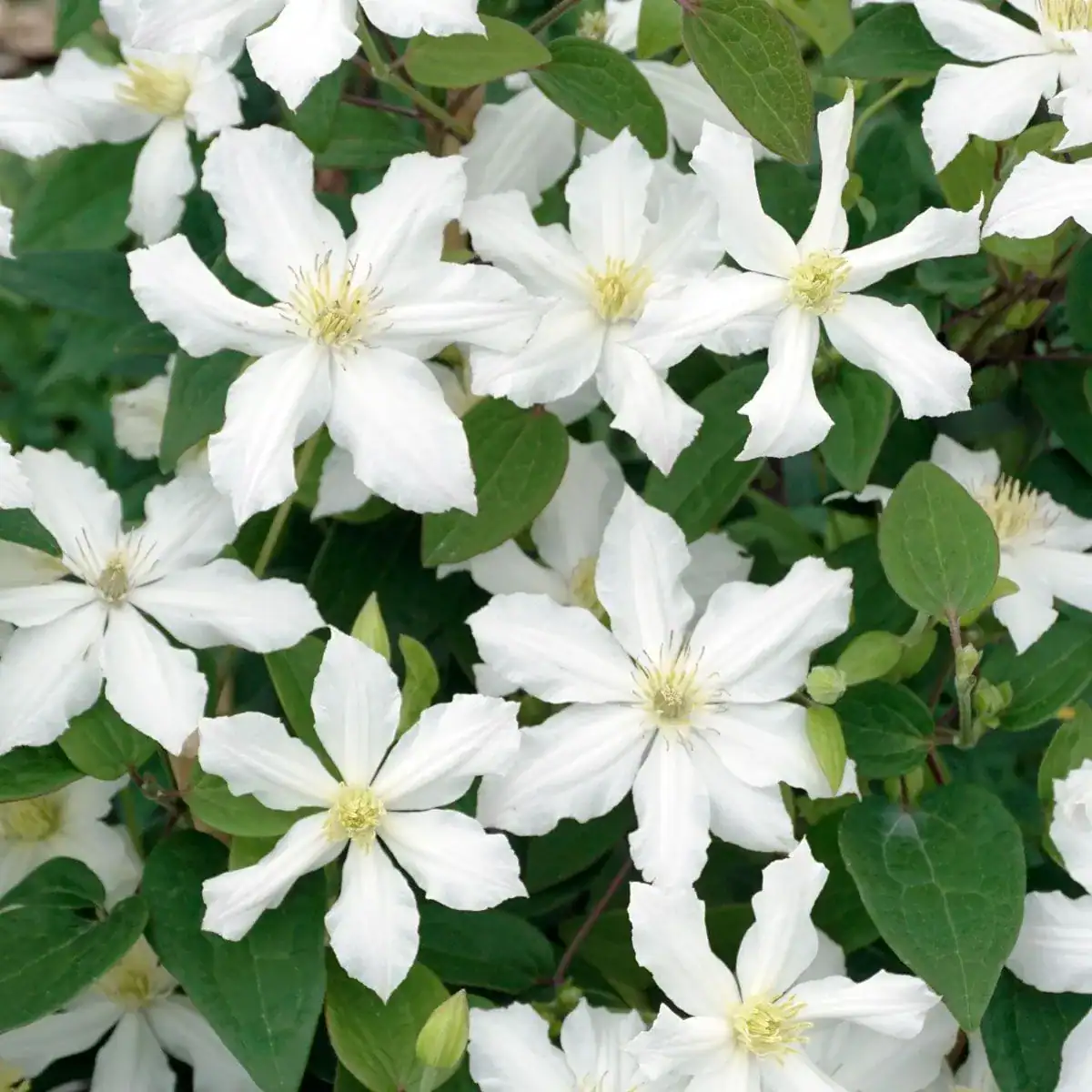
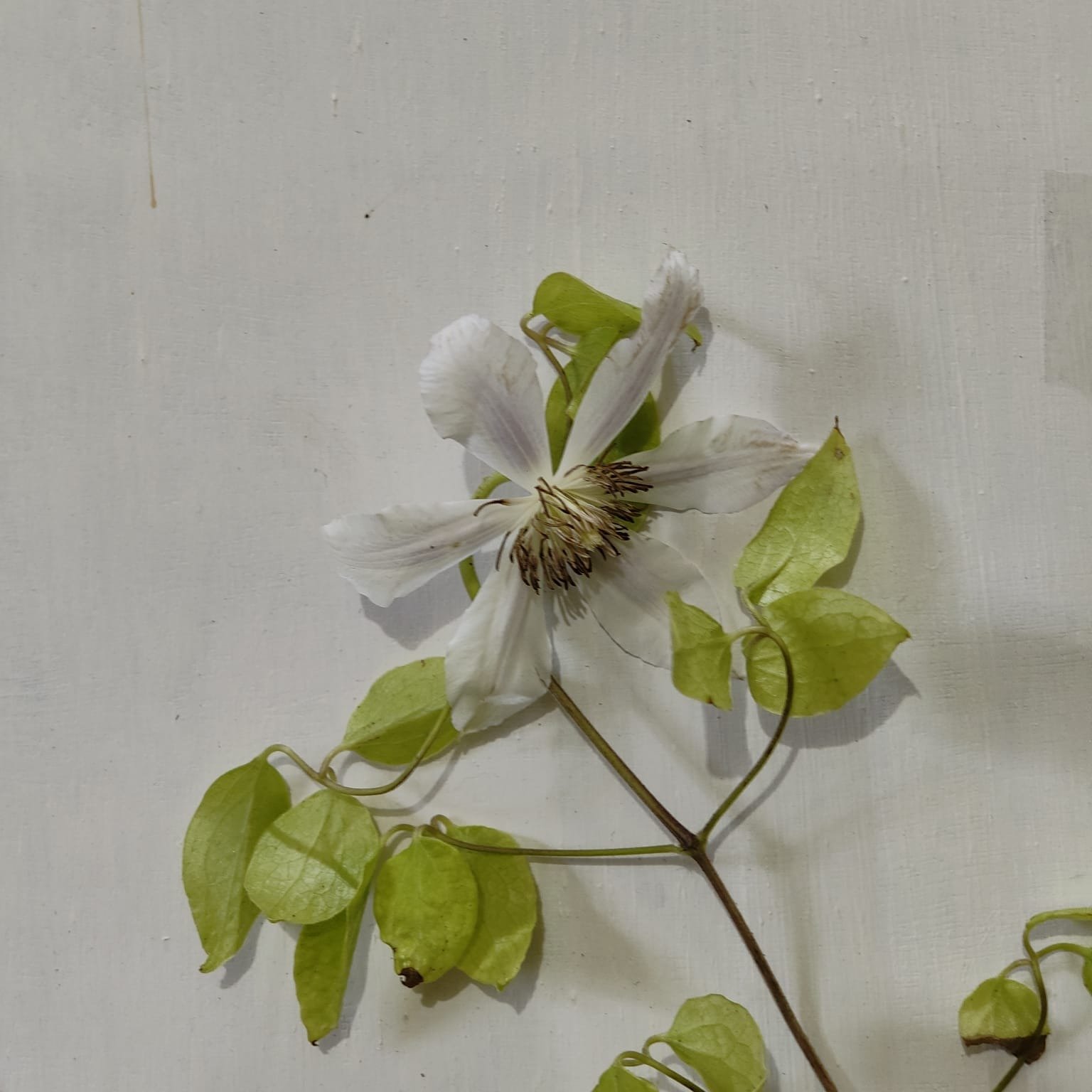
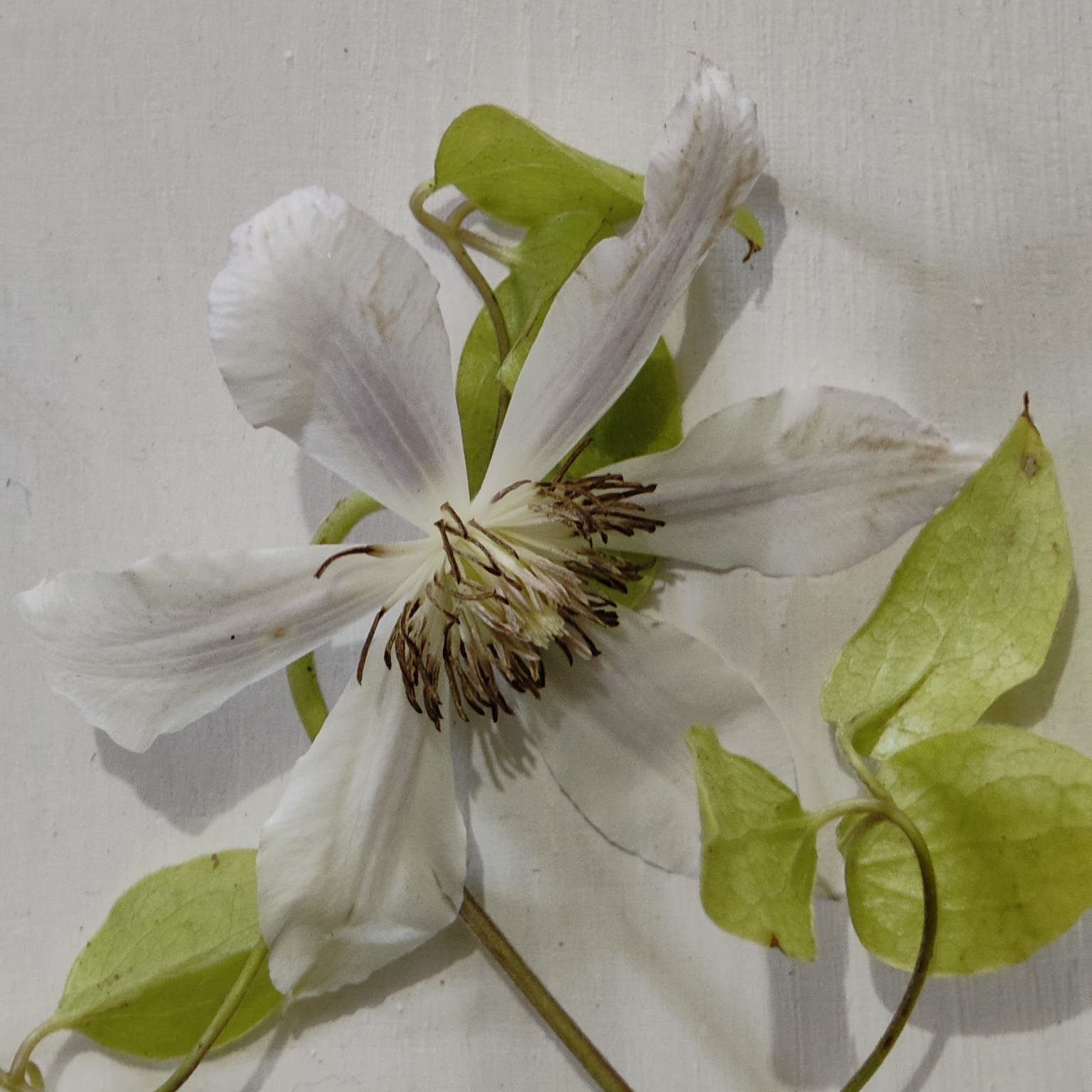
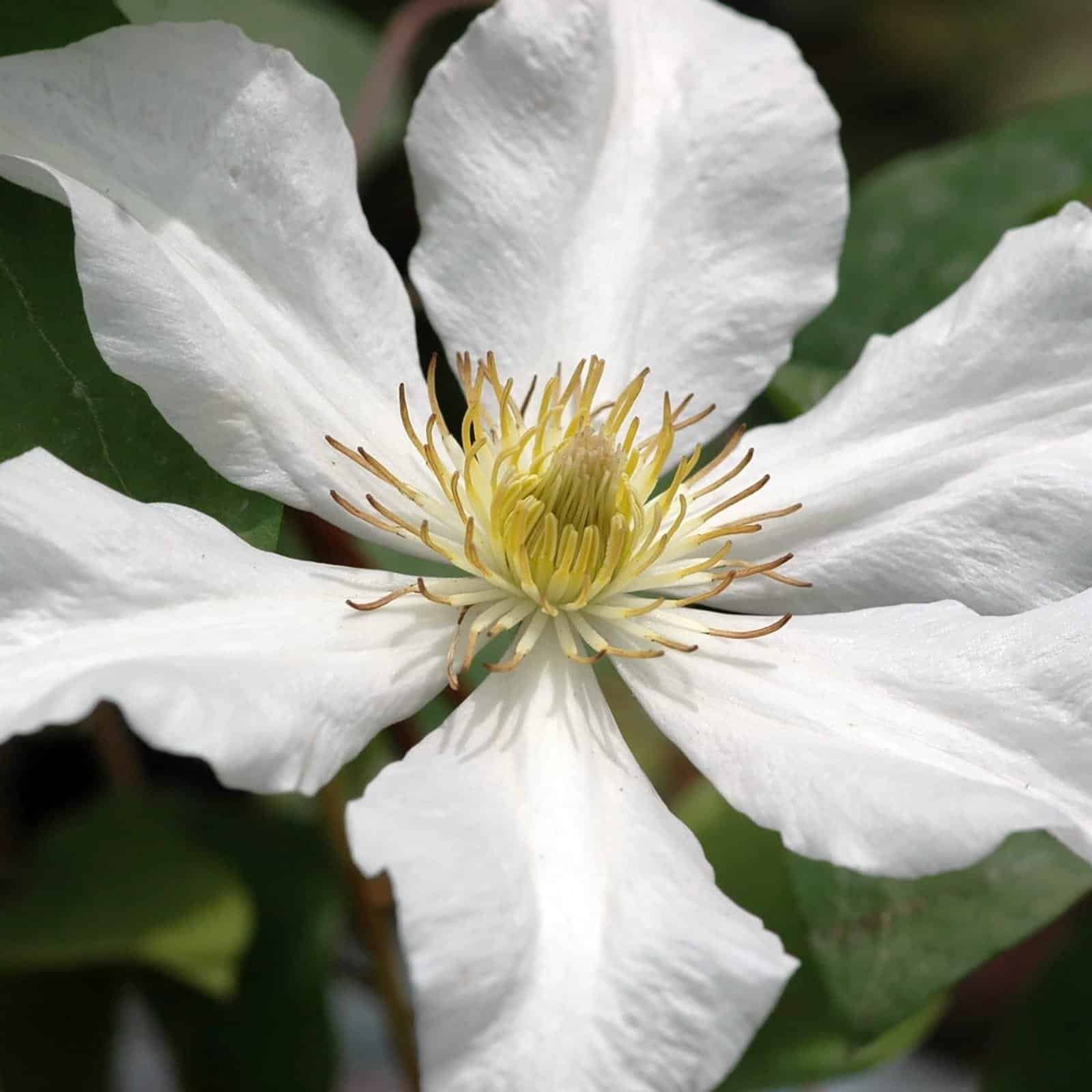
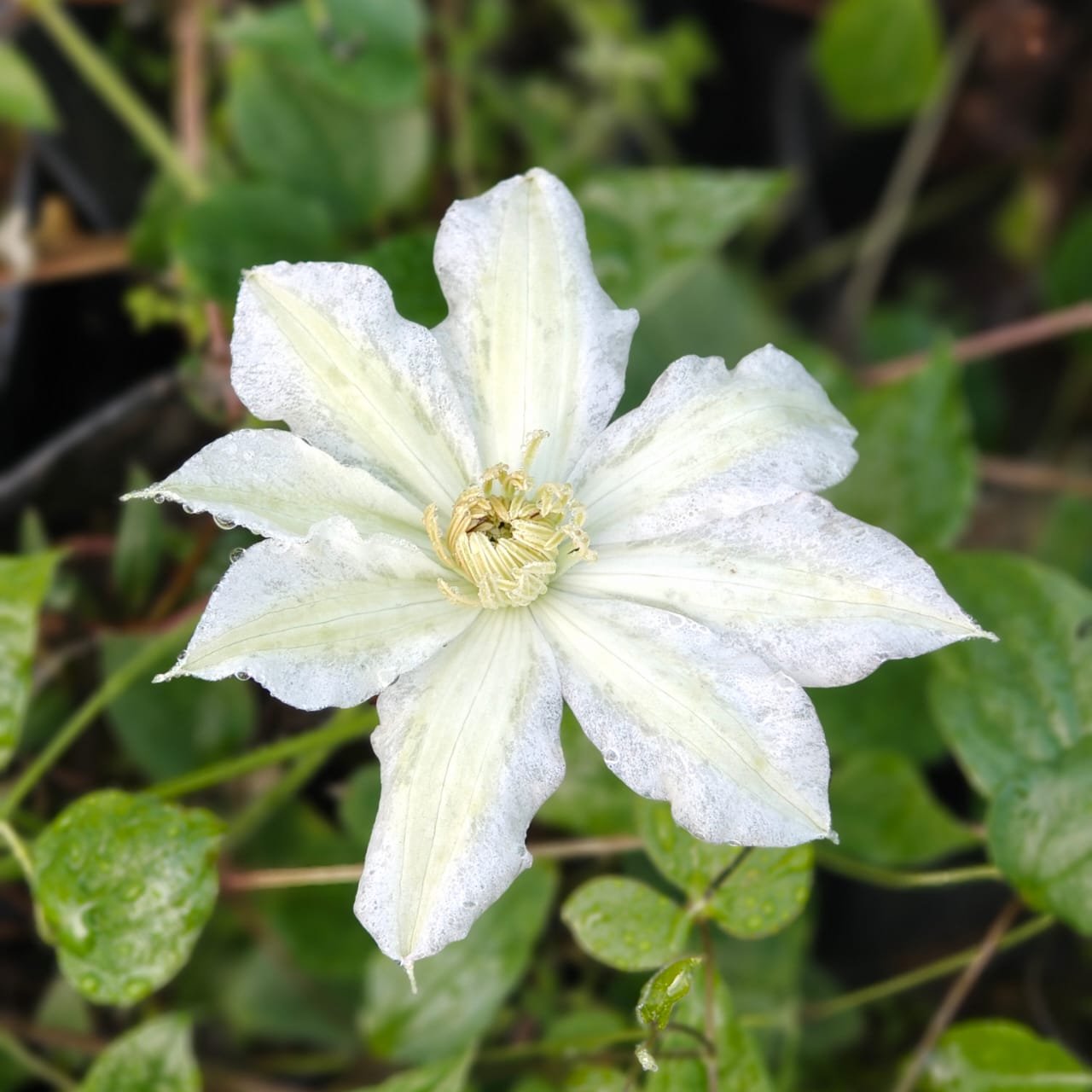
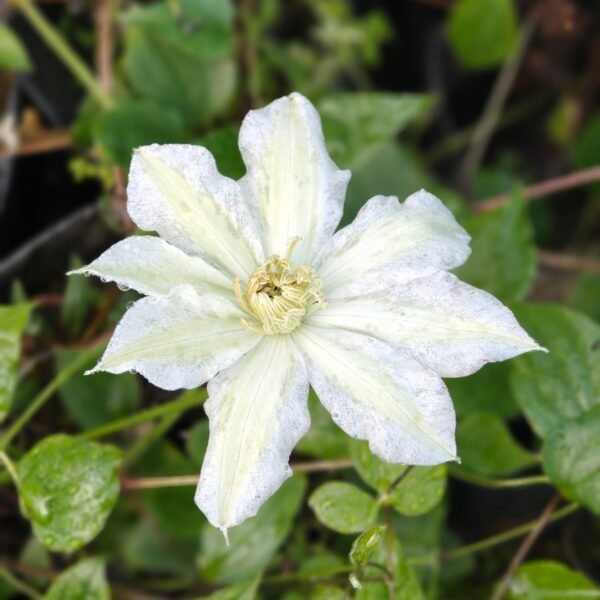
Large open white flowers on a deciduous climber — the cool-climate vine that rewards a hill garden like nothing else.
The Queen of Climbers
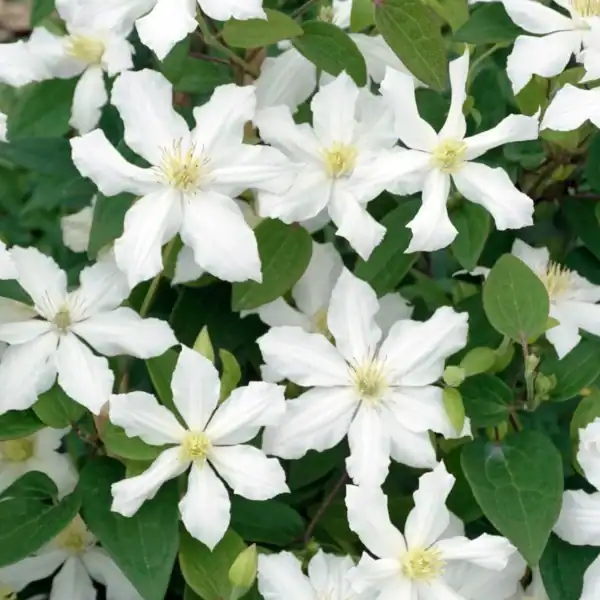
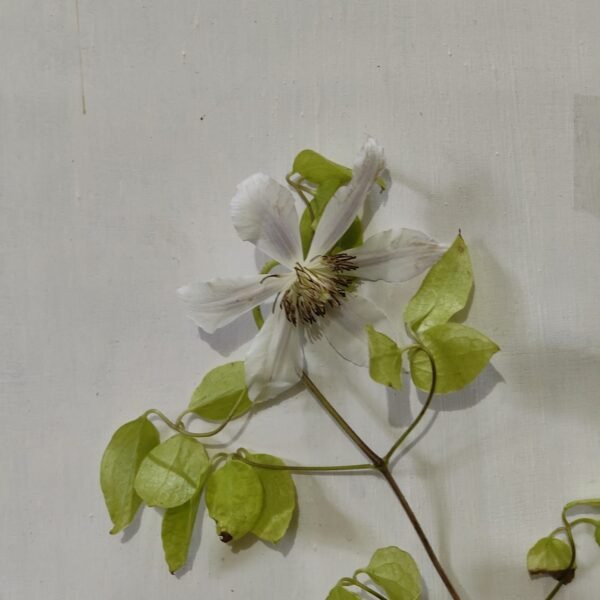
Clematis is a deciduous flowering vine grown for blooms that can reach 10–15 cm across. This white form carries clean, wide-petalled flowers with a pale central boss, held along stems that climb by twisting their leaf stalks around any thin support.
It has one firm rule, worth stating plainly: cool roots, sunny top. Shade the base of the plant with stones, low planting or mulch, let the vine climb into the light, and it will flower for years.
Flower and Habit
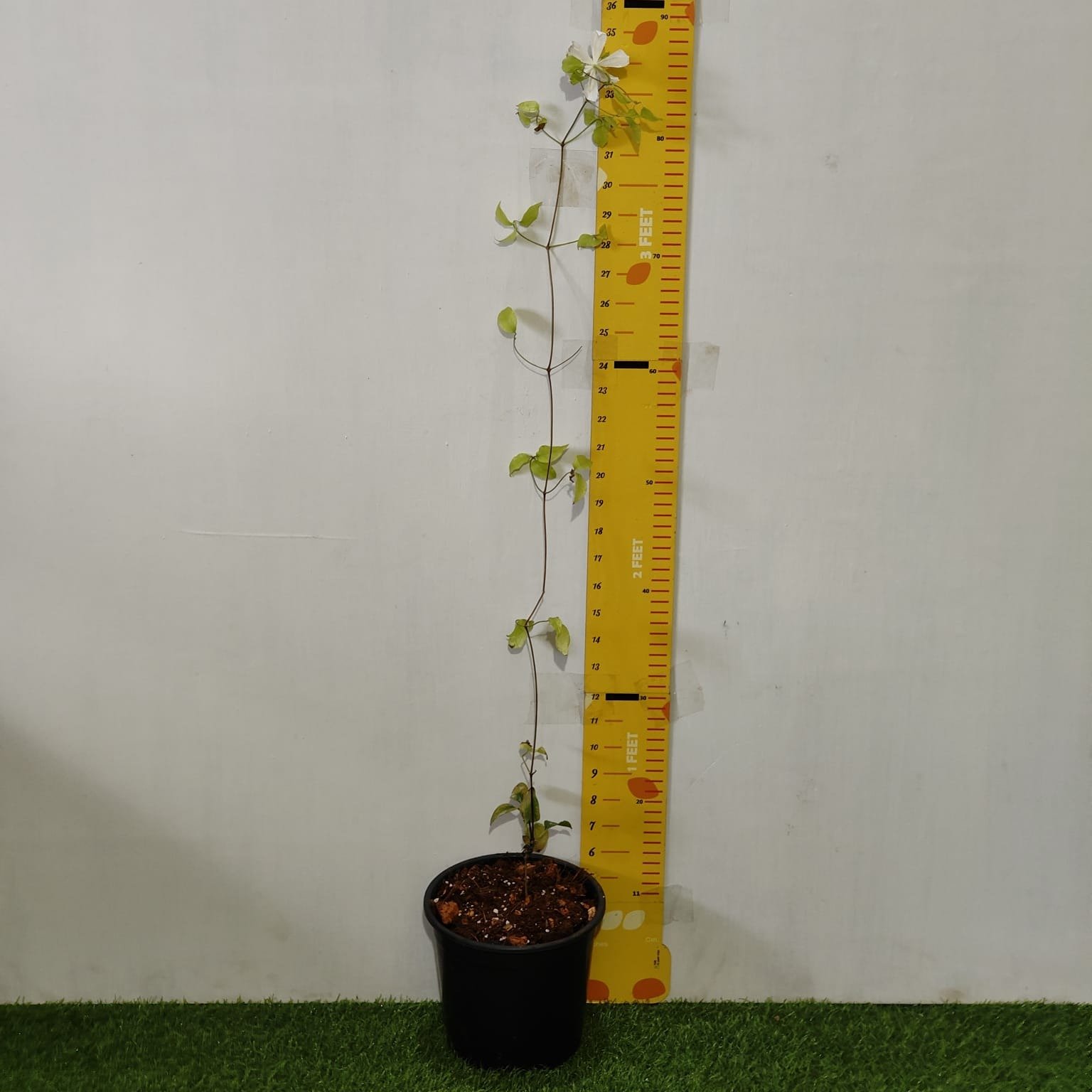
Flowers are 10–15 cm across in clean white, opening from late spring, with a lighter second flush in some varieties. The vine climbs 2–3 m by twining leaf stalks, so it needs thin wire or mesh rather than a thick post to grip.
Key Features
✓ Large open white flowers, 10–15 cm across
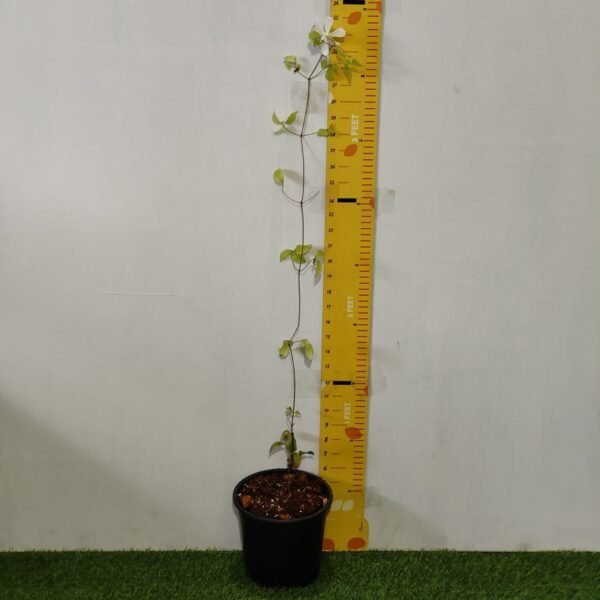
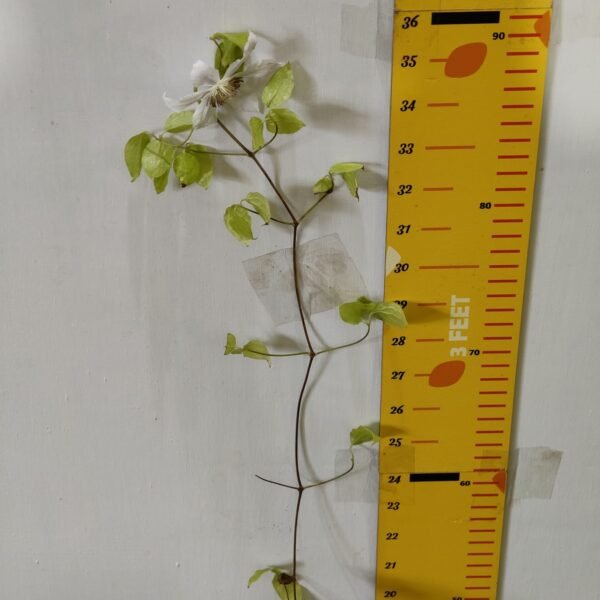
✓ Climbs 2–3 m by twining its leaf stalks
✓ Deciduous — rests fully through winter
✓ Very cold hardy once established
✓ Best in hill stations and cool temperate gardens
✓ Long lived; improves for years in the same spot
🌱 Recommended Potting Mix
A deep, well-fed mix with leaf mould and vermiculite — clematis want cool, moist roots and plenty to eat.
Clematis
Potting Mix
Potting Mix
35% Garden Soil
What is Garden Soil?
Clean, fertile and loose topsoil collected from a healthy garden or cultivation area.
- Loose and easy to crumble
- Free from stones and waste
- Not extremely hard or sticky
- Able to drain excess water
- Loamy soil is preferred
If your garden soil is sticky or clay-heavy, increase the river sand or perlite share and reduce the cocopeat by the same amount.
20% Cocopeat
Holds moisture, keeps the mix light.
22% Vermicompost
Slow-release nutrients and microbes.
10% River Sand
Drainage channels; stops compaction.
5% Vermiculite
Holds 16x its weight in water, plus nutrients.
5% Leaf Mould
Cool, moisture-holding humus.
3% Bone Meal
Slow phosphorus for roots and blooms.
Pro Tip: Cool roots, sunny top. Shade the base with stones or low plants and the vine does the rest.
Growing and Care Guide
Simple essentials for healthy and balanced growth.
Sunlight
Full sun on the vine, shade on the roots. Six hours of light on the top growth is ideal.
Watering
Keep evenly moist — clematis dislike drying out. Water deeply rather than often.
Soil
Deep, fertile, well-drained loam, slightly alkaline. Enrich generously with compost.
Temperature
Very cold hardy; grows between −20°C and 35°C. Best growth 15°C to 25°C. Suffers above 30°C.
Fertilizer
Balanced feed in early spring, then a high-potash feed as buds form.
Pruning
Depends on the group. When unsure, prune lightly after flowering and remove dead wood only.
Temperature Tolerance
What this plant enjoys, what it merely survives, and where it stops.
Ideal range
25°C day / 20°C night
The non-stress control condition in both published clematis heat-stress studies. It is where the plants were held while healthy, which is the closest thing to a documented optimum for this genus.
Active growth
Cool roots first
Clematis prefers a cool climate, and the root run matters more than the air. Keep the pot itself cool — top-dress with pebbles, plant something low in the same container, or stand other pots on the sunward side.
20°C
25°C
35°C
45°C
48°C
Safe but slowIdealWarm — tolerableHeat stressExtreme heat
❄️ Cold limits
Cool climate plant
Cold is rarely the problem
Clematis prefers a cool climate. No minimum temperature is given in the sources used here, and across most of India cold is not what limits it.
🌡️ Heat limits
35°C day / 30°C night
Heat stress begins
This is the lower of the two heat-stress levels the researchers applied. Heat is the main factor restricting the growth and ornamental value of clematis, and most cultivars sold are susceptible to it.
45°C day / 40°C night
Visible injury within days
After four days, Clematis lanuginosa showed leaf-tip wilting and withered new leaves, with its net photosynthetic rate down 51%. The more sensitive C. crassifolia yellowed and wilted after just two days and lost 91% of its photosynthetic rate.
Figures from PMC8941805 (Clematis lanuginosa and C. crassifolia under heat stress) and Frontiers in Plant Science 12:624875, which used a 25/20°C control and 35/30°C and 45/40°C heat treatments; plus the RHS clematis growing guide for the cool-root requirement. The damage figures were measured on those two species, not on this white hybrid.
Climate Zone Compatibility
Where this plant performs across India’s growing zones.
|
Cold hardiness
Cool-climate plant · no minimum published
|
Optimal growth temp
25°C day / 20°C night
|
Winter dormancy
Yes — fully deciduous in winter
|
|
Heat stress above
35°C day / 30°C night
|
Ideal Indian zones
Z2 · Z3 · Z4 · Z9
|
Temperature range
Ideal 20°C to 25°C
|
✅ Ideal — thrives here
| ✅ |
Z2 — Cold Hills · Winter down to 1–5°C / Summer up to 25°C
Elevation 1,800–3,000m · Rainfall 700–4,000mm · Monsoon 4–5 months · Full dormancy — excellent vigour
|
| ✅ |
Z3 — Subtropical Hills · Winter down to 3–8°C / Summer up to 28°C
Elevation 1,500–2,500m · Rainfall 800–2,500mm · Monsoon 4–5 months · Full dormancy — best colour
|
| ✅ |
Z4 — Subtropical Highland · Winter down to 0–8°C / Summer up to 33°C
Elevation 1,200–2,200m · Rainfall 500–3,600mm · Mixed monsoon · Dormancy sufficient at elevation
|
| ✅ |
Z9 — Cool Tropical Highland · Winter 5–12°C / Summer up to 28°C
Elevation 1,600–2,500m · Nilgiri Hills / Western Ghats · Rainfall 1,500–3,000mm · Monsoon 5–6 months
|
⚠️ Workable — grows, but needs help
| ⚠️ |
Z1 — Cold Alpine · Winter down to −20°C or below / Summer up to 20°C
Elevation 3,000–5,500m · Rainfall <300mm · Dry season 8+ months · Deep dormancy — hardiest conditions
|
| ⚠️ |
Z5 — Subtropical Monsoon · Winter 8–14°C / Summer up to 38°C
Elevation 50–600m · Monsoon 5–6 months · Rainfall 1,800–4,000mm · Humidity 75–95%
|
| ⚠️ |
Z6 — Subtropical Monsoon Highland · Winter 10–13°C / Summer up to 32°C
Elevation 800–1,400m · Monsoon 5–6 months · Rainfall 1,500–3,200mm · Dry season 5–6 months — no frost ever
|
❌ Not suitable
| ❌ |
Z7 — Humid Subtropical · Winter 8–15°C / Summer up to 42°C
Elevation 100–700m · Dry season 3–4 months · Rainfall 800–2,200mm · Summer hot — 38–42°C
|
| ❌ |
Z8 — Subtropical Semi-Arid · Winter 5–12°C / Summer up to 44°C
Elevation 10–200m · Dry season 7 months · Rainfall 400–800mm · Semi-arid steppe
|
| ❌ |
Z10 — Tropical Mid-Elevation Monsoon · Winter 9–15°C / Summer up to 38°C
Elevation 600–1,500m · Monsoon 6–7 months · Rainfall 2,500–6,000mm · Humidity 80–95%
|
| ❌ |
Z11 — Tropical Monsoon Coastal · Winter 14–24°C / Summer up to 38°C
Elevation 0–200m · Monsoon 5–6 months · Rainfall 1,400–4,000mm · No frost ever
|
| ❌ |
Z12 — Tropical Wet & Dry Savanna · Winter 11–17°C / Summer up to 40°C
Elevation 300–1,000m · Dry season 5–6 months · Rainfall 700–1,600mm · Deccan Plateau — distinct wet and dry seasons
|
| ❌ |
Z13 — Tropical WDS Hot Interior · Winter 11–18°C / Summer up to 48°C
Elevation 200–700m · Dry season 6–7 months · Rainfall 700–1,600mm · Summer scorching — 45–48°C peak
|
| ❌ |
Z14 — Tropical Wet & Dry Savanna Coastal · Winter 17–22°C / Summer up to 42°C
Elevation 0–400m · Dry season 4–5 months · Rainfall 700–2,000mm · Coastal — humid year-round
|
| ❌ |
Z15 — Tropical Semi-Arid · Winter 12–16°C / Summer up to 45°C
Elevation 450–600m · Humidity 35–75% · Rainfall 600–900mm · Dry season 7 months
|
| ❌ |
Z16 — Subtropical Hot Semi-Arid Continental · Winter 4–13°C / Summer up to 48°C
Elevation 100–450m · Dry season 6–7 months · Rainfall 600–900mm · Summer scorching — 44–48°C peak
|
| ❌ |
Z17 — Subtropical Hot Arid · Winter 5–12°C / Summer up to 50°C
Elevation 200–300m · Dry season 9–10 months · Rainfall <400mm · True desert climate
|
| ❌ |
Z18 — Tropical Hot Semi-Arid · Winter 16–20°C / Summer up to 46°C
Elevation 300–800m · Dry season 7–8 months · Rainfall 500–700mm · Western Ghats rain shadow
|
Season by Season
Spring (Feb – Apr)
New shoots race up the support. Feed now and tie in the growth.
Summer (May – Jun)
Main flowering. Keep roots cool and moist; heat above 30°C shortens the display.
Monsoon (Jul – Sep)
Growth continues. Ensure sharp drainage — waterlogged roots cause wilt.
Autumn (Oct – Nov)
Leaves colour and drop. Cut out dead wood once the vine is bare.
Winter (Dec – Jan)
Fully dormant. The cold rest is essential for next season’s flowers.
How to Plant
01. Pick a spot where the top gets sun but the base stays shaded.
02. Dig a hole 45 cm across and equally deep.
03. Add the recommended potting mixture with extra compost.
04. Plant about 5 cm deeper than the nursery pot — this helps it recover from clematis wilt.
05. Provide thin wire or mesh for the leaf stalks to grip.
06. Water in deeply and mulch, keeping mulch off the stems.
Frequently Asked Questions
Will it grow in Delhi or Mumbai?
Honestly, no. Clematis needs cool summers and a genuine winter rest. It is a hill-station plant — Shimla, Manali, Ooty, Kodaikanal, Darjeeling.
Why did a healthy vine suddenly collapse?
Clematis wilt, a fungal problem. Cut affected stems right back to healthy tissue; planting deep means the buried buds usually regrow.
What should it climb on?
Thin wire, mesh or netting. It grips with leaf stalks and cannot wrap around a thick post or trellis batten.
How hard should I prune?
Pruning depends on the clematis group. If you do not know which you have, prune lightly right after flowering and take out only dead wood.
For Gardens Where the Air Stays Cool
Large white flowers on a vine that gets better every single year.
Flowering time, bloom size, repeat flowering and vine vigour may vary depending on plant maturity, climate, sunlight, nutrition, soil and local growing conditions.






Reviews
There are no reviews yet