












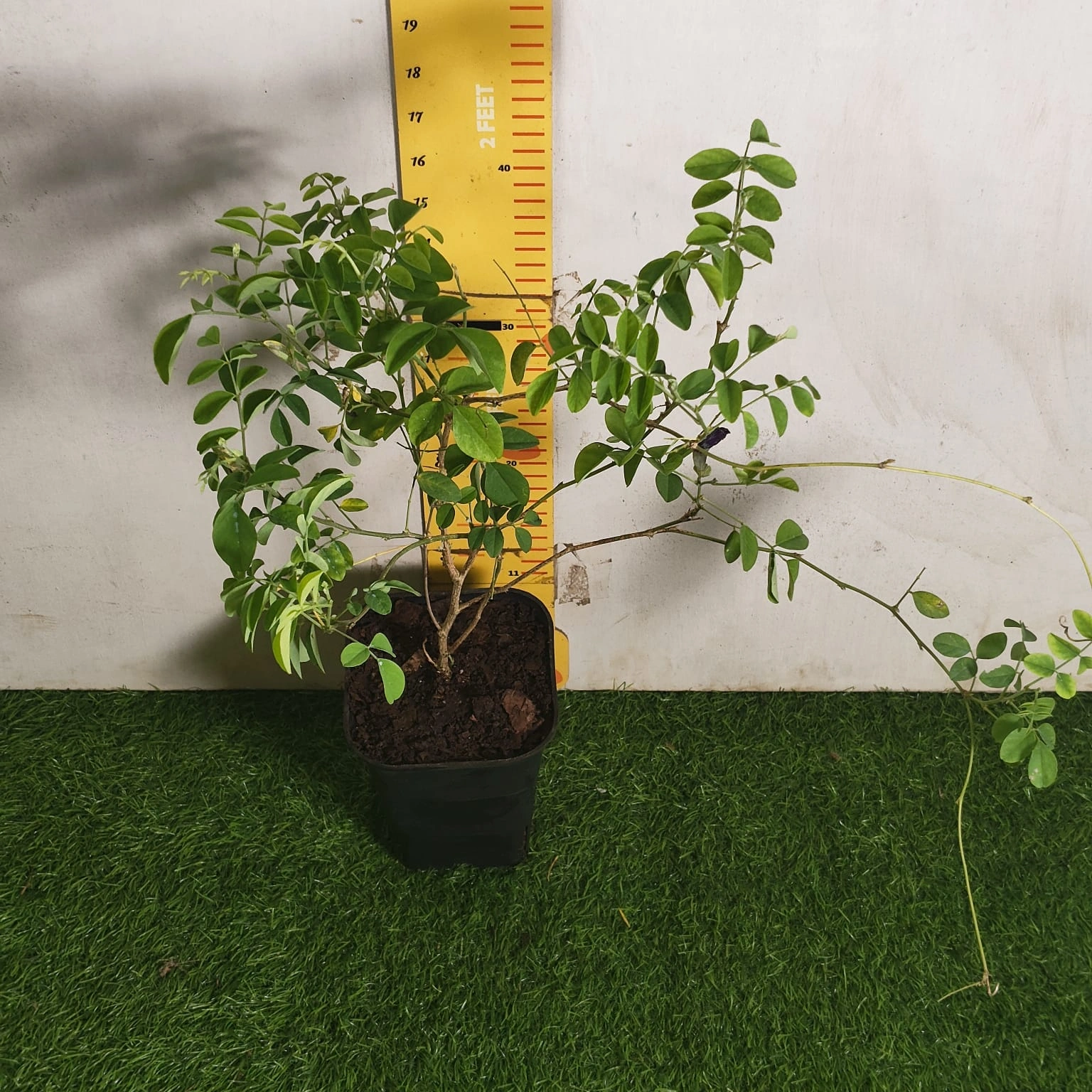
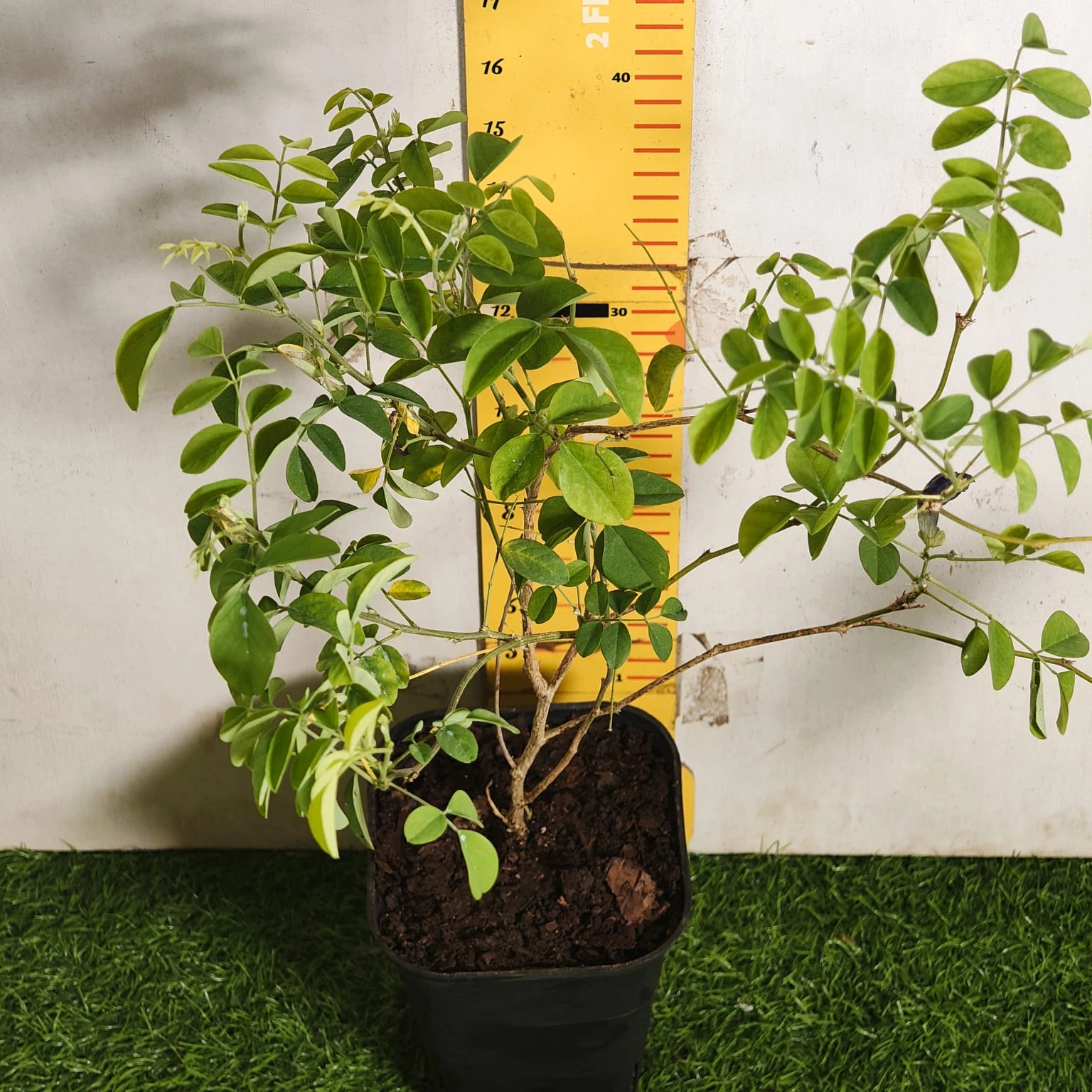
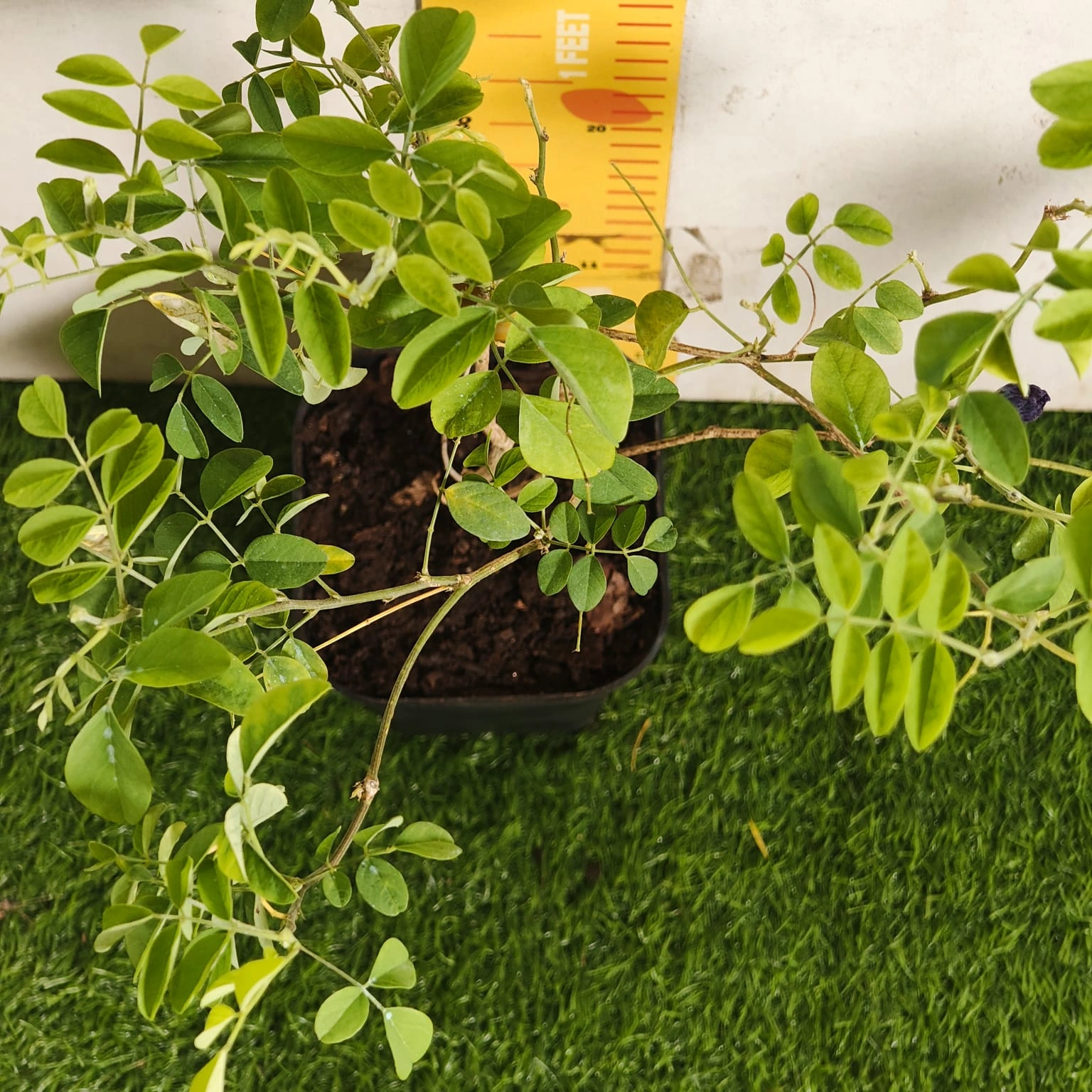
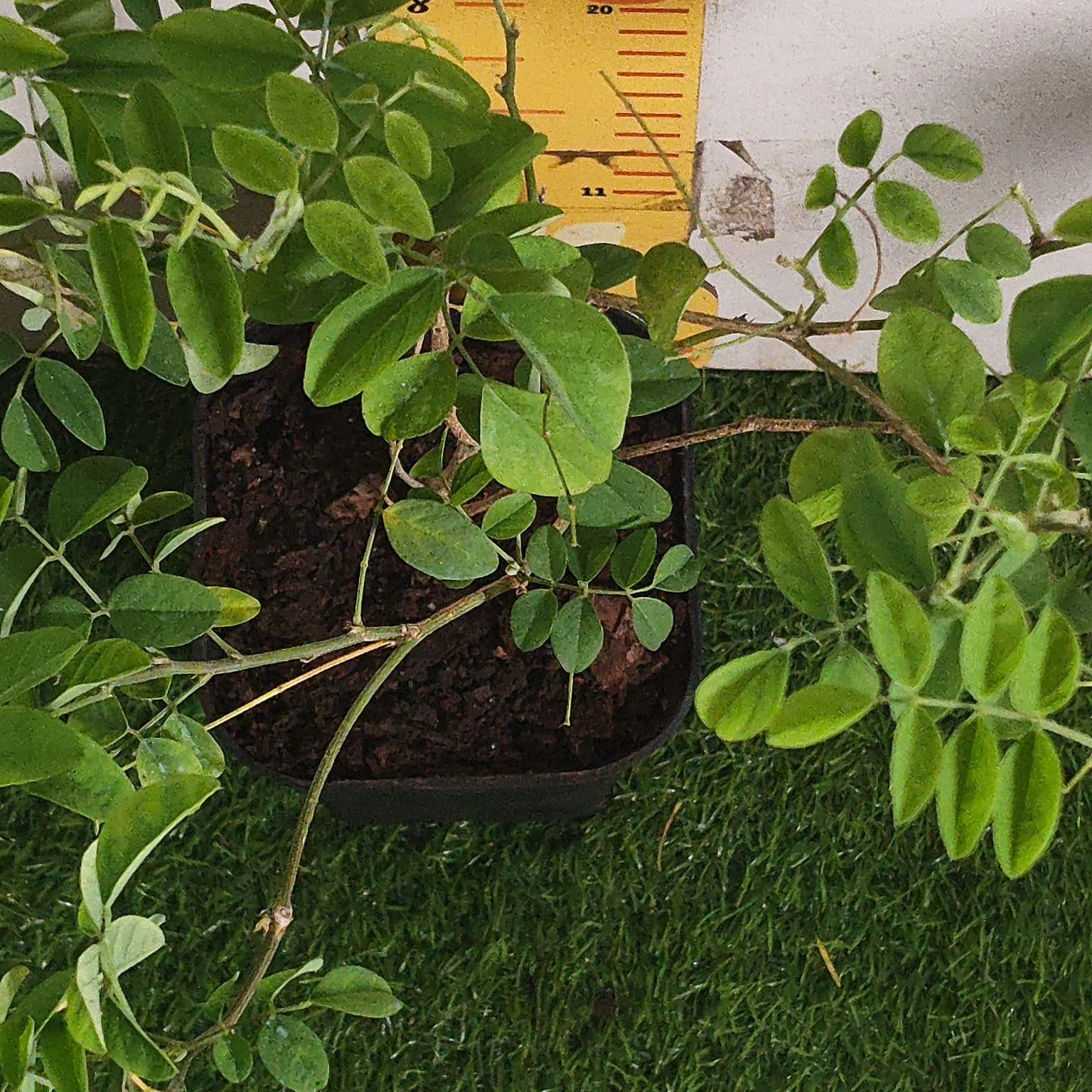
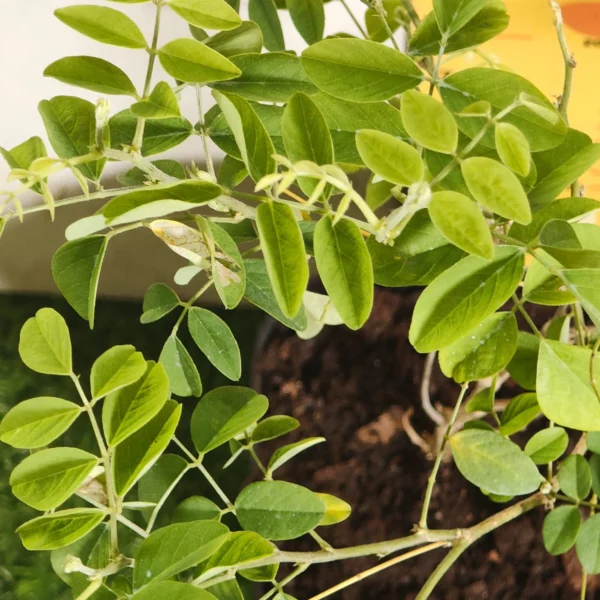

FLOWERING CLIMBER
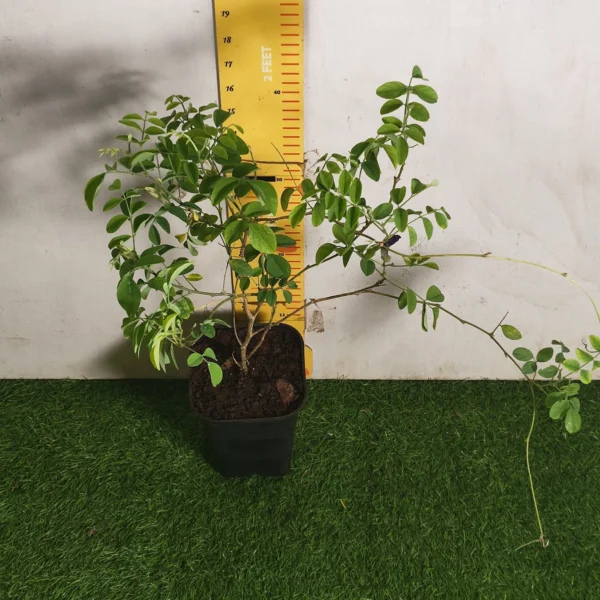
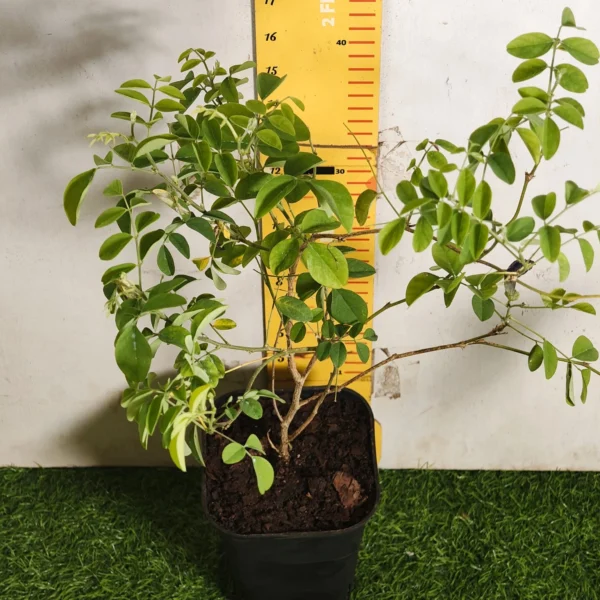
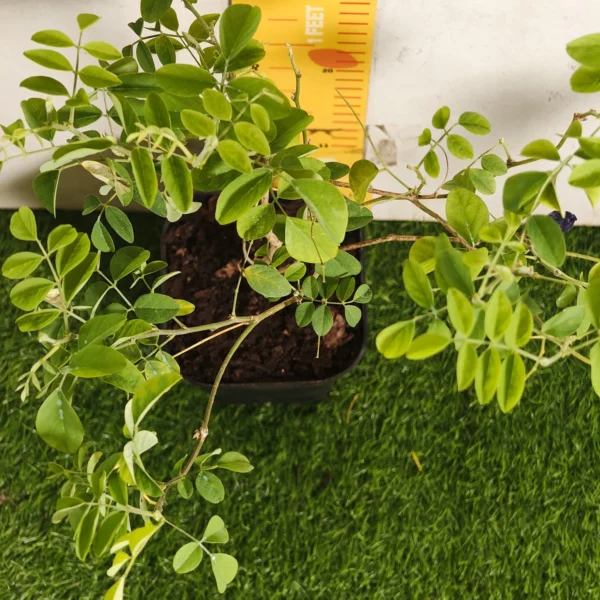
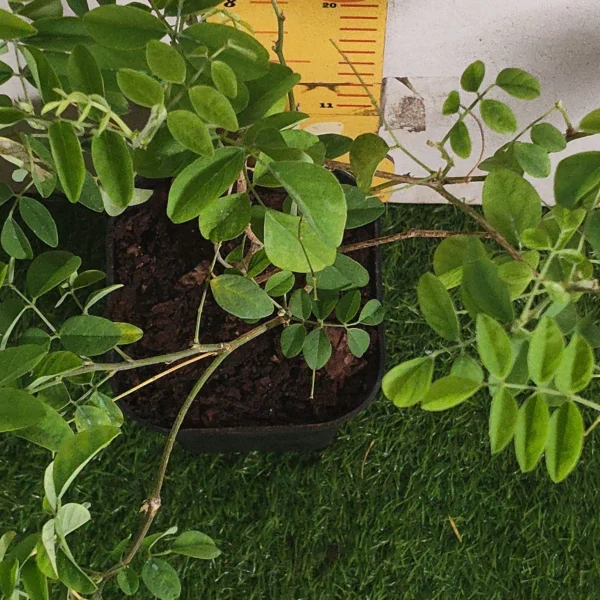
Aparajita Double Bloom Plant
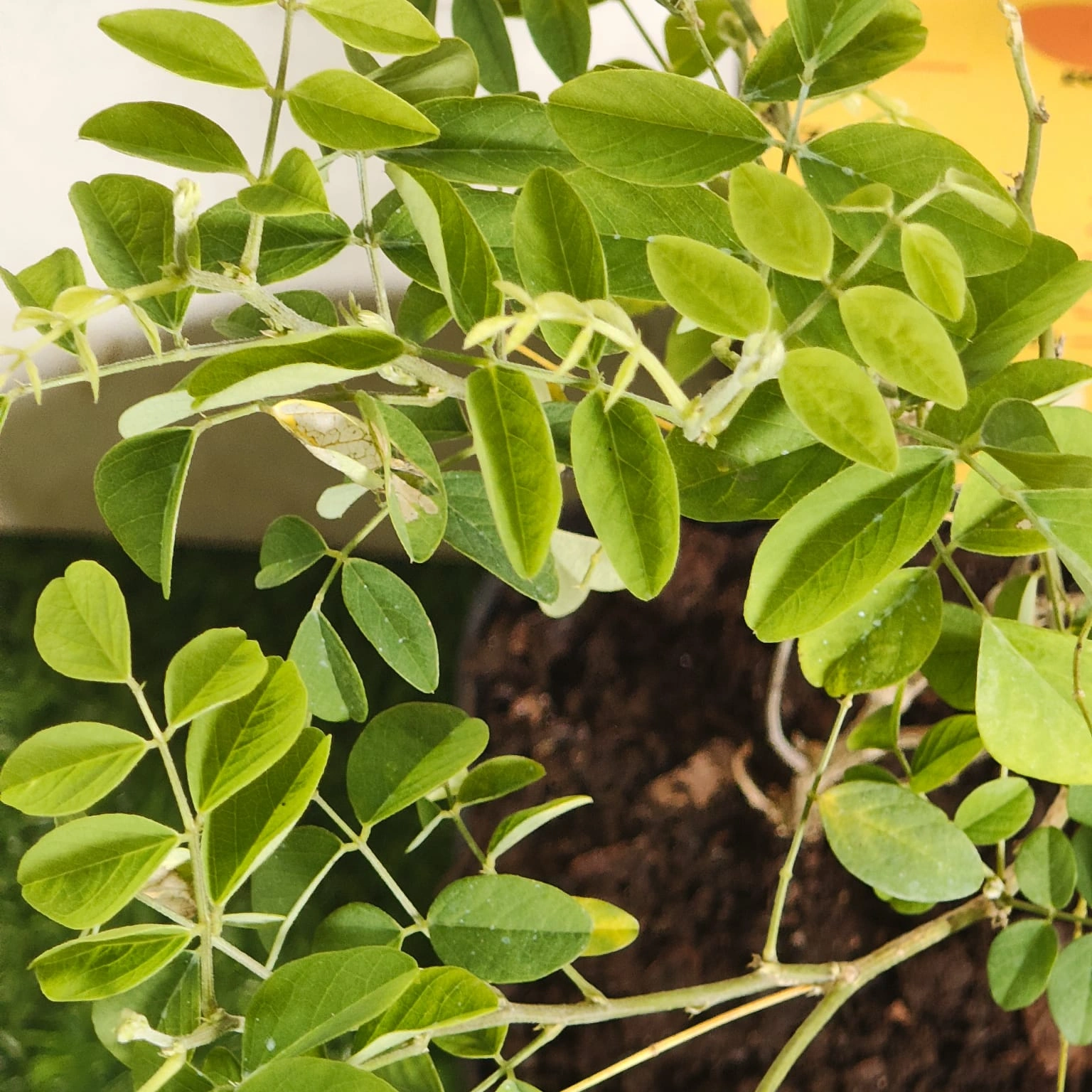
A fast-growing blue-flowered climber with fuller, many-petalled blooms — the classic Indian butterfly pea, and the source of natural blue tea.
The Double-Petalled Butterfly Pea
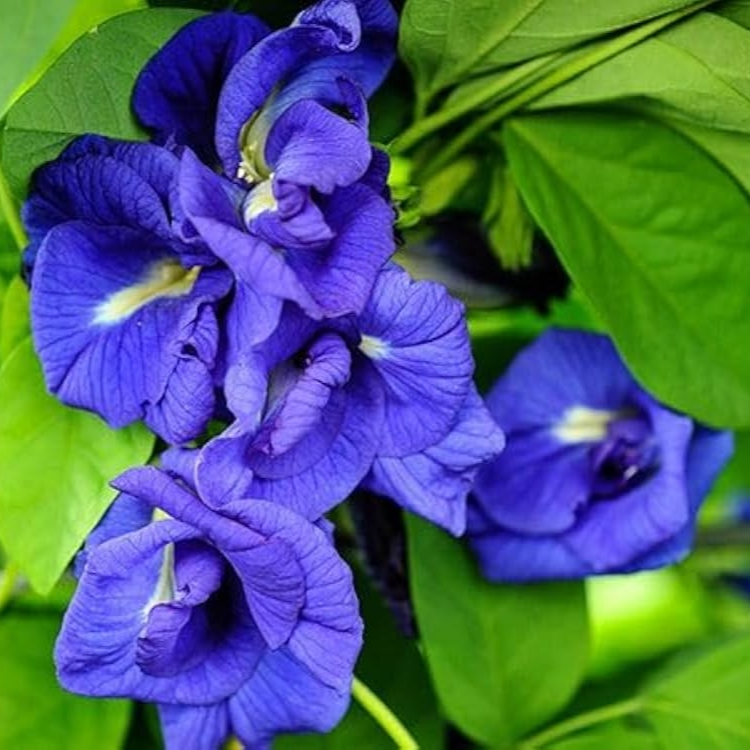
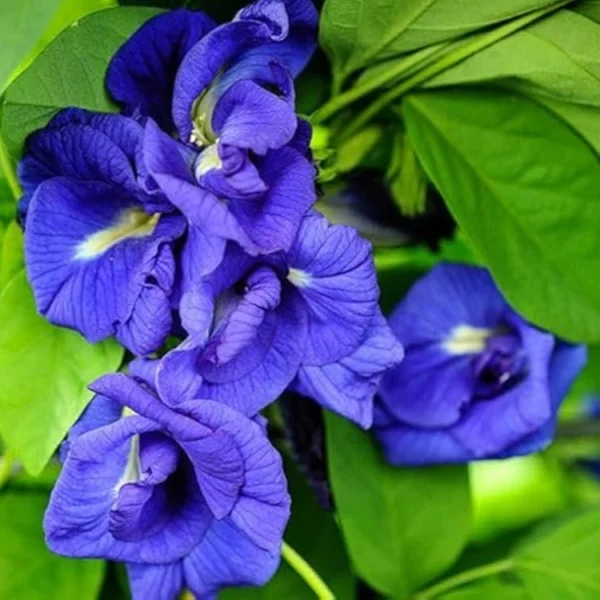
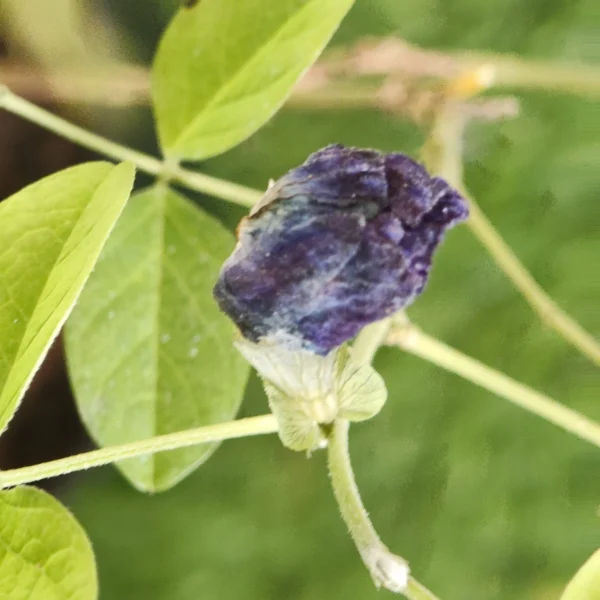
Aparajita (Clitoria ternatea) has been grown in Indian gardens and courtyards for centuries. This is the double-bloom form: where the common butterfly pea carries a single petal, this variety opens a dense, many-petalled flower in deep sapphire blue, roughly 4–5 cm across.
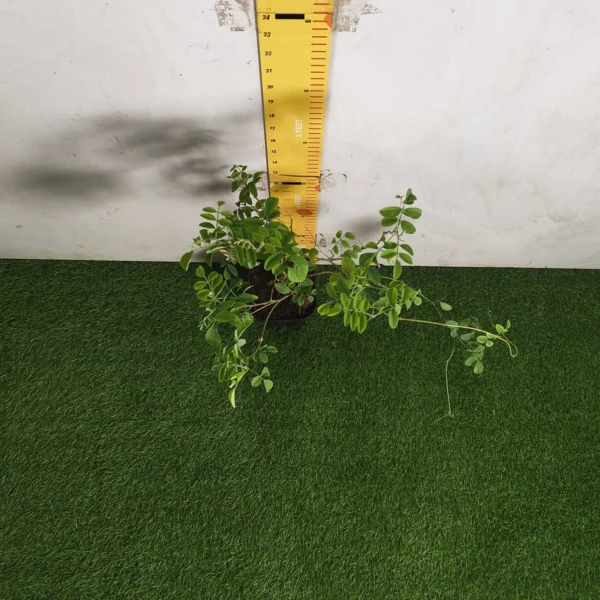
It is a twining legume that will cover a fence, grill or arch within a single season and then flower almost without pause through the warm months. The petals are what make the famous blue tea — steep them and the water turns indigo; add a squeeze of lemon and it shifts to violet-pink in front of you. Being a legume, it also fixes nitrogen and leaves the soil better than it found it.
Flower and Blue Tea Quality
Fully open blooms are picked and shade-dried for tea. Four to five flowers steeped in hot water give a deep indigo cup, thanks to the anthocyanin pigments; a few drops of lemon juice drop the pH and swing the colour to violet-pink. The same petals are used as a natural food colouring in rice, drinks and desserts.
Key Features
✓ Double-petalled deep blue blooms, 4–5 cm across
✓ Flowers almost continuously in warm weather
✓ Petals make natural blue tea and food colouring
✓ Nitrogen-fixing — improves the soil it grows in
✓ Very fast cover for fences, grills and arches
✓ Drought tolerant once established
🌱 Recommended Potting Mix
A fertile, free-draining flowering mix — butterfly pea takes most soils as long as water never sits.
Aparajita
Potting Mix
Potting Mix
25% Garden Soil
What is Garden Soil?
Clean, fertile and loose topsoil collected from a healthy garden or cultivation area.
- Loose and easy to crumble
- Free from stones and waste
- Not extremely hard or sticky
- Able to drain excess water
- Loamy soil is preferred
If your garden soil is sticky or clay-heavy, increase the river sand or perlite share and reduce the cocopeat by the same amount.
30% Cocopeat
Holds moisture, keeps the mix light.
30% Vermicompost
Slow-release nutrients and microbes.
10% River Sand
Drainage channels; stops compaction.
5% Neem Cake Powder
Feeds slowly and deters soil pests.
Pro Tip: Keep the mix lean. Heavy compost or extra nitrogen gives you a wall of leaves and very few flowers.
Growing and Care Guide
Simple essentials for healthy and balanced growth.
Sunlight
Full sun — at least 6 hours of direct sunlight daily. Flowering drops sharply in shade.
Watering
Water when the top 2–3 cm of soil is dry. Deep and infrequent beats little and often.
Soil
Light, well-drained sandy loam. Grows happily in poor soil; add sand or perlite if your mix holds water.
Temperature
Tolerates 15°C to 45°C. Best growth 20°C to 35°C. Not frost hardy.
Fertilizer
Go easy on nitrogen — it fixes its own. A low-nitrogen, high-potash feed monthly gives more flowers.
Pruning
Pinch the tips when young to bush it out. Cut back by a third after each heavy flush.
Temperature Tolerance
What this plant enjoys, what it merely survives, and where it stops.
Ideal range
24°C – 32°C
The temperature range for best growth.
Active growth
16°C – 36°C
Soil temperatures in this range are what good establishment needs. Growth is limited by low temperature in cool regions and by lack of moisture in the seasonally dry tropics.
15°C
24°C
32°C
36°C
45°C
Cold stressSafe but slowIdealActive growthWarm — tolerable
❄️ Cold limits
Below 16°C
Poor establishment
Good establishment needs soil temperatures of 16–36°C. Below that, seedlings struggle.
Around 15°C
Lower limit of comfort
The plant tolerates temperatures as low as 15°C, but it grows slowly there.
Frost
Top growth killed
Frost or fire kills the top growth. A plant that is already woody usually regrows from the stems or from the base, and recovery in the following season is generally good.
🌡️ Heat limits
Above 36°C
Beyond the establishment range
The documented establishment range stops at 36°C. No lethal high-temperature figure is given in the agronomic sources used here, so none is stated.
Figures from Tropical Forages (Clitoria ternatea fact sheet and PDF) and Frontiers in Plant Science 10:645. These are agronomic sources — the figures are establishment and growth temperatures, not annual climate averages.
Climate Zone Compatibility
Where this plant performs across India’s growing zones.
|
Cold hardiness
Tolerates to 15°C · frost kills top growth
|
Optimal growth temp
24°C – 32°C
|
Winter dormancy
None — evergreen in warm zones
|
|
Heat stress above
Above 36°C
|
Ideal Indian zones
Z5 · Z6 · Z7 · Z10 · Z11 · Z12 · Z14 · Z15 · Z18
|
Temperature range
16°C to 36°C
|
✅ Ideal — thrives here
| ✅ |
Z5 — Subtropical Monsoon · Winter 8–14°C / Summer up to 38°C
Elevation 50–600m · Monsoon 5–6 months · Rainfall 1,800–4,000mm · Humidity 75–95%
|
| ✅ |
Z6 — Subtropical Monsoon Highland · Winter 10–13°C / Summer up to 32°C
Elevation 800–1,400m · Monsoon 5–6 months · Rainfall 1,500–3,200mm · Dry season 5–6 months — no frost ever
|
| ✅ |
Z7 — Humid Subtropical · Winter 8–15°C / Summer up to 42°C
Elevation 100–700m · Dry season 3–4 months · Rainfall 800–2,200mm · Summer hot — 38–42°C
|
| ✅ |
Z10 — Tropical Mid-Elevation Monsoon · Winter 9–15°C / Summer up to 38°C
Elevation 600–1,500m · Monsoon 6–7 months · Rainfall 2,500–6,000mm · Humidity 80–95%
|
| ✅ |
Z11 — Tropical Monsoon Coastal · Winter 14–24°C / Summer up to 38°C
Elevation 0–200m · Monsoon 5–6 months · Rainfall 1,400–4,000mm · No frost ever
|
| ✅ |
Z12 — Tropical Wet & Dry Savanna · Winter 11–17°C / Summer up to 40°C
Elevation 300–1,000m · Dry season 5–6 months · Rainfall 700–1,600mm · Deccan Plateau — distinct wet and dry seasons
|
| ✅ |
Z14 — Tropical Wet & Dry Savanna Coastal · Winter 17–22°C / Summer up to 42°C
Elevation 0–400m · Dry season 4–5 months · Rainfall 700–2,000mm · Coastal — humid year-round
|
| ✅ |
Z15 — Tropical Semi-Arid · Winter 12–16°C / Summer up to 45°C
Elevation 450–600m · Humidity 35–75% · Rainfall 600–900mm · Dry season 7 months
|
| ✅ |
Z18 — Tropical Hot Semi-Arid · Winter 16–20°C / Summer up to 46°C
Elevation 300–800m · Dry season 7–8 months · Rainfall 500–700mm · Western Ghats rain shadow
|
⚠️ Workable — grows, but needs help
| ⚠️ |
Z8 — Subtropical Semi-Arid · Winter 5–12°C / Summer up to 44°C
Elevation 10–200m · Dry season 7 months · Rainfall 400–800mm · Semi-arid steppe
|
| ⚠️ |
Z9 — Cool Tropical Highland · Winter 5–12°C / Summer up to 28°C
Elevation 1,600–2,500m · Nilgiri Hills / Western Ghats · Rainfall 1,500–3,000mm · Monsoon 5–6 months
|
| ⚠️ |
Z13 — Tropical WDS Hot Interior · Winter 11–18°C / Summer up to 48°C
Elevation 200–700m · Dry season 6–7 months · Rainfall 700–1,600mm · Summer scorching — 45–48°C peak
|
| ⚠️ |
Z16 — Subtropical Hot Semi-Arid Continental · Winter 4–13°C / Summer up to 48°C
Elevation 100–450m · Dry season 6–7 months · Rainfall 600–900mm · Summer scorching — 44–48°C peak
|
| ⚠️ |
Z17 — Subtropical Hot Arid · Winter 5–12°C / Summer up to 50°C
Elevation 200–300m · Dry season 9–10 months · Rainfall <400mm · True desert climate
|
❌ Not suitable
| ❌ |
Z1 — Cold Alpine · Winter down to −20°C or below / Summer up to 20°C
Elevation 3,000–5,500m · Rainfall <300mm · Dry season 8+ months · Deep dormancy — hardiest conditions
|
| ❌ |
Z2 — Cold Hills · Winter down to 1–5°C / Summer up to 25°C
Elevation 1,800–3,000m · Rainfall 700–4,000mm · Monsoon 4–5 months · Full dormancy — excellent vigour
|
| ❌ |
Z3 — Subtropical Hills · Winter down to 3–8°C / Summer up to 28°C
Elevation 1,500–2,500m · Rainfall 800–2,500mm · Monsoon 4–5 months · Full dormancy — best colour
|
| ❌ |
Z4 — Subtropical Highland · Winter down to 0–8°C / Summer up to 33°C
Elevation 1,200–2,200m · Rainfall 500–3,600mm · Mixed monsoon · Dormancy sufficient at elevation
|
Season by Season
Spring (Feb – Apr)
Strong new growth as temperatures climb. Best planting window across most of India.
Summer (May – Jun)
Flowers freely. Needs more water in dry heat; light afternoon shade helps once days pass 36°C.
Monsoon (Jul – Sep)
Peak flowering. Growth is fastest now — keep tying it to its support.
Autumn (Oct – Nov)
Flowering continues in slightly smaller flushes. Good time to cut back.
Winter (Dec – Jan)
Slows down. In cold-prone areas move pots to a sheltered spot; frost kills top growth.
How to Plant
01. Choose a sunny spot with a fence, grill or trellis to climb.
02. Dig a hole a little wider than the root ball.
03. Add the recommended potting mixture.
04. Place the plant without disturbing its roots.
05. Fill the space and press the soil down gently.
06. Water thoroughly and guide the first shoots onto the support.
Frequently Asked Questions
Will it survive a Delhi or Punjab winter?
Frost will damage the top growth, but roots in the ground usually push out again in spring. In pots, move it against a wall or under cover for December and January.
How soon will it flower?
Usually within 6–8 weeks of planting out in warm weather, and then almost continuously until the cold sets in.
Can I use the flowers for blue tea?
Yes. Pick fully open blooms, dry them in shade, and steep 4–5 in hot water. Add lemon and the colour turns from indigo to violet-pink.
Does it need fertilizer?
Very little. It fixes its own nitrogen. Too much feed gives leaves instead of flowers.
Is the double bloom harder to grow than the single?
No — care is identical. The double simply carries fuller flowers and sets slightly fewer seed pods.
Bring Home the Blue That Started Blue Tea
Fast cover, months of sapphire flowers, and a plant that feeds your soil while it grows.
Flowering time, flower size, growth rate and plant form may vary depending on plant maturity, climate, sunlight, nutrition, soil and local growing conditions.





Reviews
There are no reviews yet