

Peace Lily
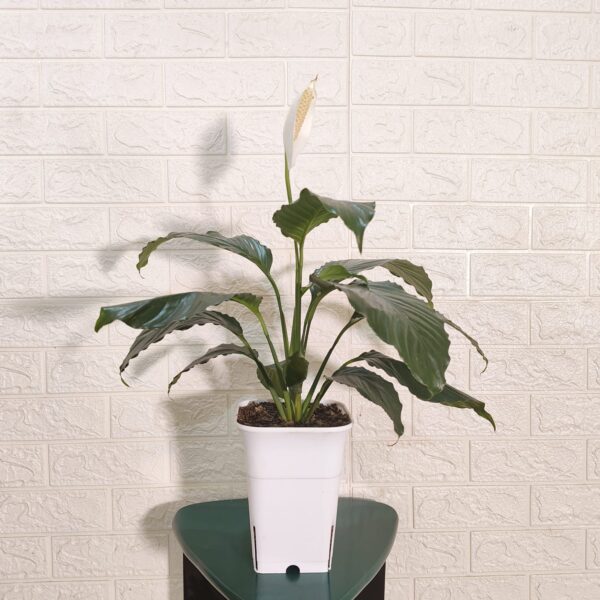
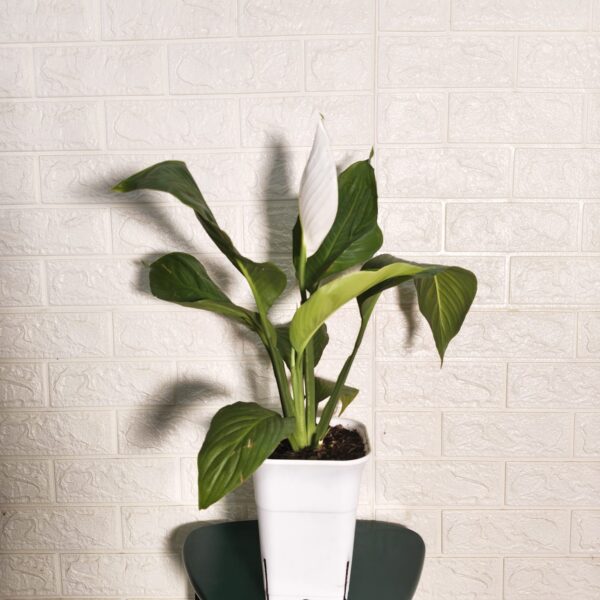
Peace Lily Thai
🌿 Compact Thai Peace Lily with glossy deep-green foliage & pure white spathes
☀️ Bright, indirect light — tolerates lower light beautifully
💧 Water when top 2 cm of soil feels dry (about every 4–6 days)
🏠 Outstanding indoor air-purifier — bedrooms, offices & bathrooms
🌡️ Loves warm, humid Indian climate (18–30°C)
📏 Stays compact — 30–45 cm tall when mature
📦 1 healthy Peace Lily Thai in a 4-inch nursery pot
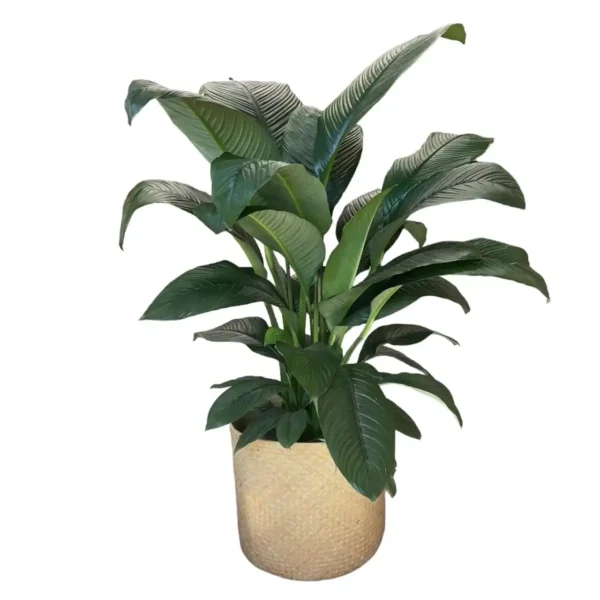

Peace lily (Spathiphyllum) is a popular houseplant with glossy green leaves and white spathe flowers. Our range includes the giant peace lily ‘Sensation’, variegated peace lily and the Thai variety. What is in stock changes, so the products above show what we have today.
Peace Lily Care at a Glance
| Need | What to do |
|---|---|
| Light | Bright indirect light. It tolerates lower light but flowers less. Keep it out of hot direct sun, which scorches the leaves. |
| Water | Water when the top 2 to 3 centimetres of soil are dry. A peace lily droops when thirsty and recovers soon after watering. Do not leave it standing in water. |
| Humidity | It likes humid air. Mist lightly or group it with other plants, and keep it away from air-conditioner vents. |
| Soil and pot | A light, well-draining potting mix in a pot with drainage holes. Repot when roots fill the pot. |
| Feeding | Feed lightly every month or two in the growing season. |
| Safety | All parts are harmful if eaten by pets or people, so keep it out of reach of children, cats and dogs. |
Peace Lily FAQs
Why are the leaf tips of my peace lily turning brown?
Common causes are dry air, irregular watering or salts building up from tap water and fertiliser. Water evenly, avoid vents and trim the brown tips.
Why is my peace lily not flowering?
Usually too little light. Move it to a brighter spot with indirect light, and feed lightly in the growing season.
How much light does a peace lily need?
Bright indirect light is best. It survives in lower light, but the plant grows slower and rarely flowers.
How big does a giant peace lily get?
The giant variety ‘Sensation’ can grow well over a metre tall when mature and needs a large pot.
Is peace lily safe for pets?
No. It is toxic if chewed or eaten, so keep it where cats, dogs and small children cannot reach it.
See more easy houseplants in our indoor plants and air purifying plants.
 PEBBLES
 PLANTS GROWTH
 Planting Materials