

Hydrangea Care Guide for India: Light, Water, Soil & Flowering

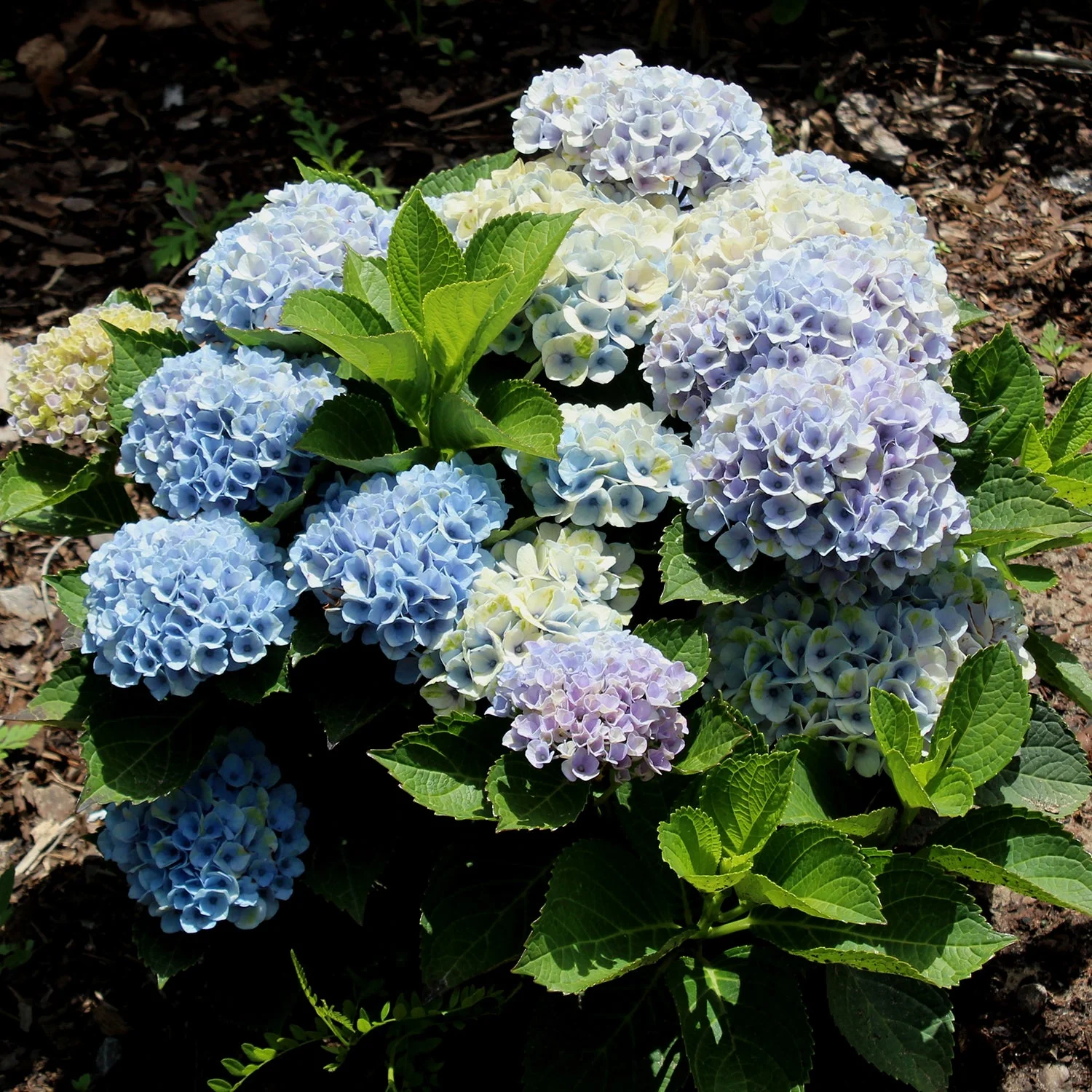
Hydrangeas are loved for their big, rounded or cone-shaped flower heads, and they have a reputation for being fussy. They are not hard once you know what they want: morning sun, afternoon shade, steady moisture and rich soil. The real challenge in India is heat, so this guide also covers how to grow hydrangea in the plains.
The two types we sell are Hydrangea macrophylla (bigleaf or mophead hydrangea) and Hydrangea paniculata (tree or panicle hydrangea). Their needs overlap, and the differences are pointed out below.
Hydrangea Care at a Glance
| Need | What your hydrangea wants |
|---|---|
| Light | Morning sun and afternoon shade. Tree hydrangea (paniculata) tolerates more sun than bigleaf (macrophylla), but in hot climates both do better with afternoon shade. |
| Water | Keep the soil evenly moist. Water deeply when the top 2 to 3 cm of soil feels dry. A potted plant may need water daily in summer. |
| Soil | Rich in organic matter, well-draining, slightly acidic to neutral. |
| Pot | A large pot with drainage holes. Mulch the top to keep the roots cool. |
| Feeding | A balanced fertilizer in spring and early summer. Too much nitrogen gives leaves instead of flowers. |
| Pruning | Depends on the type. See the pruning section below. |
| Climate | Prefers mild weather. In hot plains it struggles in peak summer, and it grows best in hill regions and cooler months. |
| Pets | Toxic to cats and dogs if eaten. Keep out of reach. |
How Much Sun Does a Hydrangea Need?
Aim for morning sun and shade in the afternoon. Hydrangea leaves are large and lose water quickly, so strong afternoon sun makes them wilt and scorches the edges. Tree hydrangea copes with more sun than bigleaf hydrangea, but in most of India even the tree type is happier with some afternoon shade. Too little light gives you a healthy-looking plant with few flowers, so look for a spot with at least 3 to 4 hours of gentle morning sun.
How Often to Water a Hydrangea
The name hydrangea comes from the Greek for water vessel, and the plant lives up to it. It likes soil that is evenly moist, never bone dry and never soggy. Check the soil with your finger and water deeply when the top 2 to 3 cm is dry, until water runs out of the drainage holes. In summer a potted hydrangea can need water every day. Water in the morning so the plant has moisture for the heat of the day. A layer of mulch (dry leaves, coco peat or bark) slows evaporation and keeps the roots cooler.
A hydrangea that wilts in the afternoon but perks up by evening is usually just hot. A hydrangea that stays limp in wet soil is overwatered and may have root rot.
Best Soil and Pot for a Hydrangea
Use a rich, well-draining potting mix with plenty of compost or other organic matter. Slightly acidic to neutral soil suits hydrangea best. Choose a large pot with drainage holes, because a small pot dries out too fast in summer. Repot into a pot one size bigger when roots fill the container.
Hydrangea Flower Colour: Pink, Blue or White
The flower colour of bigleaf hydrangea (Hydrangea macrophylla) depends partly on the soil. In acidic soil (around pH 5.5 or lower) the flowers tend toward blue, in alkaline soil (above about pH 6.5) toward pink, and in between you can get purple. White varieties stay white. Changing colour is gradual, so go slowly and follow the label of any soil acidifier or lime. This does not work for tree hydrangea (Hydrangea paniculata), whose white or cream flowers often age to pink on their own as the season goes on.
Our listing for bigleaf hydrangea is sold as random colour, so the colour of the plant you receive may vary.
Feeding Your Hydrangea
Feed with a balanced fertilizer in spring and early summer, following the pack instructions. Too much nitrogen gives lots of leaves and few flowers. Stop feeding in late summer so the plant can settle before the cooler months.
When and How to Prune a Hydrangea
Pruning depends on the type, and cutting at the wrong time is a common reason for no flowers.
- Bigleaf hydrangea (macrophylla): many varieties flower on stems grown the previous year, so heavy pruning removes the flower buds. Remove dead stems and spent flowers right after flowering and prune lightly. Reblooming varieties flower on both old and new stems and are more forgiving.
- Tree hydrangea (paniculata): flowers on new growth, so you can cut it back before new growth begins to keep it compact and encourage bigger flower heads.
Growing Hydrangea in Hot Indian Weather
Hydrangea is happiest in cool, humid conditions, so it is a natural fit for hill regions. In the plains it can still be grown, with some care: keep it in a pot so you can move it, give it bright shade or morning sun only, mulch the soil, water every morning in summer, and expect the plant to look tired in the hottest weeks. Do not move it from shade into full sun suddenly.
How to Propagate a Hydrangea
The easiest way is stem cuttings. In early summer, cut a 10 to 15 cm piece of a healthy, non-flowering shoot just below a leaf pair, remove the lower leaves, and plant it in a moist, airy mix. Keep it in bright shade and keep the mix damp. New roots can take several weeks to form.
Common Hydrangea Problems
| Symptom | Likely cause | What to do |
|---|---|---|
| Wilting in the afternoon, recovers by evening | Heat stress | Move to afternoon shade, mulch, and water in the morning. |
| Stays limp, soil is wet | Overwatering or root rot | Reduce watering, improve drainage, and repot into fresh mix if the roots are mushy. |
| Brown, crispy leaf edges | Too much sun or wind, or dry soil | Give more shade and water steadily. |
| No flowers | Buds pruned off, too much shade, too much nitrogen, or a young plant | Prune at the right time, give more morning light, and use a balanced fertilizer. |
| Yellow leaves with green veins | Iron deficiency in alkaline soil | Use an iron or acid-loving plant fertilizer and avoid very alkaline water. |
| Spots or white powder on leaves | Fungal leaf spot or powdery mildew in humid weather | Improve air flow, avoid wetting the leaves, and remove badly affected leaves. |
| Tiny insects on new growth | Aphids or spider mites | Wash off with a strong spray of water or use a mild soap solution. |
Are Hydrangeas Safe for Pets?
No. Hydrangea leaves and flower buds are toxic to cats and dogs if eaten, and can upset a person who eats them too. Keep the plant where pets and small children cannot chew it, and call your vet if a pet eats some.
Hydrangea FAQs
Can hydrangea grow in India?
Yes. It grows best in hill regions and cooler months. In the plains, grow it in a pot in bright shade, mulch the soil, and water it daily in summer.
Why is my hydrangea not flowering?
The usual reasons are pruning at the wrong time (removing the buds on bigleaf types), too much shade, too much nitrogen fertilizer, or a young plant. Check each of these in turn.
How do I turn my hydrangea blue or pink?
This works for bigleaf hydrangea only. Acidic soil tends to give blue flowers and alkaline soil tends to give pink. Change the soil slowly and follow the product label. White varieties stay white.
Can I grow hydrangea indoors?
Only for a short time. Hydrangea needs bright light and does best outdoors or on a balcony with morning sun.
How often should I water a hydrangea?
Check the soil daily in hot weather and water deeply when the top 2 to 3 cm is dry. A potted plant can need water every day in summer.
When should I prune a hydrangea?
Prune bigleaf hydrangea lightly right after flowering. Tree hydrangea can be cut back before new growth starts.
Buy Hydrangea Plants Online
See our full hydrangea collection, including Hydrangea Macrophylla and Tree Hydrangea (Hydrangea paniculata). Availability changes, so check the product page. You may also like our flowering plants and our guide to growing and caring for azalea, which also likes acidic soil.
 PEBBLES
 PLANTS GROWTH
 PLANTHING MATERIALS