

Prayer Plant (Maranta) Care in India: Light, Water and Humidity

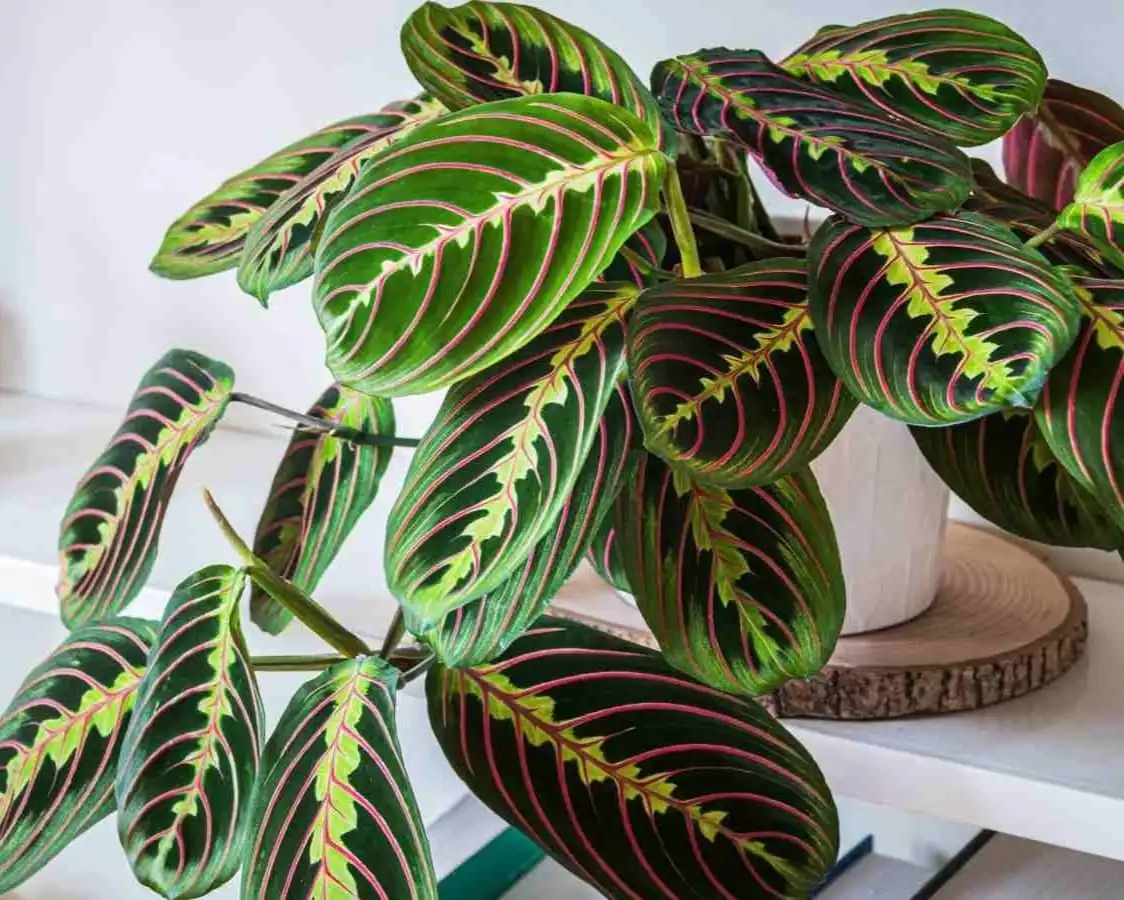
The prayer plant (Maranta leuconeura) grows well in India if you give it bright indirect light, evenly moist soil, filtered water and as much humidity as you can manage. Its patterned leaves fold upward at night like hands in prayer, which is how it got its name. It is a little fussier than a snake plant or pothos, but easy once you know the three things it hates: direct sun, dry air and salty tap water.
Maranta, calathea and the “prayer plant” name
Maranta leuconeura is the true prayer plant. Its relatives in the same family, such as calathea, also raise and lower their leaves with the light, so they are often sold under the same name. Care is very similar. The red-veined form is called Maranta leuconeura var. erythroneura, or the fascinator.
Quick care facts
- Light: bright indirect light or light shade. No direct sun.
- Water: keep the soil lightly moist, and water when the top 2 to 3 cm is dry. Use filtered, rain or settled water if you can.
- Humidity: likes it humid. Group it with other plants or use a pebble tray.
- Temperature: about 18 to 28 degrees C. Keep it away from cold draughts and strong AC air.
- Soil: airy, slightly acidic mix, for example potting soil with coco peat and perlite.
- Feeding: half-strength liquid fertiliser once a month in spring and the monsoon.
- Pets: listed as non-toxic to cats and dogs by the ASPCA.
Light
Direct sun fades the pattern and scorches the leaves. A spot a few feet from an east or north window works well. In low light the plant survives, but the colours look dull and growth slows. The leaves move with the day and fold up at night, which is normal and not a sign of a problem.
Watering and water quality
Prayer plants like steady moisture, not a soggy pot and not a dry one. Water when the top 2 to 3 cm of soil feels dry and let the extra drain away. They are sensitive to the salts and chlorine in some tap water, which cause brown leaf tips. If you see this, switch to filtered or rain water and flush the soil with plain water every few months. In winter, water less often.
Humidity
Dry indoor air, especially in AC rooms and in winter in the north, is the main cause of crispy brown edges. Keep the plant in a room that is not too dry, group it with other plants, or place the pot on a tray of wet pebbles with the pot sitting above the water. A bathroom with a bright window also suits it.
Soil, pot and repotting
Use a light, airy mix that holds some moisture but drains quickly. A shallow, wide pot with drainage holes suits its roots. Repot every year or two in spring, going up only one pot size.
Feeding and grooming
Feed at half strength once a month in the growing season. Trim any fully brown leaves at the base. Pinching the long stems makes the plant bushier.
Common problems and fixes
- Brown tips and edges: dry air or salty water. Raise humidity and use filtered water.
- Curling leaves: the plant is thirsty or the air is too dry. Check the soil and humidity.
- Yellow leaves: overwatering or cold. Let the top soil dry a little and move away from draughts.
- Faded pattern: too much sun. Move it to softer light.
- Fine webbing and speckled leaves: spider mites, common in dry air. Wipe the leaves, rinse the plant and raise humidity.
- Leaves that stay folded in the day: usually too dry, too cold or too dark.
Where to buy prayer plants in India
Our range of Maranta prayer plants and calathea changes with stock, so check the shop for what is available now. The red vein prayer plant has a page too. Orders are dispatched within 5 days of the order, and the courier usually delivers in 3 to 5 working days after dispatch, with tracking by WhatsApp or SMS. For easier plants, see our best indoor plants for beginners.
Frequently asked questions
Why do prayer plant leaves fold up at night?
It is a natural daily movement that follows light. The leaves lie flat in the day and fold upward at night.
How often should I water a prayer plant?
Water when the top 2 to 3 cm of soil is dry, which is often about once a week in warm months and less in winter. Check the soil rather than following a fixed schedule.
Why are the tips of my prayer plant brown?
Usually dry air or salts in the water. Raise humidity and use filtered or rain water.
Can a prayer plant live in low light?
It can survive in light shade, but the colours fade and growth slows. Bright indirect light is best.
Is the prayer plant safe for pets?
It is listed as non-toxic to cats and dogs by the ASPCA, but it is best to stop pets from chewing any plant.
 PEBBLES
 PLANTS GROWTH
 Planting Materials