


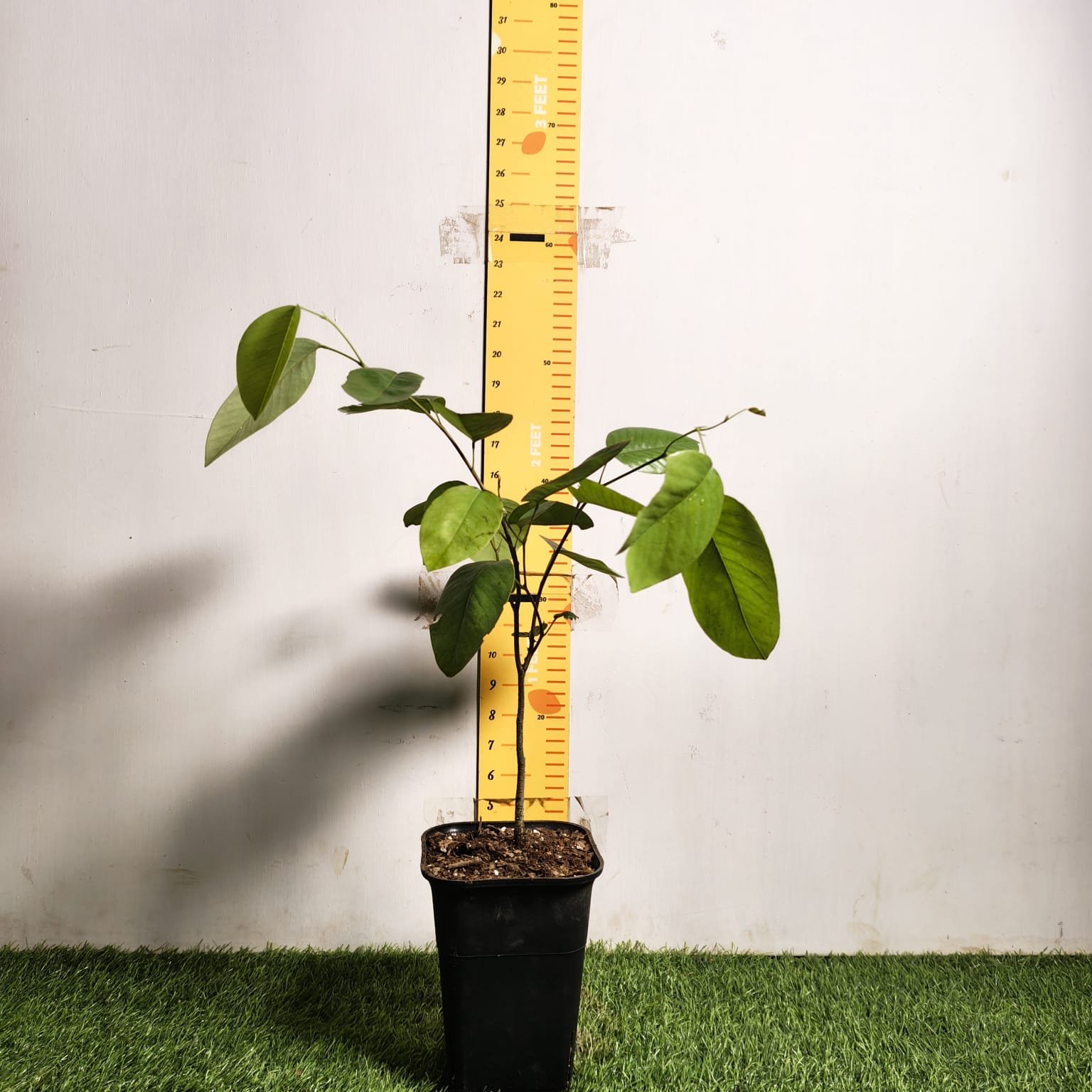
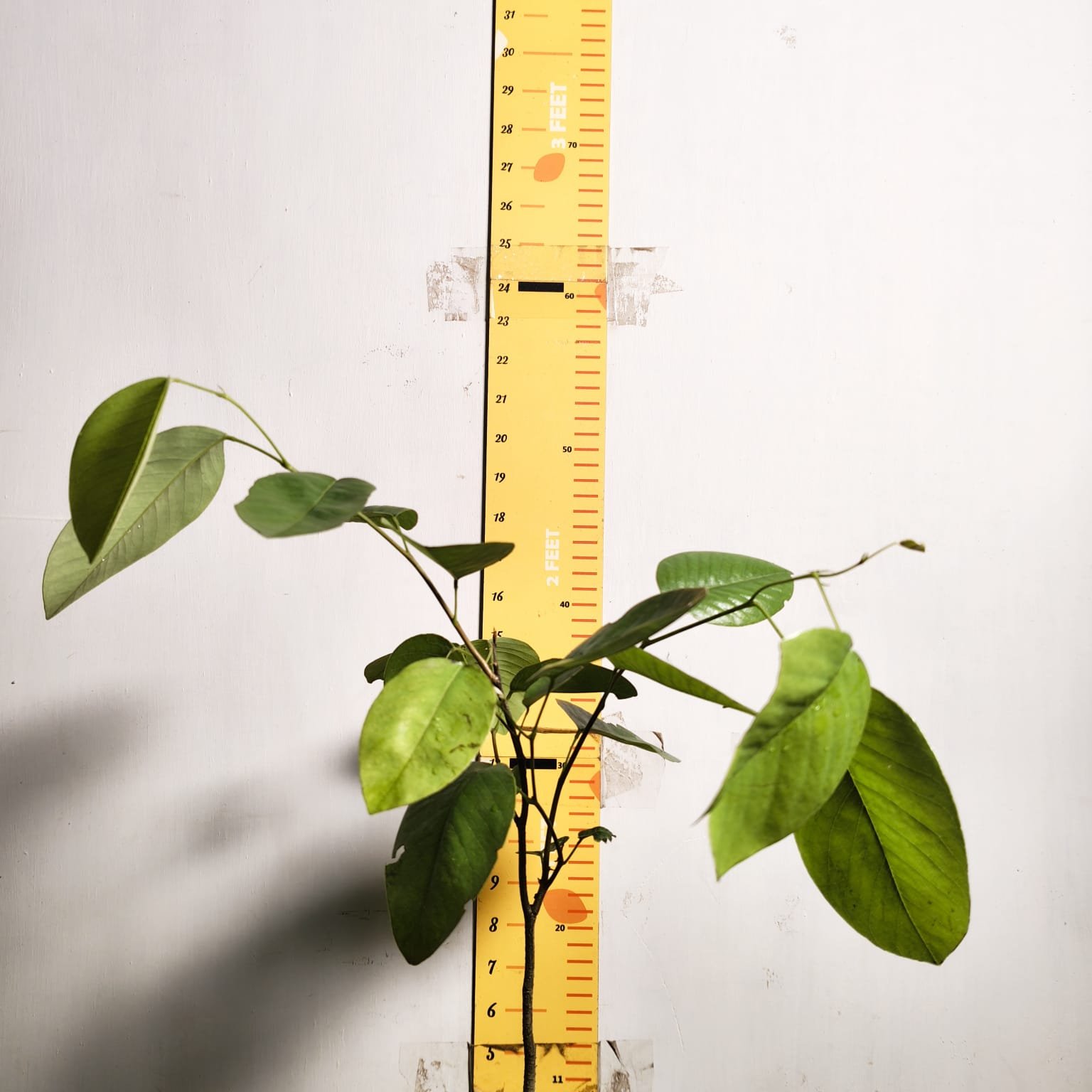
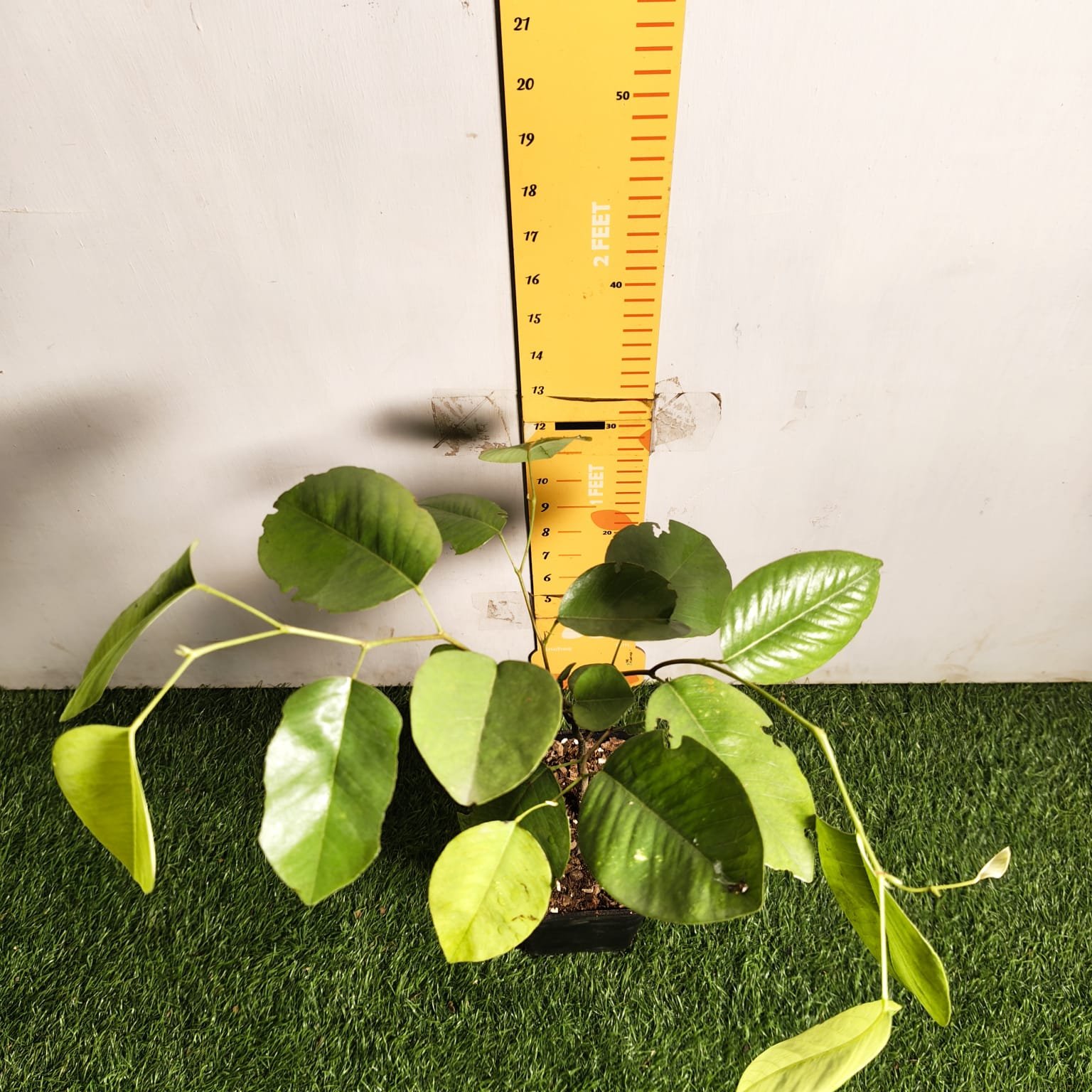
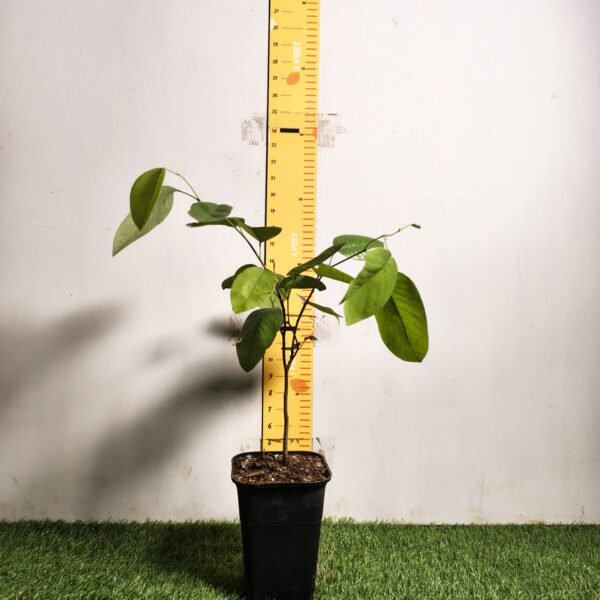
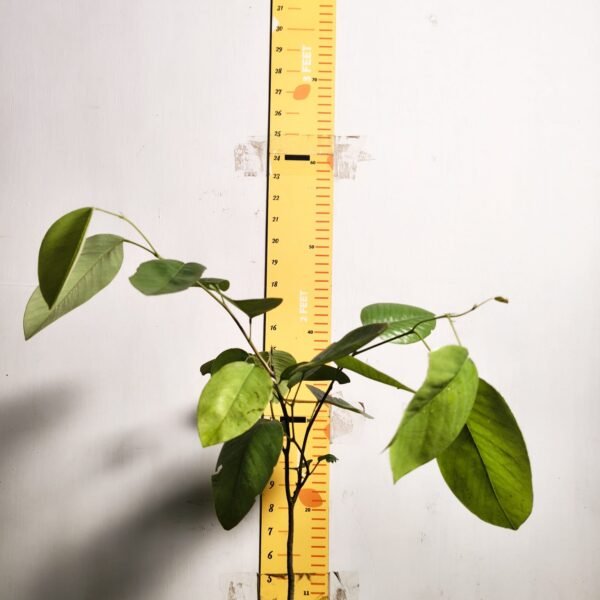
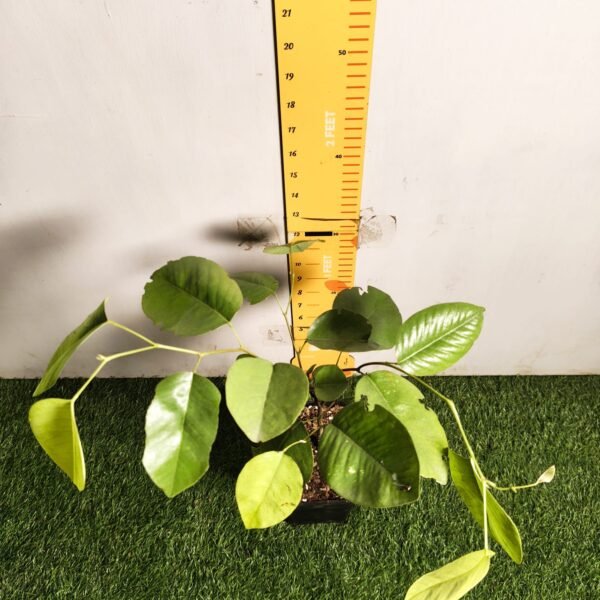
Red sandalwood (Pterocarpus santalinus)
₹149.00

30 Days Replacement & Refund Guarantee
🌱 Bought for the right climate zone? You're fully covered with our 30-day replacement & refund guarantee!
- 🌳 Native red-heartwood tree of the Eastern Ghats — reaches 5–8 m in cultivation
- ☀️ Full sun all day; it will not develop properly in shade
- 💧 Water weekly while young, then almost never — very drought hardy once established
- 🌡️ Temperature Tolerance: 7°C – 46°C (grows best where the mean annual temperature is 26–32°C; killed below 0°C)
- 📐 Needs no host plant, unlike white sandalwood — and fixes its own nitrogen
- 🏆 Thrives in poor, gravelly soil where most trees fail
₹149.00
In stock
In stock
Description
Red Sandalwood Plant
Pterocarpus santalinus — the red-heartwood tree of the Eastern Ghats. Slow, drought-hardy, and unmistakable once mature.
The Red Heartwood of South India
Pterocarpus santalinus — red sandalwood, red sanders, raktachandan — grows wild only in a narrow belt of the Eastern Ghats across Andhra Pradesh, Tamil Nadu and Karnataka. It is valued for dense, deep red heartwood, a colour that develops slowly over decades.
It is not the aromatic white sandalwood (Santalum album): red sanders has no scent and is not a root parasite, so it needs no host plant. It is a straightforward dry-country tree — full sun, sharp drainage, and patience.
Wood and Growth Habit
Growth is genuinely slow — roughly a metre a year in good conditions, and decades before heartwood colour develops. The tree reaches 5–8 m in cultivation. Being a legume it fixes its own nitrogen and copes with poor, gravelly ground that would defeat most trees.
Key Features
🌱 Recommended Potting Mix
A gritty, sand-led mix — the same recipe we use for white sandalwood.
Potting Mix
What is Garden Soil?
Clean, fertile and loose topsoil collected from a healthy garden or cultivation area.
- Loose and easy to crumble
- Free from stones and waste
- Not extremely hard or sticky
- Able to drain excess water
- Loamy soil is preferred
If your garden soil is sticky or clay-heavy, increase the river sand or perlite share and reduce the cocopeat by the same amount.
Drainage channels; stops compaction.
Slow-release nutrients and microbes.
Holds moisture, keeps the mix light.
Pro Tip: Do not overwater and do not overfeed. This tree evolved on thin, stony, seasonally dry ground.
Growing and Care Guide
Simple essentials for healthy and balanced growth.
Temperature Tolerance
What this plant enjoys, what it merely survives, and where it stops.
Figures from Useful Tropical Plants (tropical.theferns.info, Pterocarpus santalinus) for the tolerance and mean-annual figures, and Antropocene.it for the −1°C limit. Habitat notes from the IUCN Red List assessment and Andhra Pradesh forest survey literature.
Climate Zone Compatibility
Where this plant performs across India’s growing zones.
|
Cold hardiness
Killed below 0°C
|
Optimal growth temp
Mean annual 26°C – 32°C
|
Winter dormancy
Semi-deciduous in the dry season
|
|
Heat stress above
Survives 45–46°C extremes
|
Ideal Indian zones
Z10 · Z11 · Z12 · Z13 · Z14 · Z15 · Z18
|
Temperature range
7°C to 46°C
|
| ✅ |
Z10 — Tropical Mid-Elevation Monsoon · Winter 9–15°C / Summer up to 38°C
Elevation 600–1,500m · Monsoon 6–7 months · Rainfall 2,500–6,000mm · Humidity 80–95%
|
| ✅ |
Z11 — Tropical Monsoon Coastal · Winter 14–24°C / Summer up to 38°C
Elevation 0–200m · Monsoon 5–6 months · Rainfall 1,400–4,000mm · No frost ever
|
| ✅ |
Z12 — Tropical Wet & Dry Savanna · Winter 11–17°C / Summer up to 40°C
Elevation 300–1,000m · Dry season 5–6 months · Rainfall 700–1,600mm · Deccan Plateau — distinct wet and dry seasons
|
| ✅ |
Z13 — Tropical WDS Hot Interior · Winter 11–18°C / Summer up to 48°C
Elevation 200–700m · Dry season 6–7 months · Rainfall 700–1,600mm · Summer scorching — 45–48°C peak
|
| ✅ |
Z14 — Tropical Wet & Dry Savanna Coastal · Winter 17–22°C / Summer up to 42°C
Elevation 0–400m · Dry season 4–5 months · Rainfall 700–2,000mm · Coastal — humid year-round
|
| ✅ |
Z15 — Tropical Semi-Arid · Winter 12–16°C / Summer up to 45°C
Elevation 450–600m · Humidity 35–75% · Rainfall 600–900mm · Dry season 7 months
|
| ✅ |
Z18 — Tropical Hot Semi-Arid · Winter 16–20°C / Summer up to 46°C
Elevation 300–800m · Dry season 7–8 months · Rainfall 500–700mm · Western Ghats rain shadow
|
| ⚠️ |
Z5 — Subtropical Monsoon · Winter 8–14°C / Summer up to 38°C
Elevation 50–600m · Monsoon 5–6 months · Rainfall 1,800–4,000mm · Humidity 75–95%
|
| ⚠️ |
Z6 — Subtropical Monsoon Highland · Winter 10–13°C / Summer up to 32°C
Elevation 800–1,400m · Monsoon 5–6 months · Rainfall 1,500–3,200mm · Dry season 5–6 months — no frost ever
|
| ⚠️ |
Z7 — Humid Subtropical · Winter 8–15°C / Summer up to 42°C
Elevation 100–700m · Dry season 3–4 months · Rainfall 800–2,200mm · Summer hot — 38–42°C
|
| ⚠️ |
Z8 — Subtropical Semi-Arid · Winter 5–12°C / Summer up to 44°C
Elevation 10–200m · Dry season 7 months · Rainfall 400–800mm · Semi-arid steppe
|
| ⚠️ |
Z16 — Subtropical Hot Semi-Arid Continental · Winter 4–13°C / Summer up to 48°C
Elevation 100–450m · Dry season 6–7 months · Rainfall 600–900mm · Summer scorching — 44–48°C peak
|
| ⚠️ |
Z17 — Subtropical Hot Arid · Winter 5–12°C / Summer up to 50°C
Elevation 200–300m · Dry season 9–10 months · Rainfall <400mm · True desert climate
|
| ❌ |
Z1 — Cold Alpine · Winter down to −20°C or below / Summer up to 20°C
Elevation 3,000–5,500m · Rainfall <300mm · Dry season 8+ months · Deep dormancy — hardiest conditions
|
| ❌ |
Z2 — Cold Hills · Winter down to 1–5°C / Summer up to 25°C
Elevation 1,800–3,000m · Rainfall 700–4,000mm · Monsoon 4–5 months · Full dormancy — excellent vigour
|
| ❌ |
Z3 — Subtropical Hills · Winter down to 3–8°C / Summer up to 28°C
Elevation 1,500–2,500m · Rainfall 800–2,500mm · Monsoon 4–5 months · Full dormancy — best colour
|
| ❌ |
Z4 — Subtropical Highland · Winter down to 0–8°C / Summer up to 33°C
Elevation 1,200–2,200m · Rainfall 500–3,600mm · Mixed monsoon · Dormancy sufficient at elevation
|
| ❌ |
Z9 — Cool Tropical Highland · Winter 5–12°C / Summer up to 28°C
Elevation 1,600–2,500m · Nilgiri Hills / Western Ghats · Rainfall 1,500–3,000mm · Monsoon 5–6 months
|
Season by Season
How to Plant
Frequently Asked Questions
Is this the same as white sandalwood?
No. White sandalwood (Santalum album) is aromatic and needs a host plant. Red sanders has no scent, needs no host, and is a different genus entirely.
How long until the wood turns red?
Decades. This is a legacy tree, not a quick crop. Growth is roughly a metre a year in good conditions.
Is it legal to grow?
Growing it is permitted. Harvesting, transporting and trading the timber is tightly regulated in India — check your state rules before felling anything.
Will it survive a north Indian winter?
Only in a pot that can be moved under cover. Frost kills it, and anything below 10°C causes stress.
Plant a Tree That Outlives You
Slow, tough and rooted in South Indian soil — red sanders is a tree for the long view.
Growth rate, heartwood development, tree size and flowering may vary depending on plant maturity, climate, sunlight, nutrition, soil and local growing conditions.
Care & Guide
Fertilizer
| Weight | 350 g |
|---|
Reviews
 Red sandalwood (Pterocarpus santalinus)
Related Products


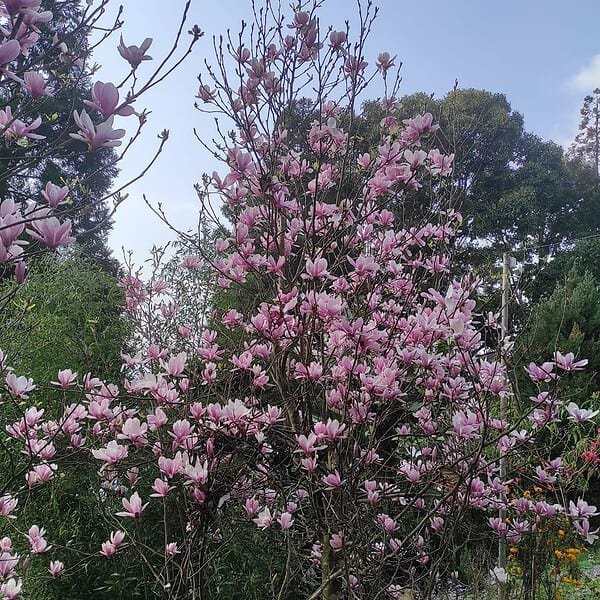
Magnolia x Soulangeana – Beautiful Flowering Tree for Your Garden
- 🌸 Breathtaking tulip-shaped blooms in soft pink-white — large, fragrant, and borne abundantly on bare branches each spring
- ☀️ Full sun to partial shade — needs at least 5–6 hours of direct sunlight for best flowering
- 💧 Water deeply once every 5–7 days; reduce in winter dormancy; never waterlog
- 🏡 Perfect for garden lawns, bungalow landscapes, driveways & cool-climate specimen planting
- 🌡️ Best for cool-to-mild Indian climate (5–30°C); ideal for Shimla, Ooty, Nainital, Srinagar & similar
- 📏 Grows 4–8 m tall, broad spreading canopy — a magnificent spring-flowering tree
- 📦 1 healthy Magnolia x Soulangeana sapling in nursery pot

 PEBBLES
 PLANTS GROWTH
 PLANTHING MATERIALS
Reviews
There are no reviews yet