

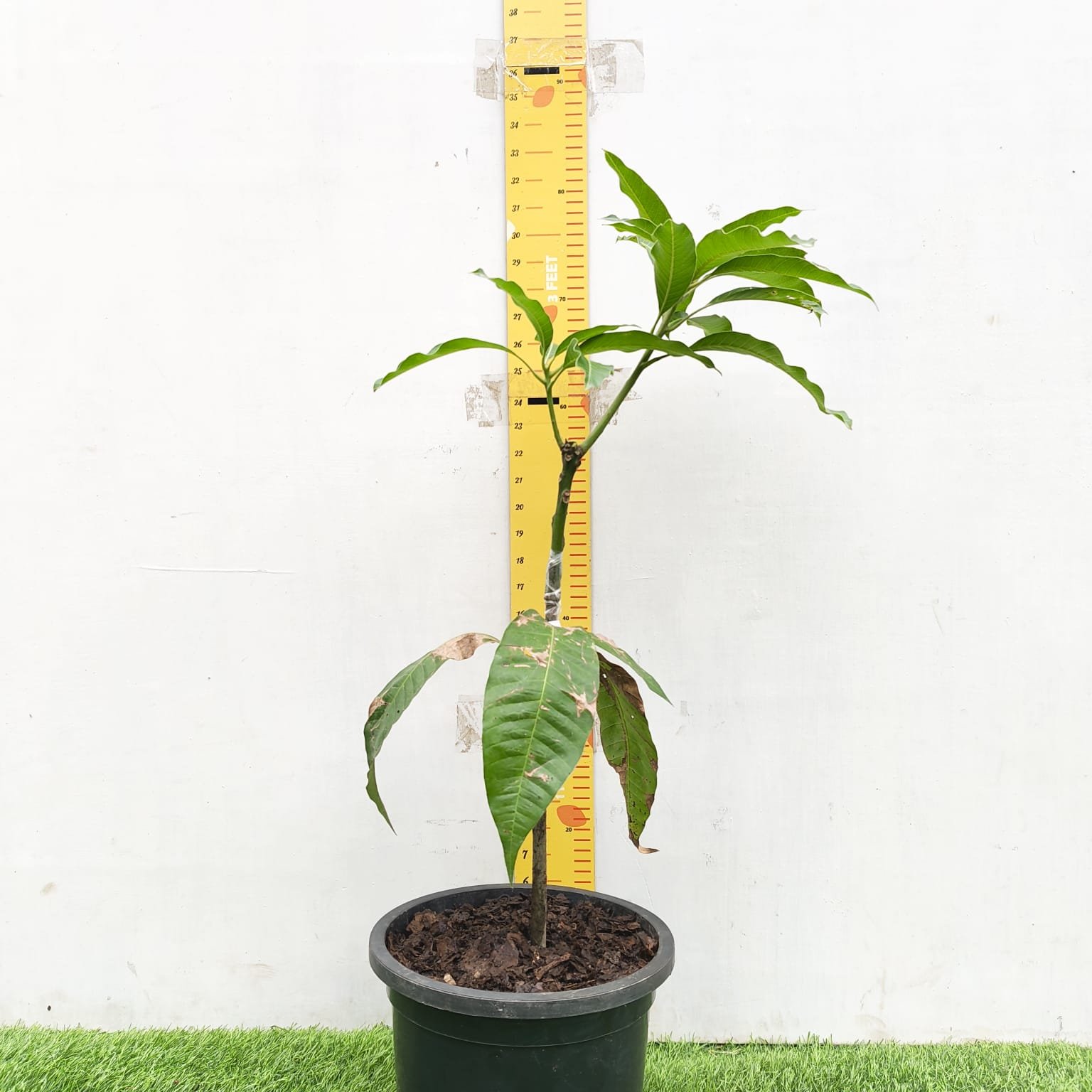
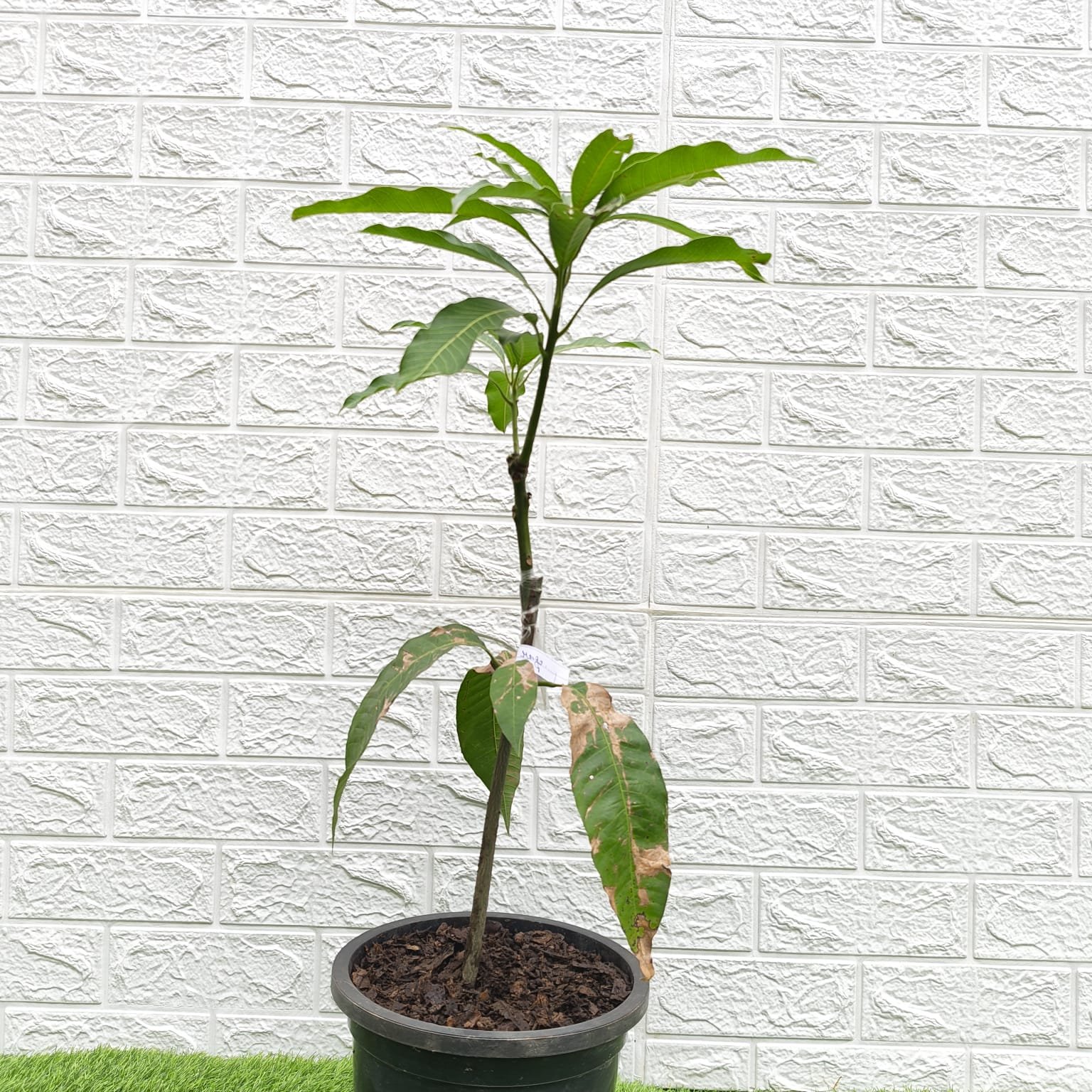
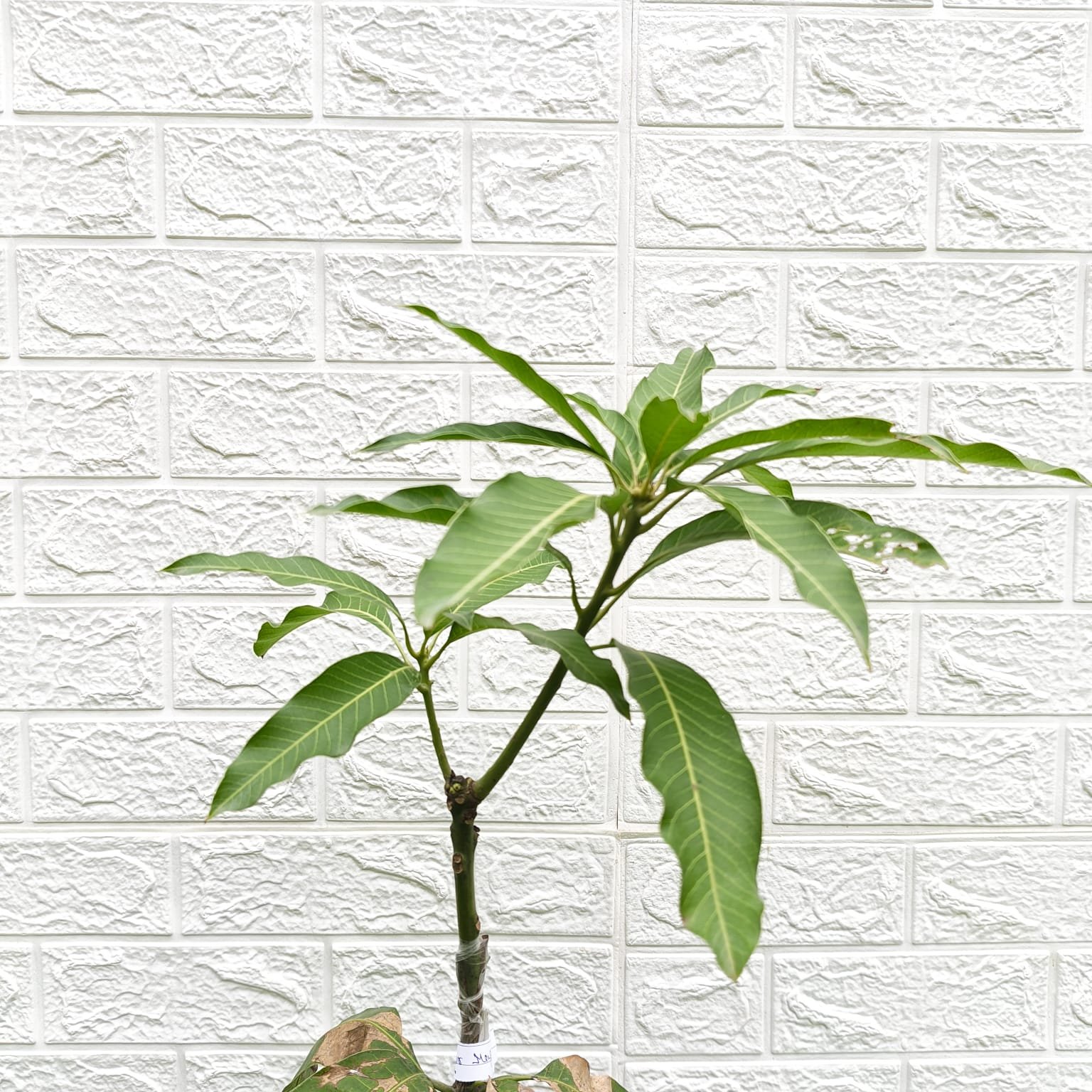
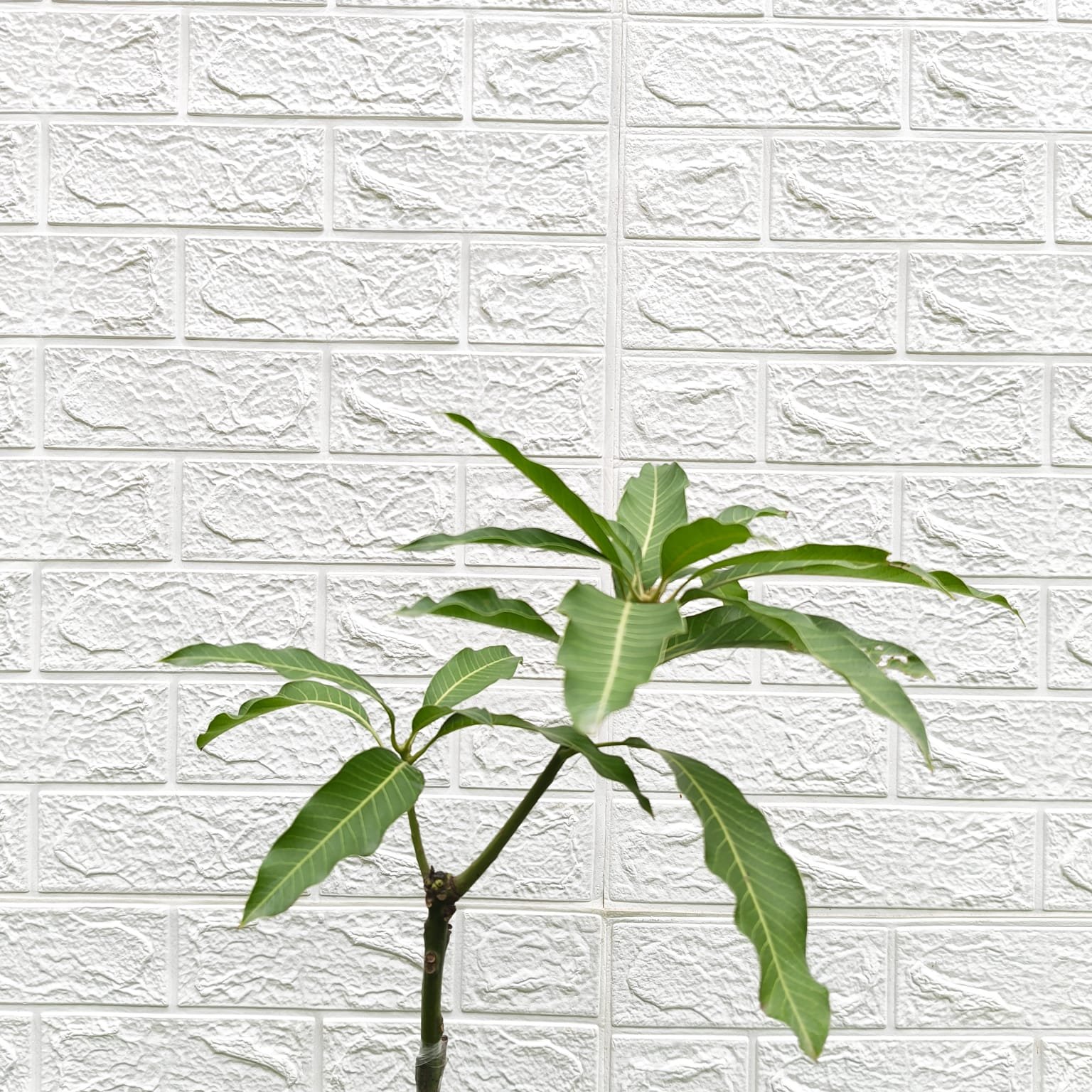
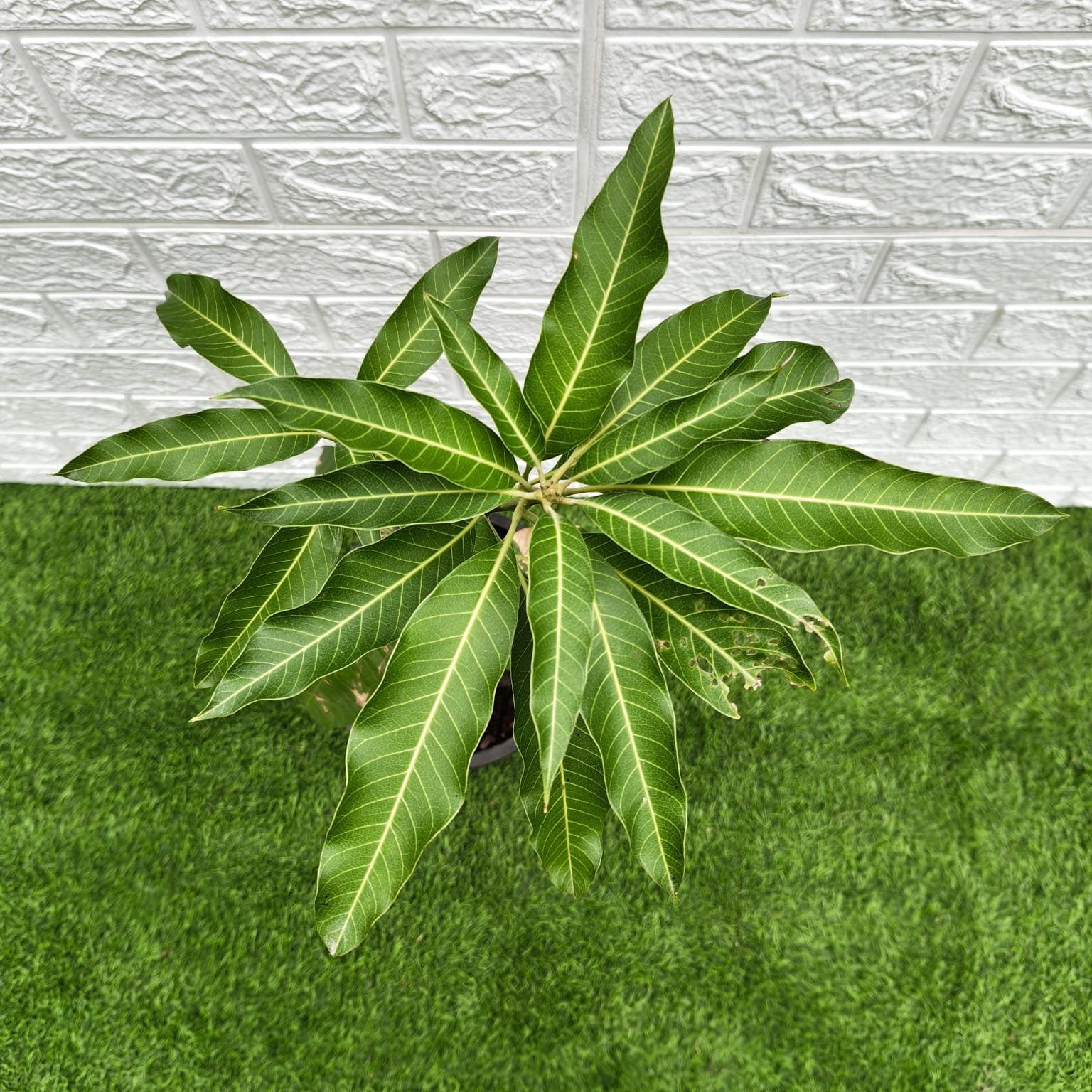
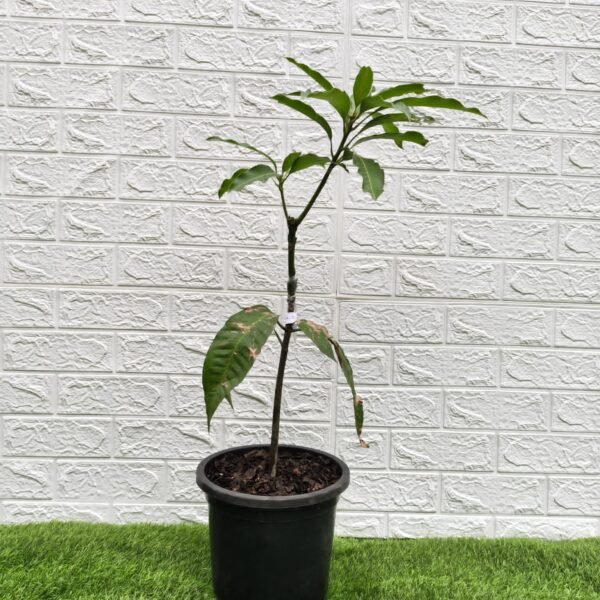
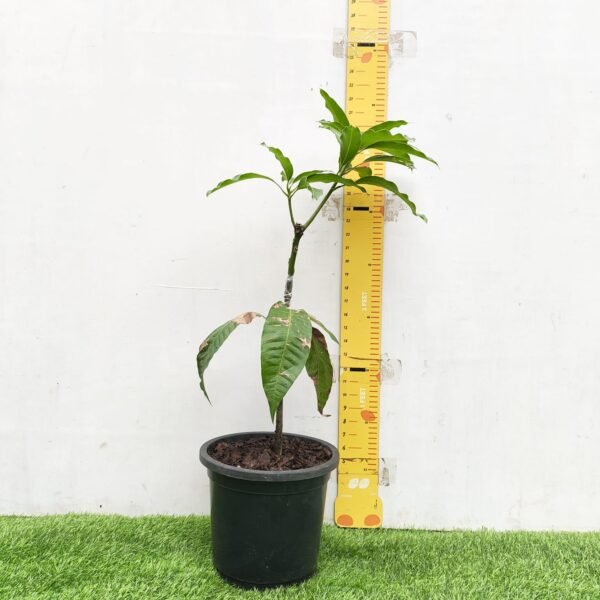
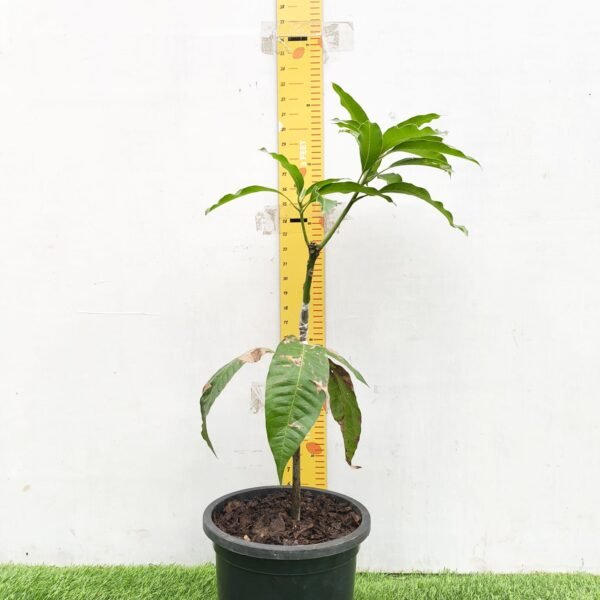
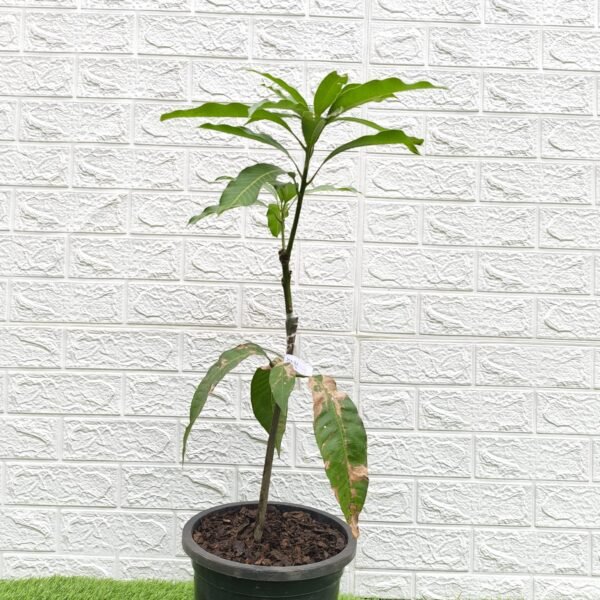
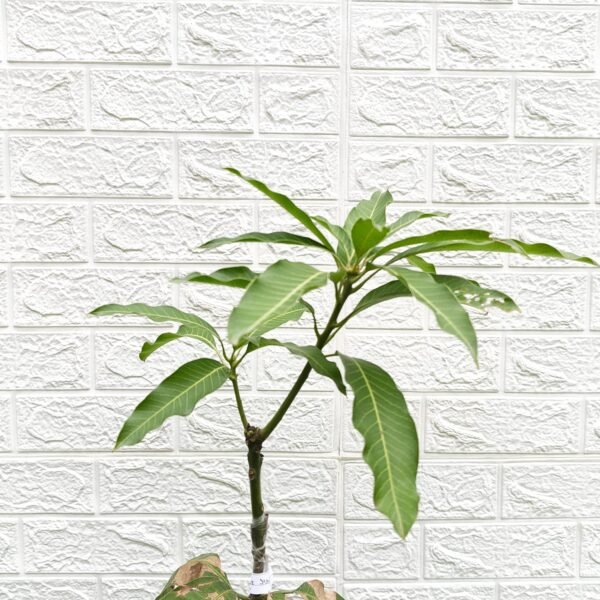
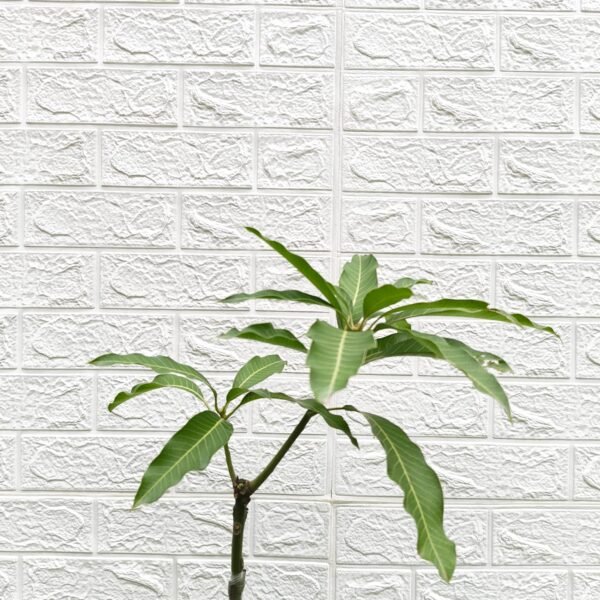
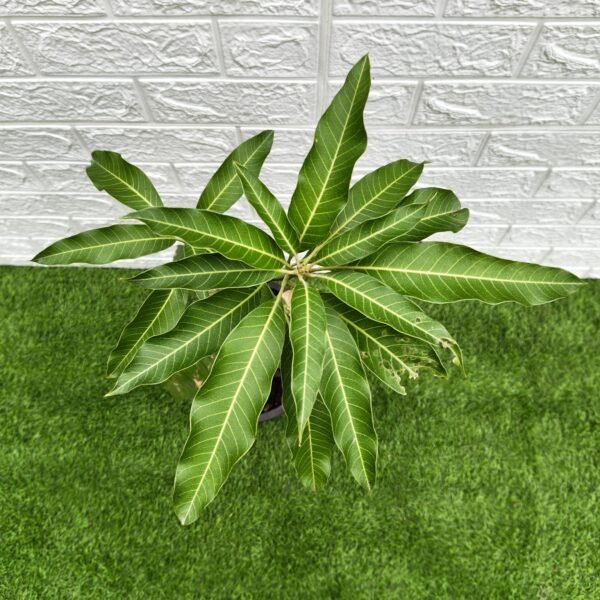
Himsagar Mango
₹349.00

30 Days Replacement & Refund Guarantee
🌱 Bought for the right climate zone? You're fully covered with our 30-day replacement & refund guarantee!
- 🥭 Completely fibreless, deep saffron pulp — Bengal’s most prized early-season mango
- ☀️ Full sun — 6 to 8 hours daily; fruiting depends directly on it
- 💧 Deep watering every 7–10 days as fruit swells; keep water off open flowers
- 🌡️ Temperature Tolerance: 0°C – 48°C (best growth 24–30°C; chilling injury below 10–12°C)
- 📐 Grafted plant — fruits in two to three years, not the decade a seedling takes
- 🏆 Small stone and thin skin give around 75% edible portion by weight
₹349.00
In stock
In stock
Description
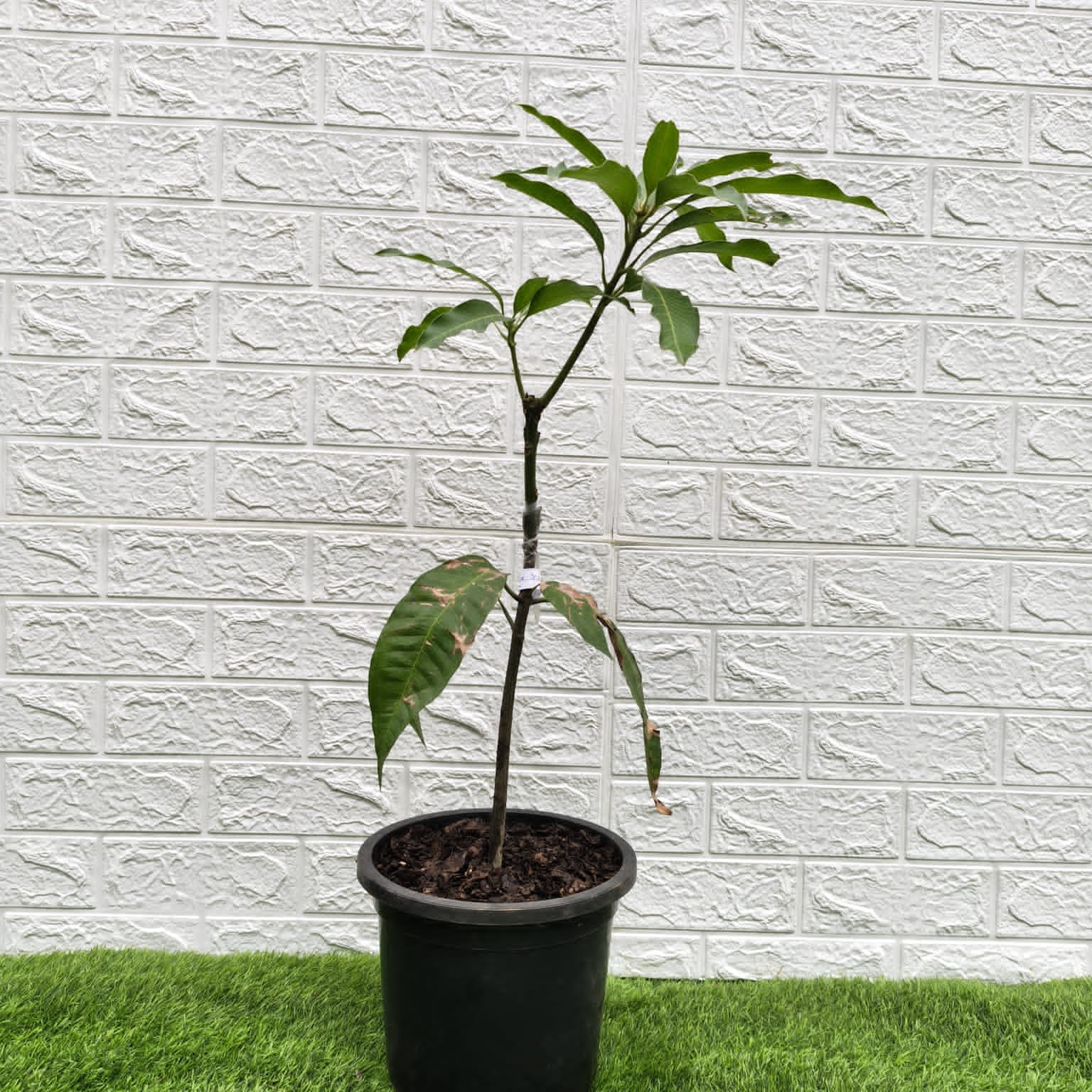
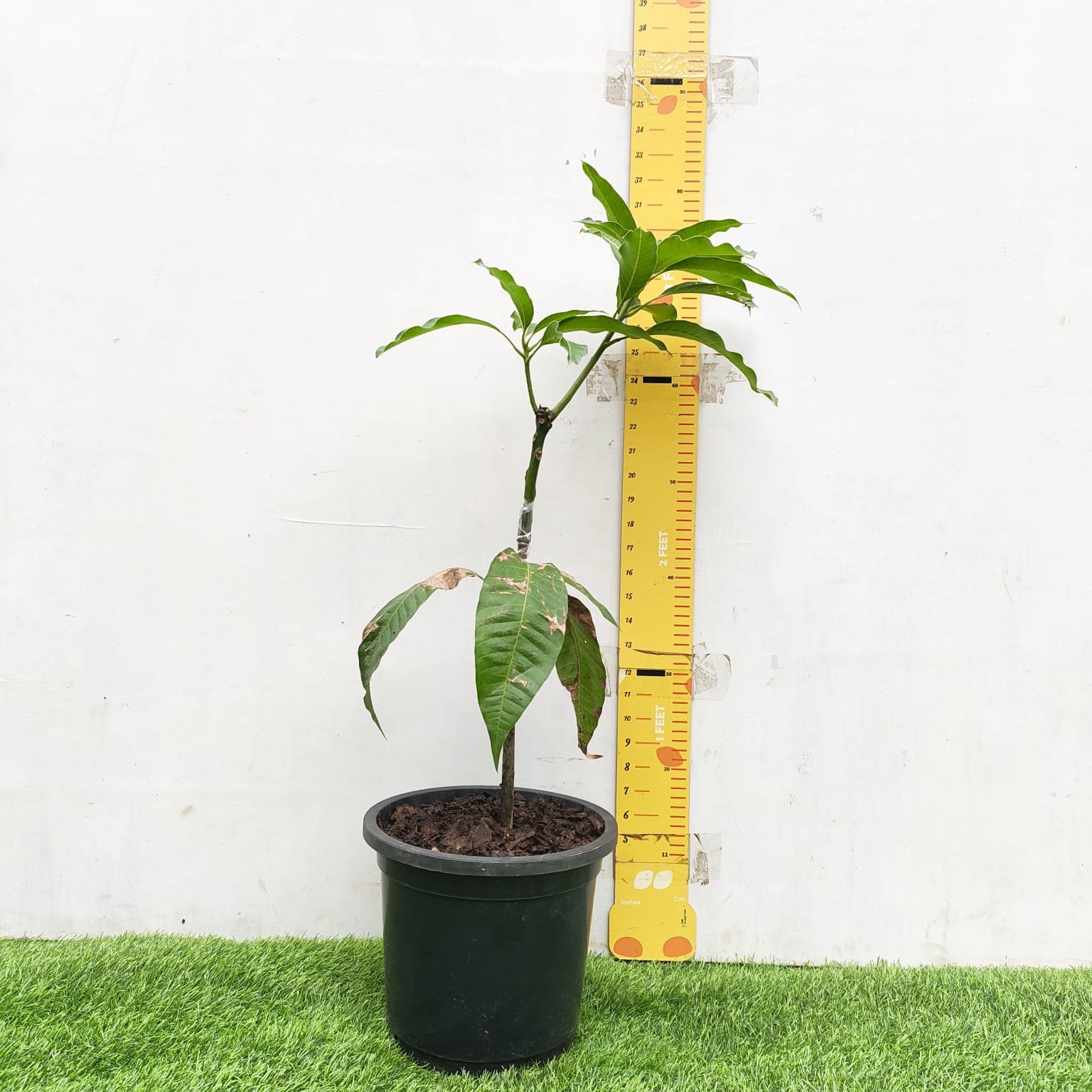
Himsagar Mango Plant
Bengal’s most loved mango — fibreless, intensely sweet, with a small stone and a very high edible portion. Grafted, so it fruits in two to three years.
The Pride of Bengal
Himsagar is the mango West Bengal and Bangladesh argue over. It ripens early, from mid-May, and is prized for pulp that is completely fibreless, deep saffron-orange, and sweet without being cloying.
The stone is unusually small and the skin thin, which gives Himsagar one of the highest edible portions of any Indian mango — most of what you hold is fruit. This is a grafted plant, so it carries the true variety and begins fruiting in two to three years rather than the decade a seedling takes.
Fruit Quality
Fruits weigh roughly 250–350 g with green-to-yellow skin. The pulp is fibreless, firm and deep orange, with high sugar and a distinct aroma. Because the stone is small and the skin thin, the edible portion is around 75–77% of the fruit by weight.
Key Features
🌱 Recommended Potting Mix
Our Bari-13 mango mix, with bone meal and neem cake added for a fruiting tree in a pot.
Potting Mix
What is Garden Soil?
Clean, fertile and loose topsoil collected from a healthy garden or cultivation area.
- Loose and easy to crumble
- Free from stones and waste
- Not extremely hard or sticky
- Able to drain excess water
- Loamy soil is preferred
If your garden soil is sticky or clay-heavy, increase the river sand or perlite share and reduce the cocopeat by the same amount.
Slow-release nutrients and microbes.
Holds moisture, keeps the mix light.
Drainage channels; stops compaction.
Slow phosphorus for roots and blooms.
Feeds slowly and deters soil pests.
Pro Tip: Do not water while the tree is flowering — wet flowers drop. Resume once fruit has set.
Growing and Care Guide
Simple essentials for healthy and balanced growth.
Temperature Tolerance
What this plant enjoys, what it merely survives, and where it stops.
Figures from Useful Tropical Plants (Mangifera indica) for the 24–30°C best-growth range and the 8–48°C tolerance; PubMed 14975891 for seedling growth peaking near 30°C; PMC9837111 for pollen germination and pollen tube optima; and University of Hawaii System, ResearchGate and IgMin Research as summarised by Google for the cold and heat thresholds.
Climate Zone Compatibility
Where this plant performs across India’s growing zones.
|
Cold hardiness
Chilling below 10–12°C · lethal at 0°C
|
Optimal growth temp
24°C – 30°C
|
Winter dormancy
None — evergreen
|
|
Heat stress above
40°C (104°F)
|
Ideal Indian zones
Z5 · Z7 · Z10 · Z11 · Z12 · Z13 · Z14 · Z15 · Z18
|
Temperature range
0°C to 48°C
|
| ✅ |
Z5 — Subtropical Monsoon · Winter 8–14°C / Summer up to 38°C
Elevation 50–600m · Monsoon 5–6 months · Rainfall 1,800–4,000mm · Humidity 75–95%
|
| ✅ |
Z7 — Humid Subtropical · Winter 8–15°C / Summer up to 42°C
Elevation 100–700m · Dry season 3–4 months · Rainfall 800–2,200mm · Summer hot — 38–42°C
|
| ✅ |
Z10 — Tropical Mid-Elevation Monsoon · Winter 9–15°C / Summer up to 38°C
Elevation 600–1,500m · Monsoon 6–7 months · Rainfall 2,500–6,000mm · Humidity 80–95%
|
| ✅ |
Z11 — Tropical Monsoon Coastal · Winter 14–24°C / Summer up to 38°C
Elevation 0–200m · Monsoon 5–6 months · Rainfall 1,400–4,000mm · No frost ever
|
| ✅ |
Z12 — Tropical Wet & Dry Savanna · Winter 11–17°C / Summer up to 40°C
Elevation 300–1,000m · Dry season 5–6 months · Rainfall 700–1,600mm · Deccan Plateau — distinct wet and dry seasons
|
| ✅ |
Z13 — Tropical WDS Hot Interior · Winter 11–18°C / Summer up to 48°C
Elevation 200–700m · Dry season 6–7 months · Rainfall 700–1,600mm · Summer scorching — 45–48°C peak
|
| ✅ |
Z14 — Tropical Wet & Dry Savanna Coastal · Winter 17–22°C / Summer up to 42°C
Elevation 0–400m · Dry season 4–5 months · Rainfall 700–2,000mm · Coastal — humid year-round
|
| ✅ |
Z15 — Tropical Semi-Arid · Winter 12–16°C / Summer up to 45°C
Elevation 450–600m · Humidity 35–75% · Rainfall 600–900mm · Dry season 7 months
|
| ✅ |
Z18 — Tropical Hot Semi-Arid · Winter 16–20°C / Summer up to 46°C
Elevation 300–800m · Dry season 7–8 months · Rainfall 500–700mm · Western Ghats rain shadow
|
| ⚠️ |
Z6 — Subtropical Monsoon Highland · Winter 10–13°C / Summer up to 32°C
Elevation 800–1,400m · Monsoon 5–6 months · Rainfall 1,500–3,200mm · Dry season 5–6 months — no frost ever
|
| ⚠️ |
Z8 — Subtropical Semi-Arid · Winter 5–12°C / Summer up to 44°C
Elevation 10–200m · Dry season 7 months · Rainfall 400–800mm · Semi-arid steppe
|
| ⚠️ |
Z9 — Cool Tropical Highland · Winter 5–12°C / Summer up to 28°C
Elevation 1,600–2,500m · Nilgiri Hills / Western Ghats · Rainfall 1,500–3,000mm · Monsoon 5–6 months
|
| ⚠️ |
Z16 — Subtropical Hot Semi-Arid Continental · Winter 4–13°C / Summer up to 48°C
Elevation 100–450m · Dry season 6–7 months · Rainfall 600–900mm · Summer scorching — 44–48°C peak
|
| ⚠️ |
Z17 — Subtropical Hot Arid · Winter 5–12°C / Summer up to 50°C
Elevation 200–300m · Dry season 9–10 months · Rainfall <400mm · True desert climate
|
| ❌ |
Z1 — Cold Alpine · Winter down to −20°C or below / Summer up to 20°C
Elevation 3,000–5,500m · Rainfall <300mm · Dry season 8+ months · Deep dormancy — hardiest conditions
|
| ❌ |
Z2 — Cold Hills · Winter down to 1–5°C / Summer up to 25°C
Elevation 1,800–3,000m · Rainfall 700–4,000mm · Monsoon 4–5 months · Full dormancy — excellent vigour
|
| ❌ |
Z3 — Subtropical Hills · Winter down to 3–8°C / Summer up to 28°C
Elevation 1,500–2,500m · Rainfall 800–2,500mm · Monsoon 4–5 months · Full dormancy — best colour
|
| ❌ |
Z4 — Subtropical Highland · Winter down to 0–8°C / Summer up to 33°C
Elevation 1,200–2,200m · Rainfall 500–3,600mm · Mixed monsoon · Dormancy sufficient at elevation
|
Season by Season
How to Plant
Frequently Asked Questions
When will it start fruiting?
Two to three years for a grafted plant in good conditions. A seedling would take eight to ten.
Can I grow it outside Bengal?
Yes — it fruits well across warm, humid India. It needs a cool dry winter spell to flower properly, so it does best where December and January are distinctly cooler.
Can it be grown in a pot?
Yes, in a 60 cm or larger container, though fruit size and yield will be smaller than in the ground.
Why did the flowers drop without setting fruit?
Usually rain or irrigation on open flowers, or a hopper attack. Keep water off the panicles and inspect them weekly.
The Mango Bengal Waits All Year For
Fibreless, intensely sweet, and a grafted plant that fruits in two to three years.
Fruiting time, yield, fruit size, sweetness and plant growth may vary depending on plant maturity, climate, sunlight, nutrition, soil and local growing conditions.
Care & Guide
Fertilizer
| Weight | 1000 g |
|---|
Reviews
 Himsagar Mango
Related Products
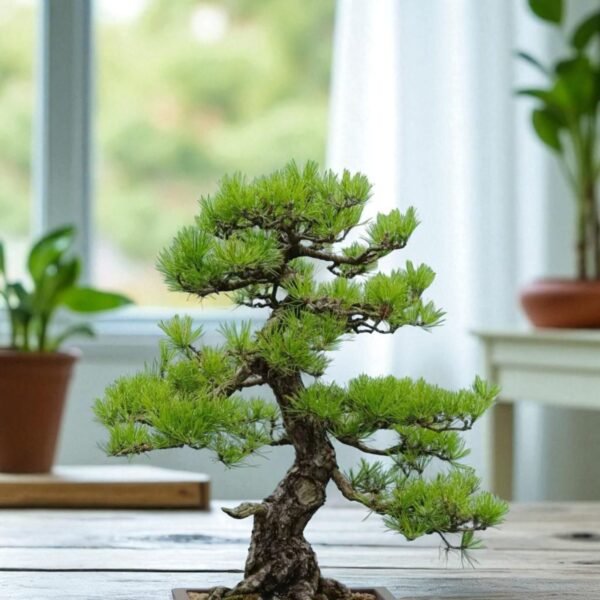
Japanese Black Pine (Pinus Thunbergii) – Resilient Evergreen Tree for Landscaping and Bonsai
| Placement | Outdoor |
| Sun Exposure | Full |
| Ideal Temperature | 15 to 35° Celsius |
| Min-Max Temperature | -5 to 41° Celsius |
| Soil Type | Well drain, moisture-retentive soil + garden compost or well-rotted manure. |
| Soil pH | neutral to slightly alkaline (between 6.5 and 7.5. ) |
First Image is for reference only. Actual images are shown in select height option.


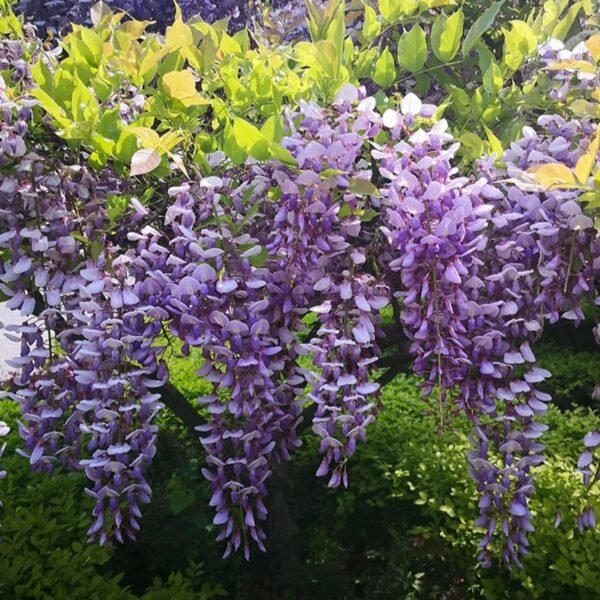
Wisteria Sinensis (Purple) – Fragrant Climbing Vine | Garden Decor
- 🌸 Fragrant cascading flower clusters 15–30 cm long — drooping blue-violet to lavender-purple blooms with a distinctive grape-like scent
- ☀️ Full sun required — at least 6 hours of direct sunlight daily; partial shade reduces or prevents flowering
- 💧 About 1 inch (~25 mm) of water per week — keep soil consistently moist but never waterlogged; well-drained soil essential
- 🌡️ Adaptable across cold to warm climates (−29°C to 43°C); needs a defined cold season to set flower buds reliably
- 📐 Vigorous woody climber — 6–10 m (20–30 ft) in cultivation, twining counterclockwise around any sturdy support
- 🏆 Long-lived perennial — can thrive for over a century with proper pruning, becoming more spectacular each year
 PEBBLES
 PLANTS GROWTH
 PLANTHING MATERIALS
Reviews
There are no reviews yet