













FLOWERING TREE
Black Diamond White Crape Myrtle
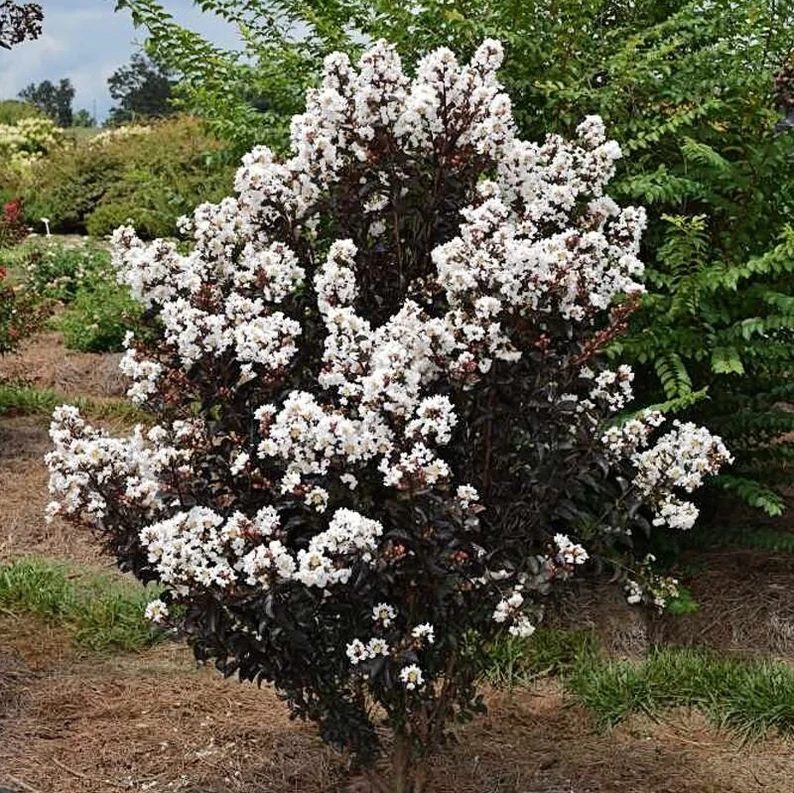
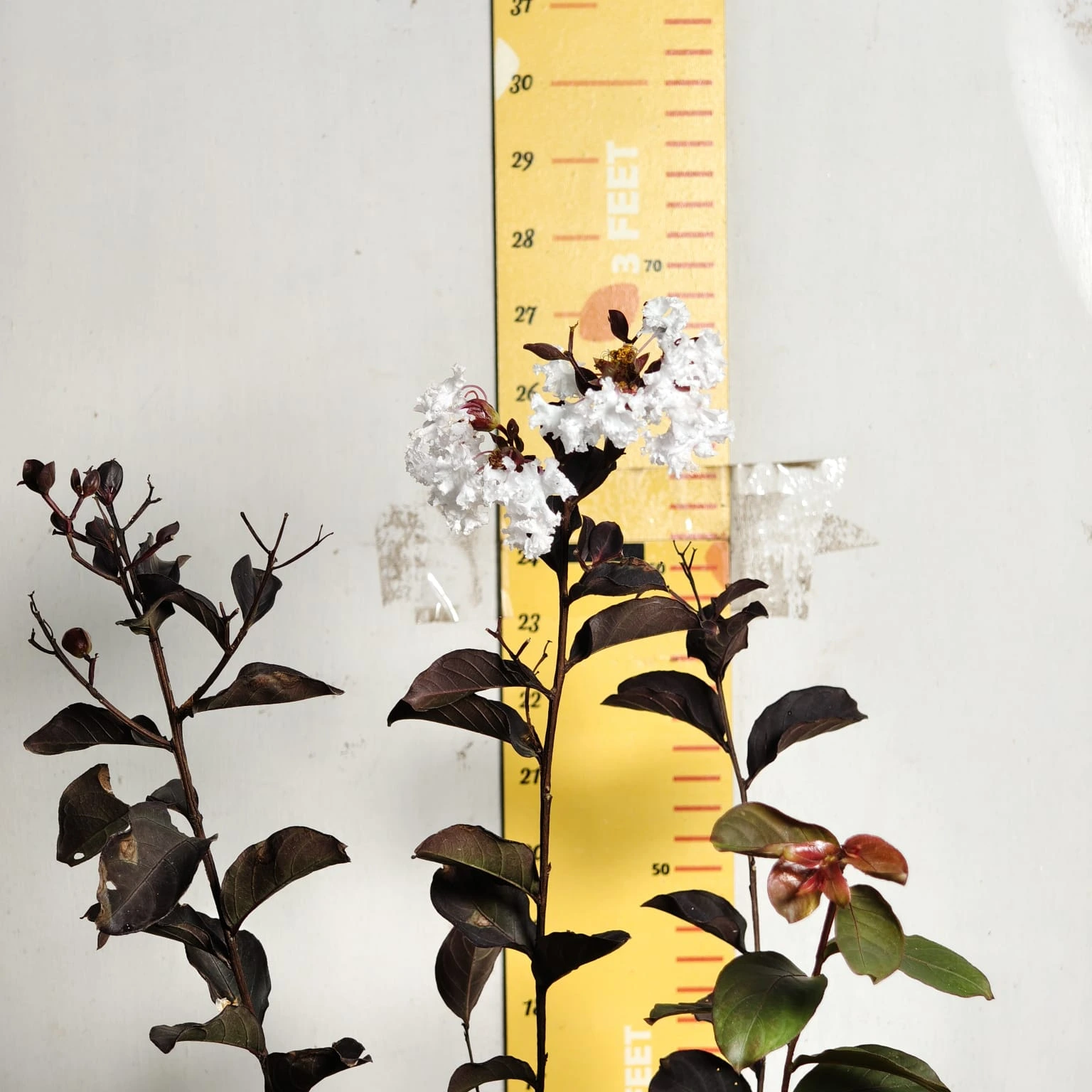
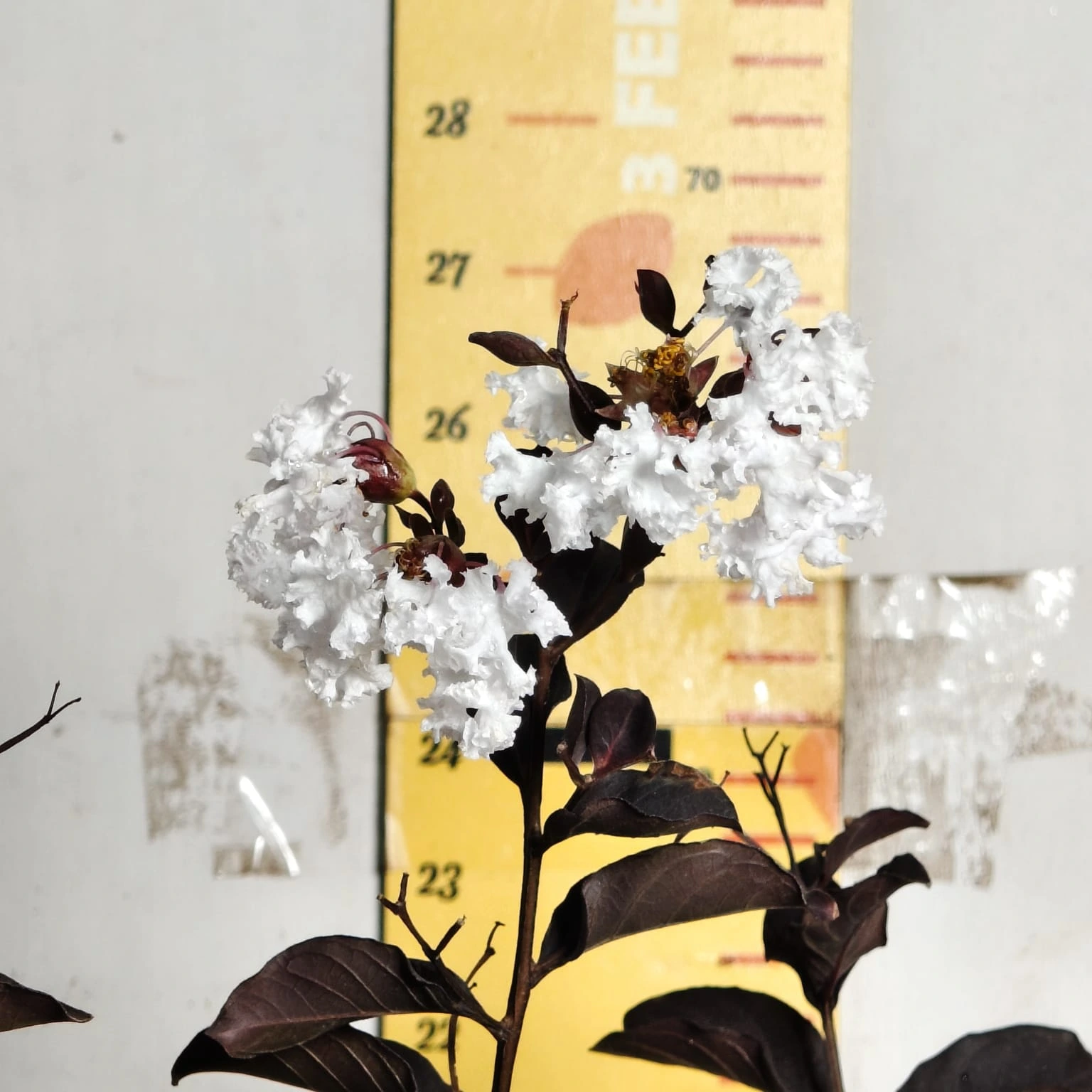
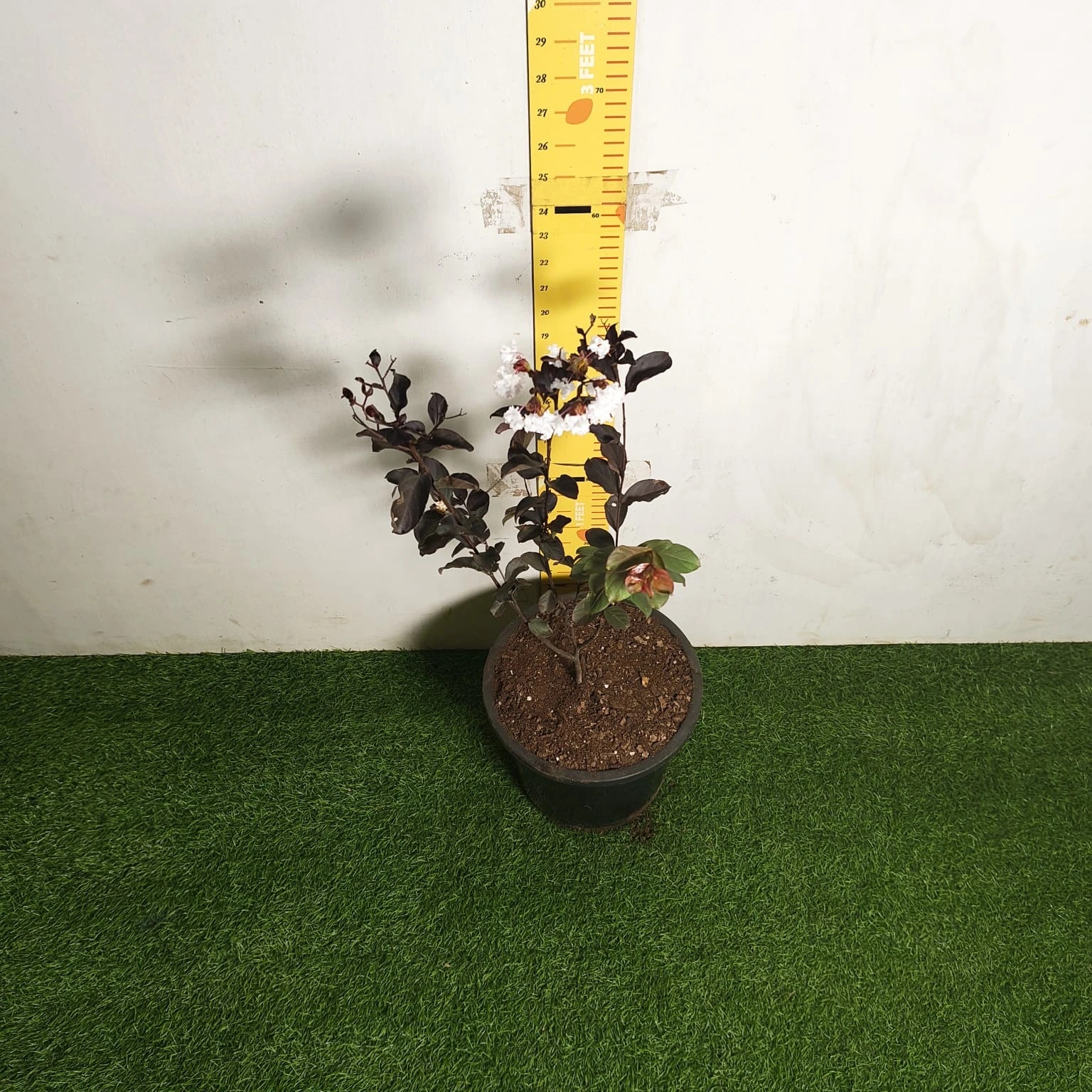
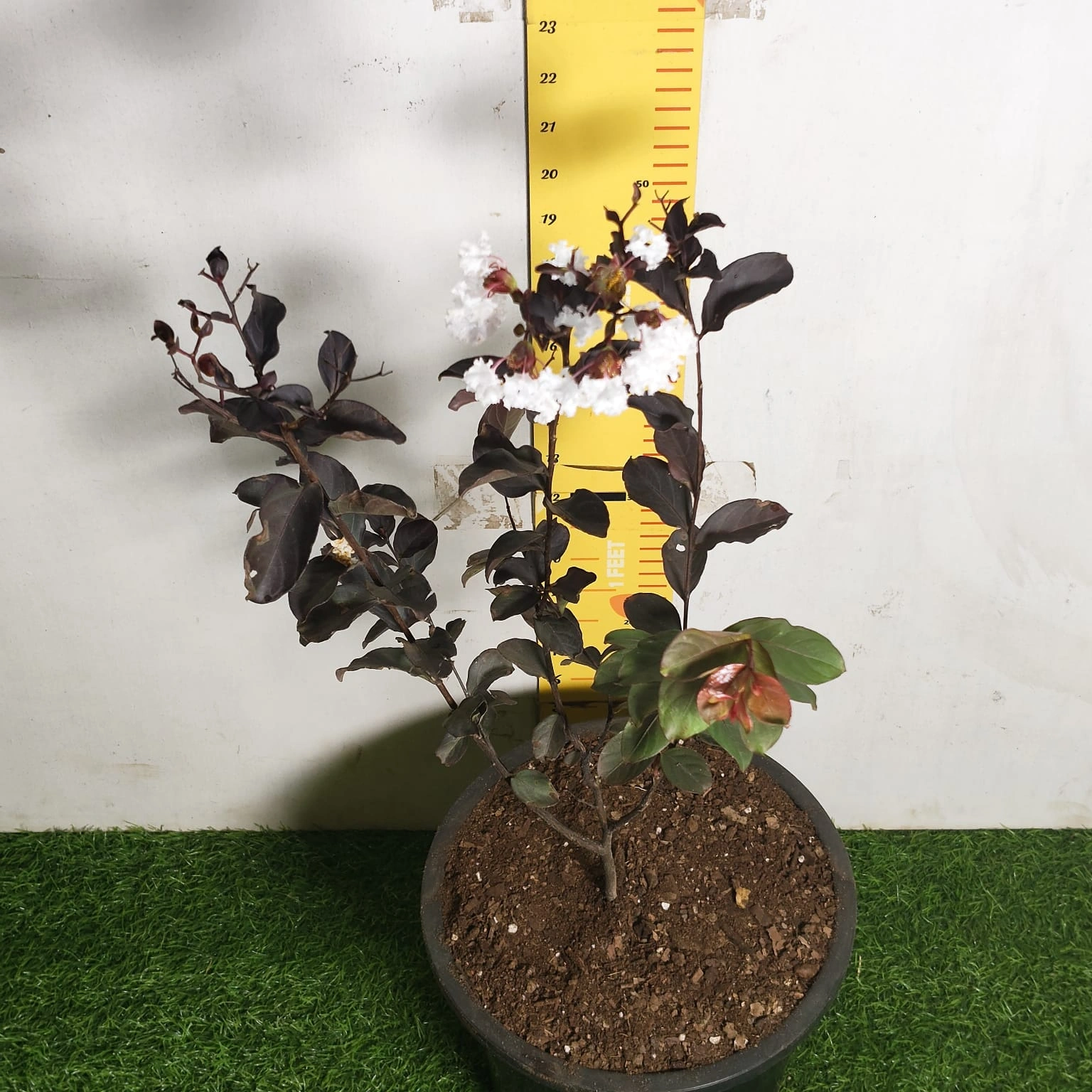
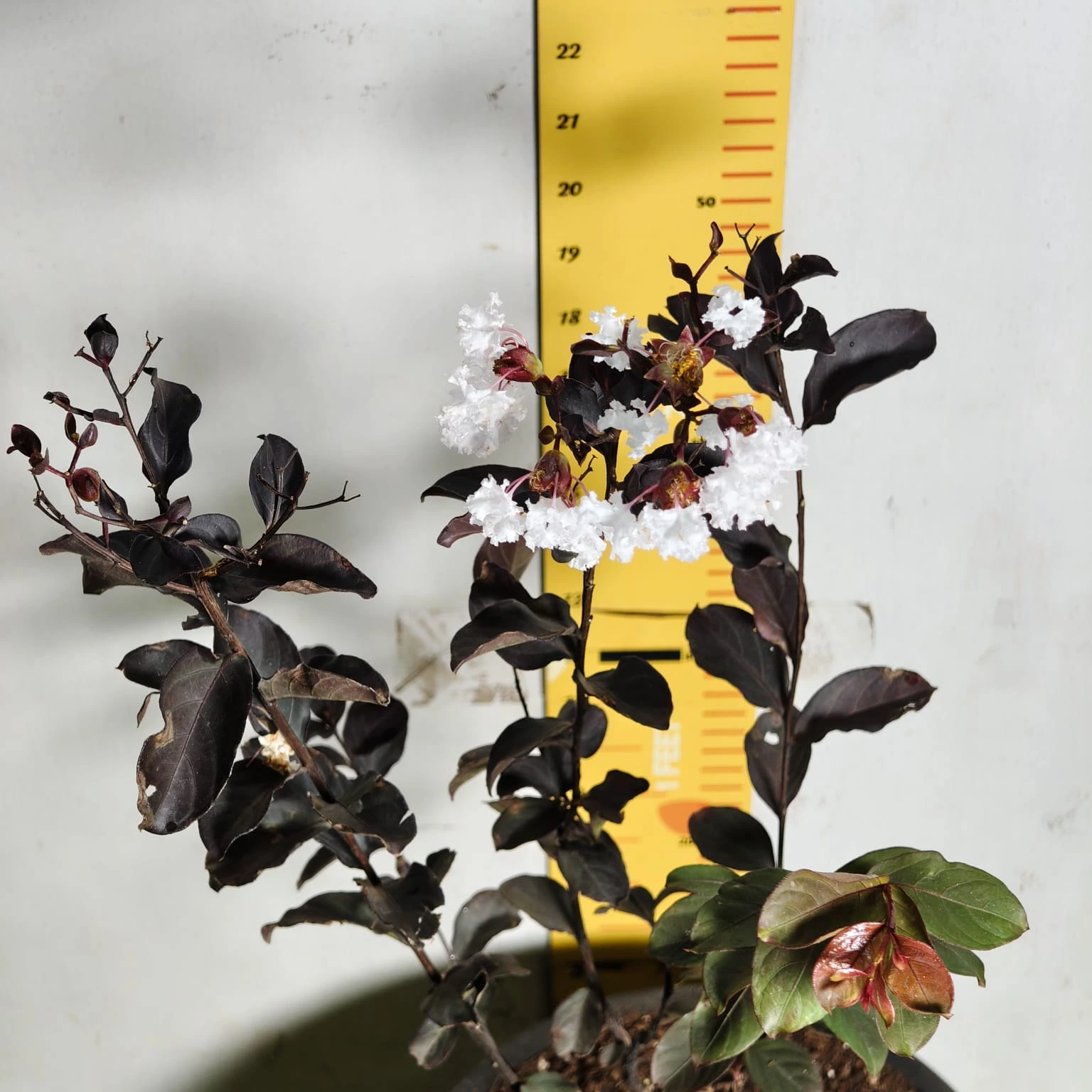
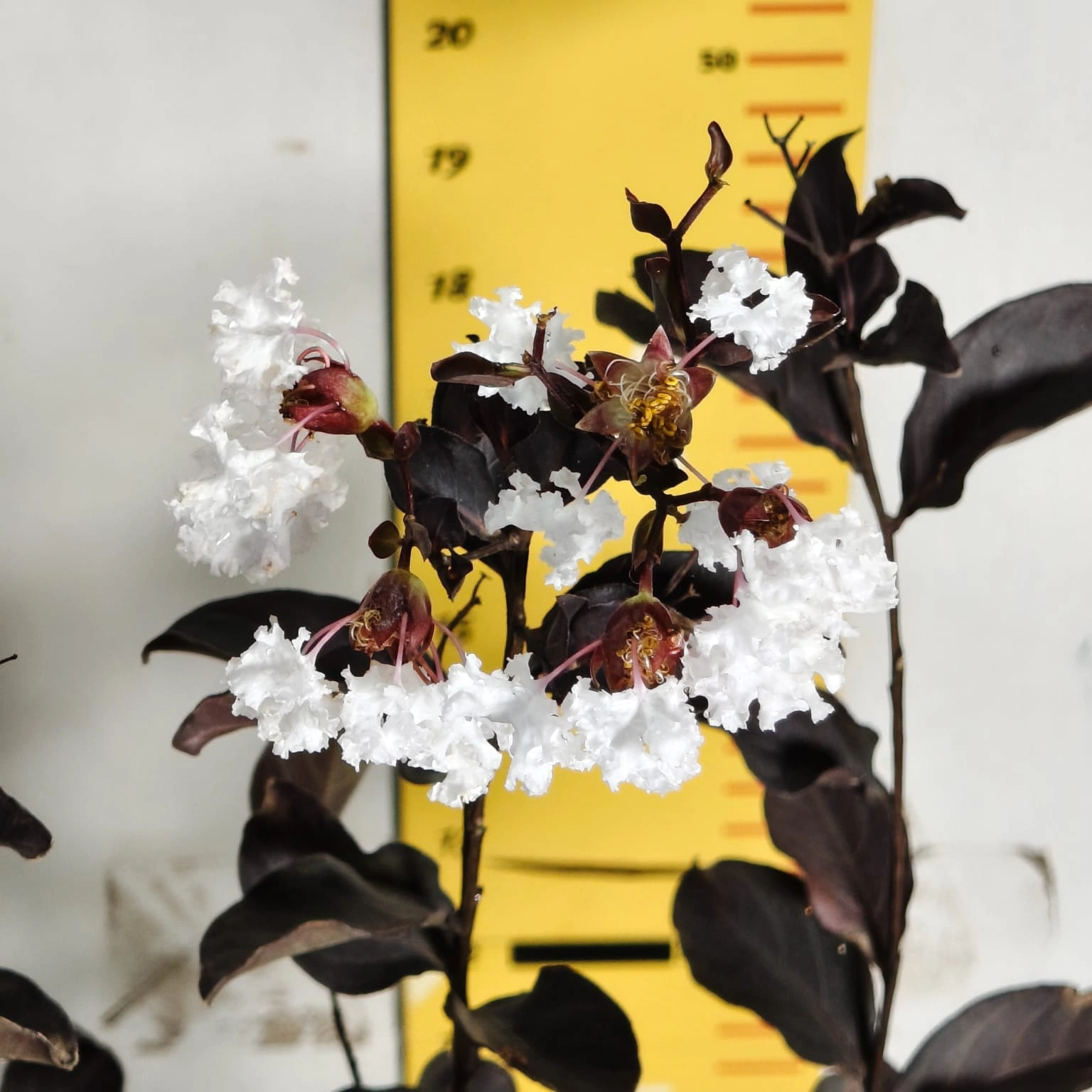
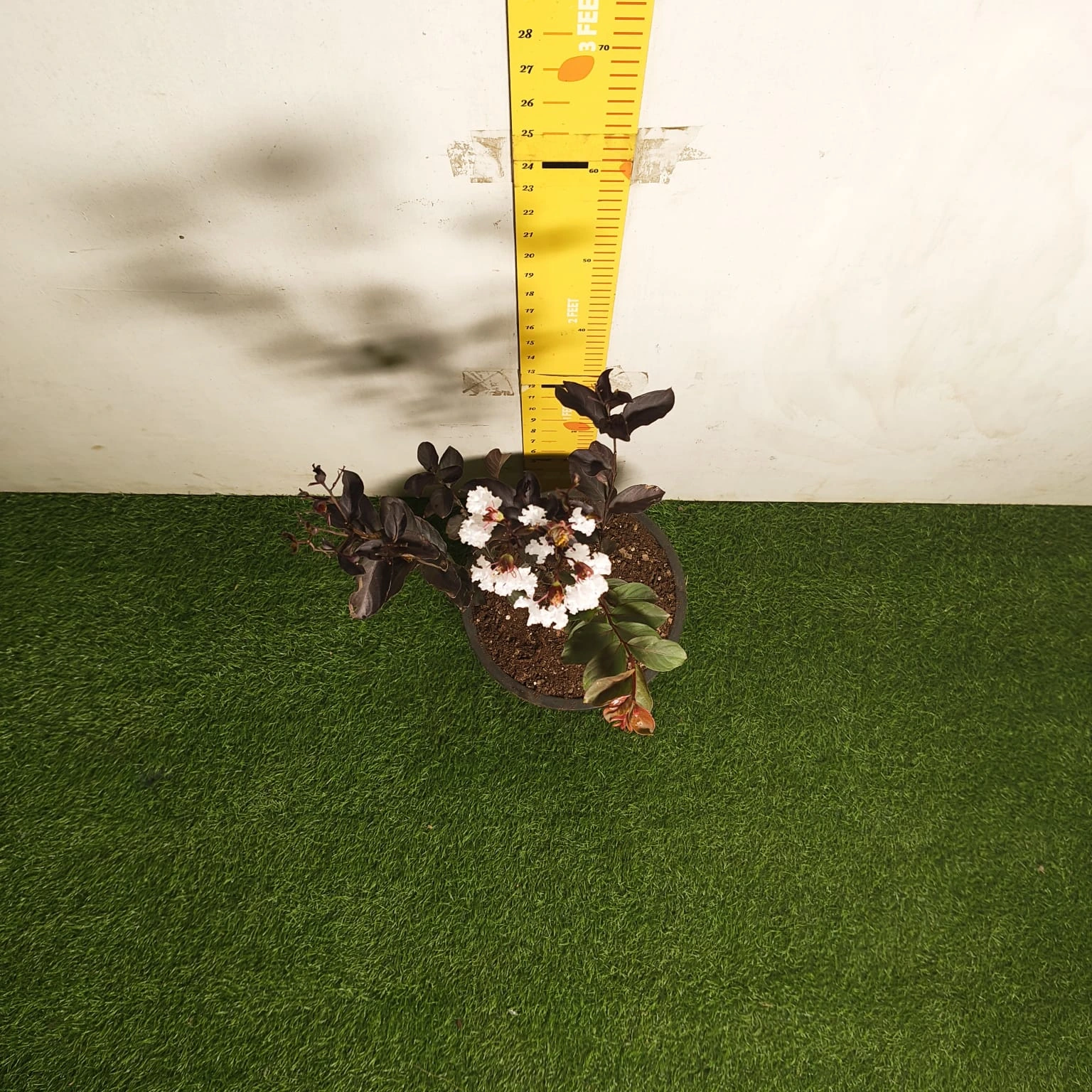
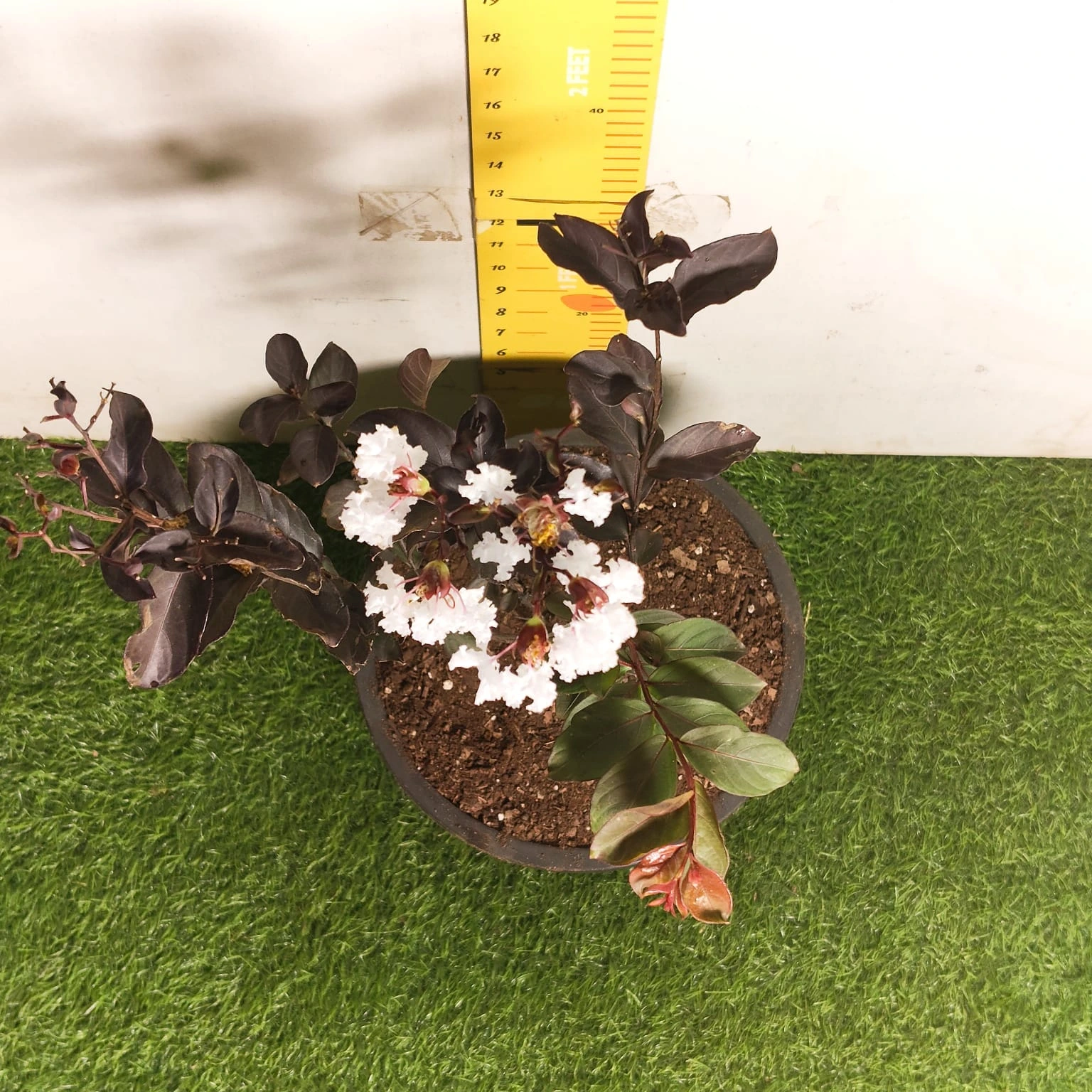
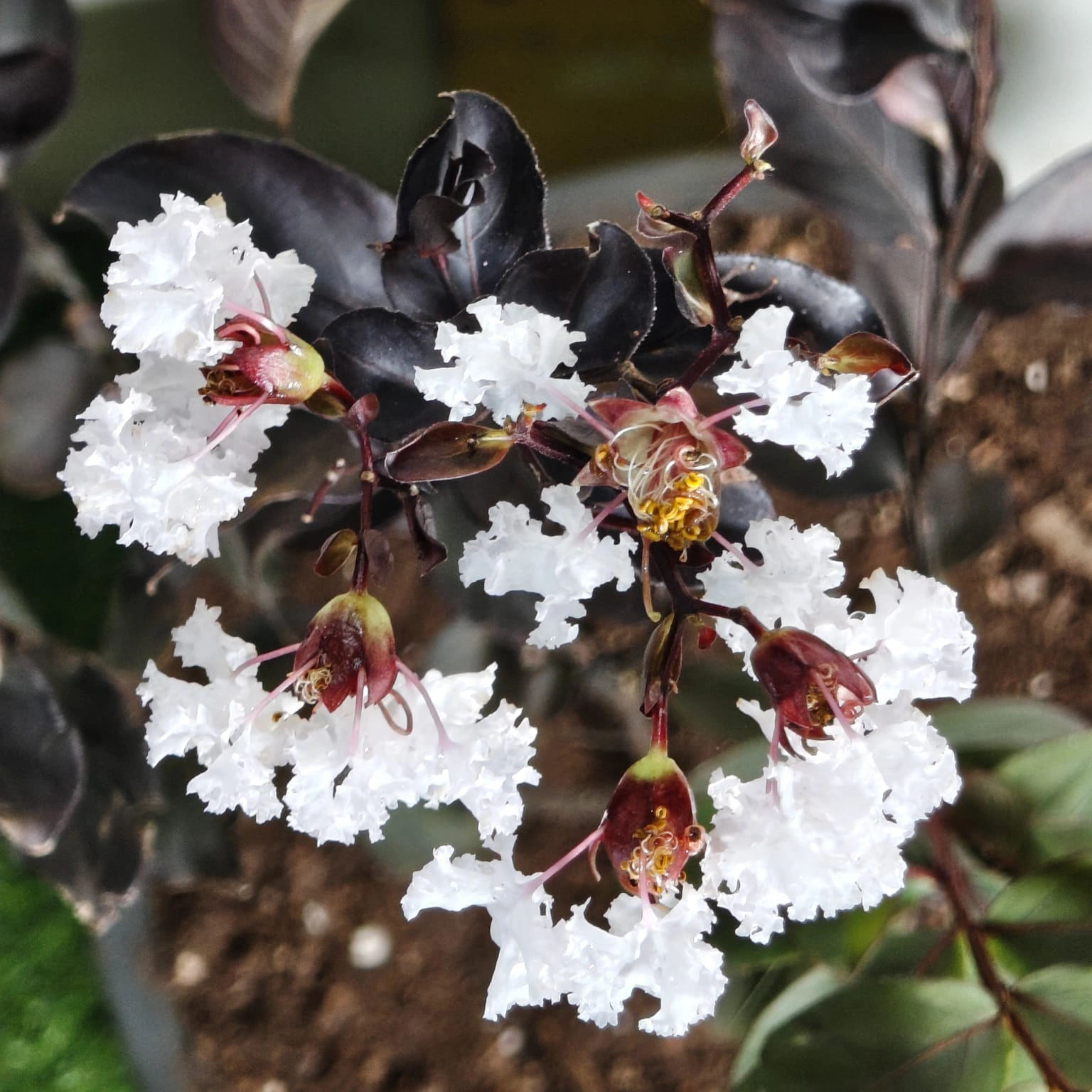
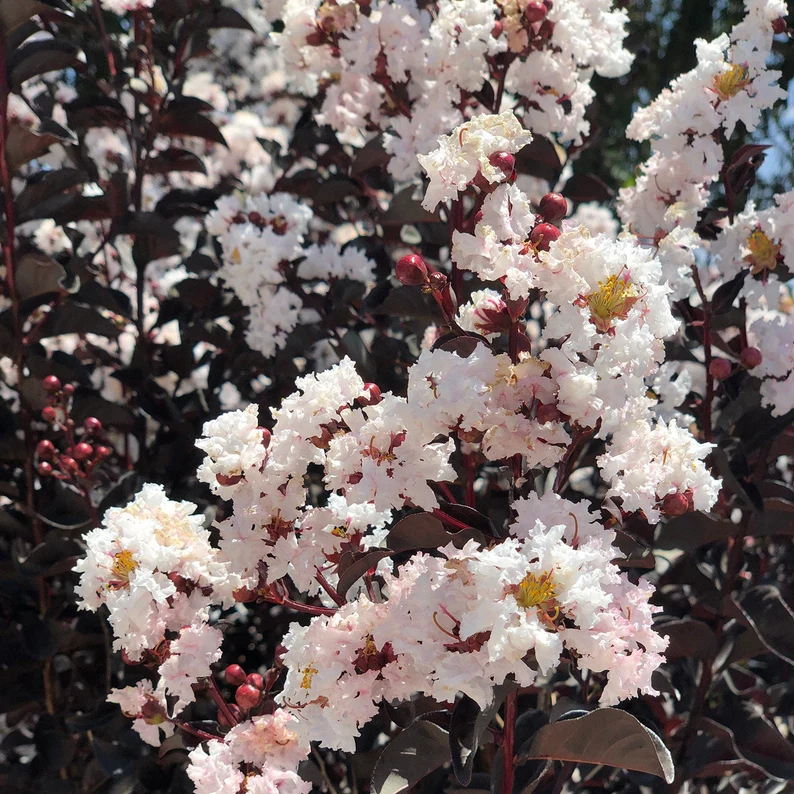
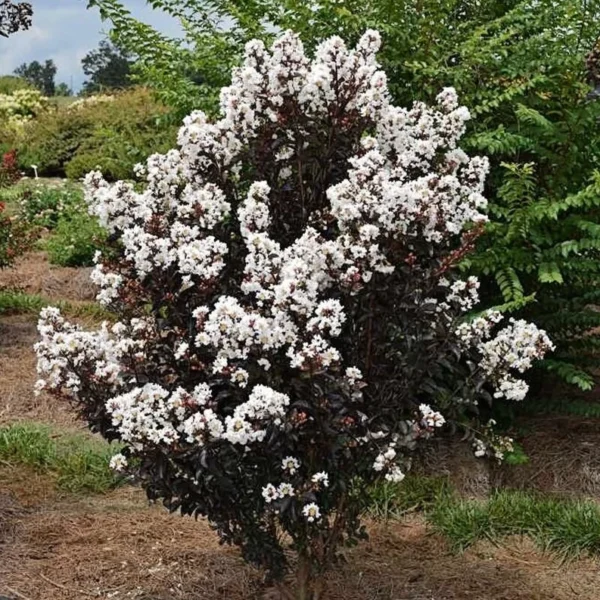
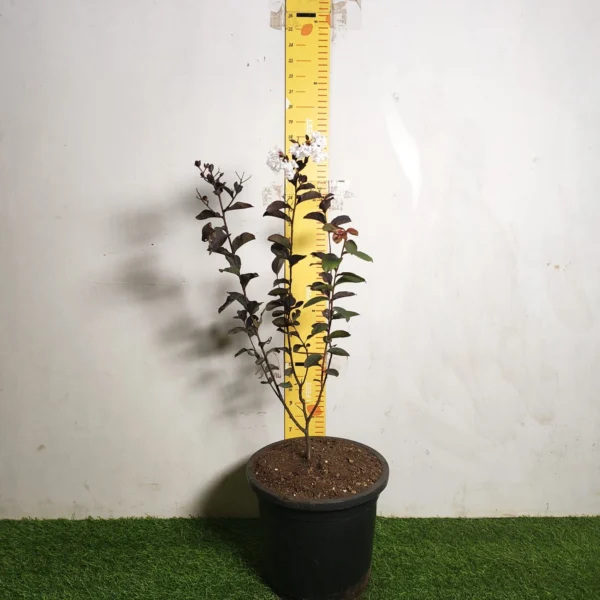
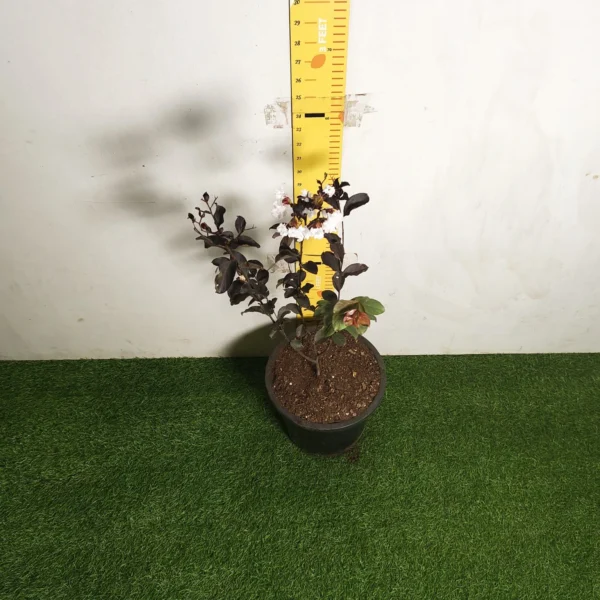
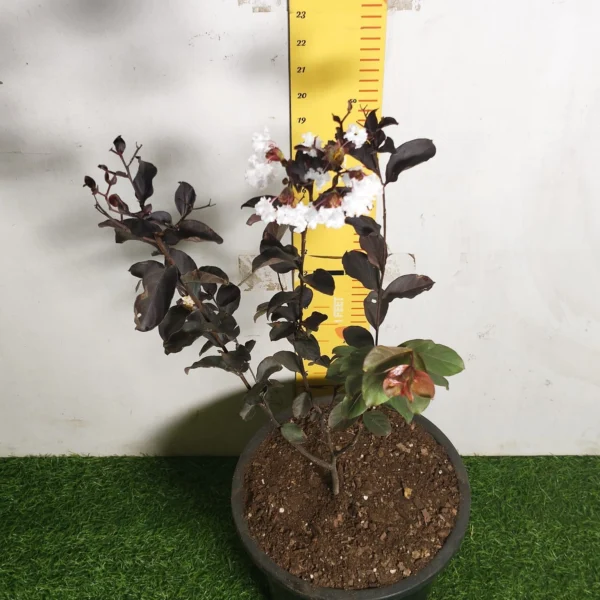
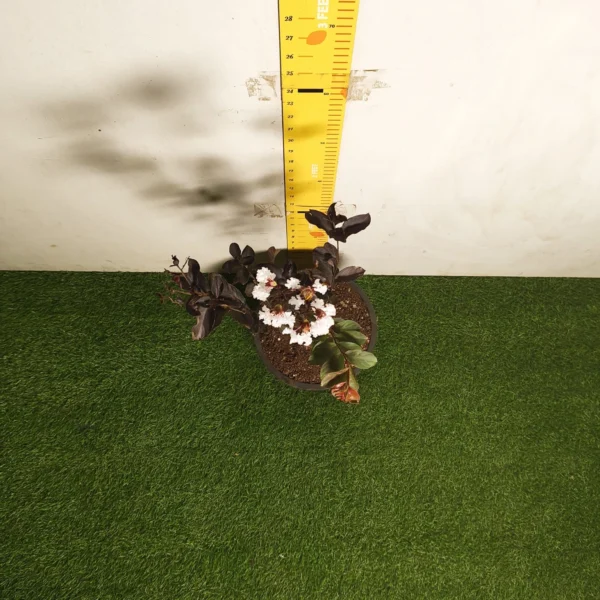
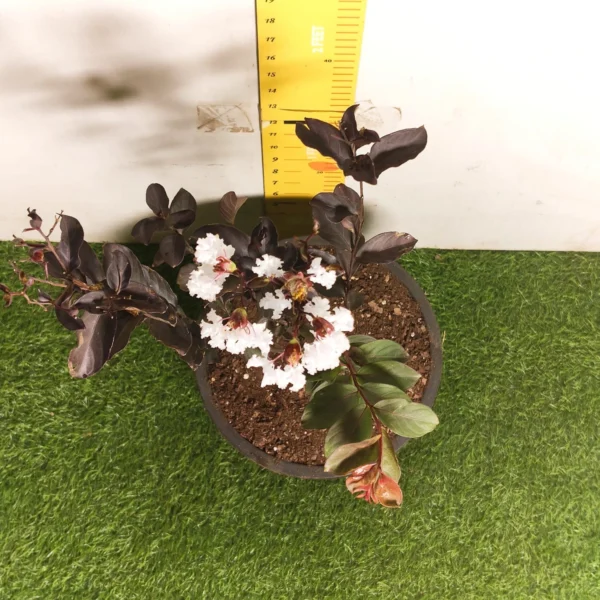
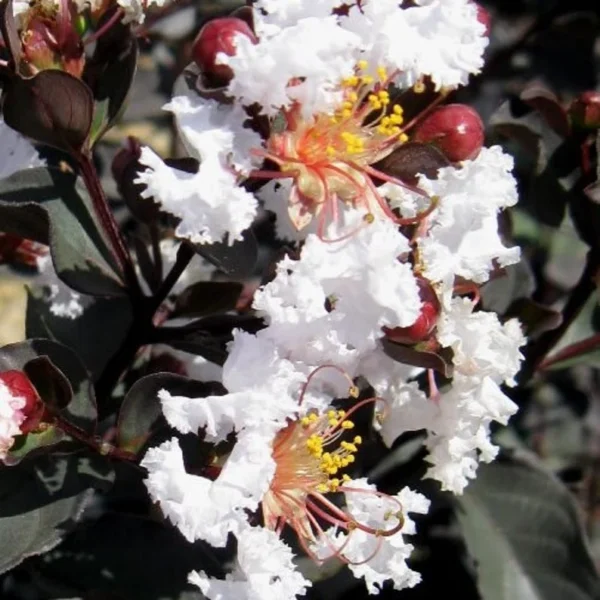
Pure white blooms against deep burgundy-black leaves — the sharpest contrast in the Black Diamond series, on a compact 2–3 m tree.
White Against Black
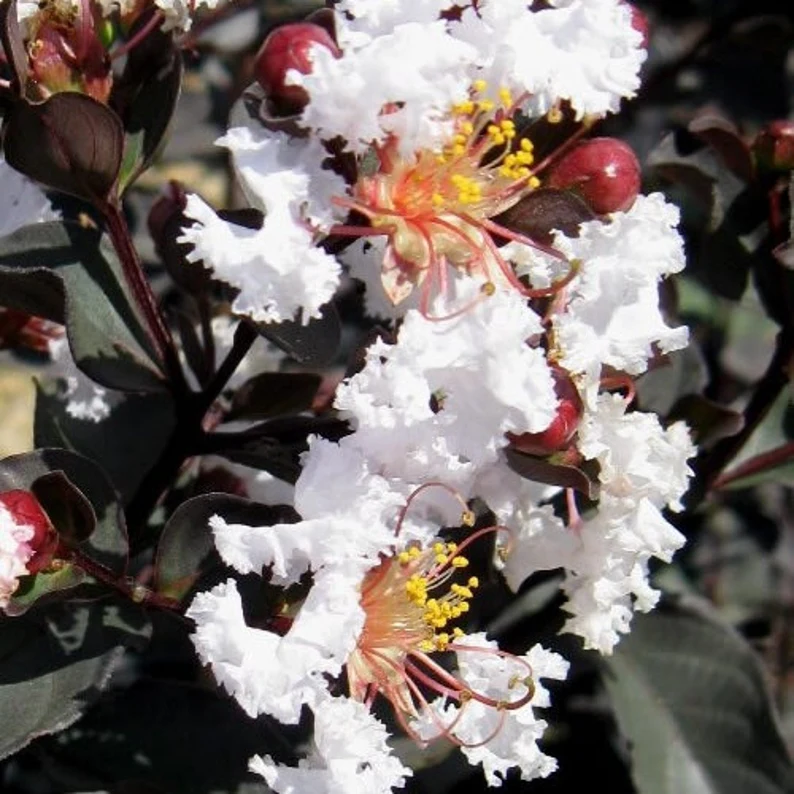
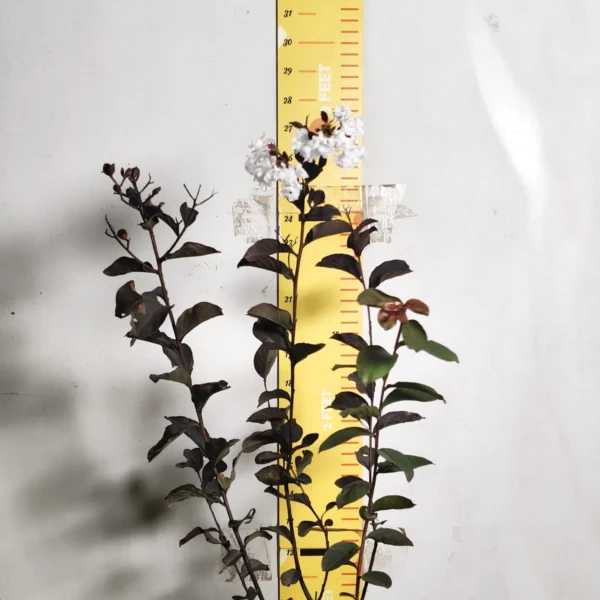
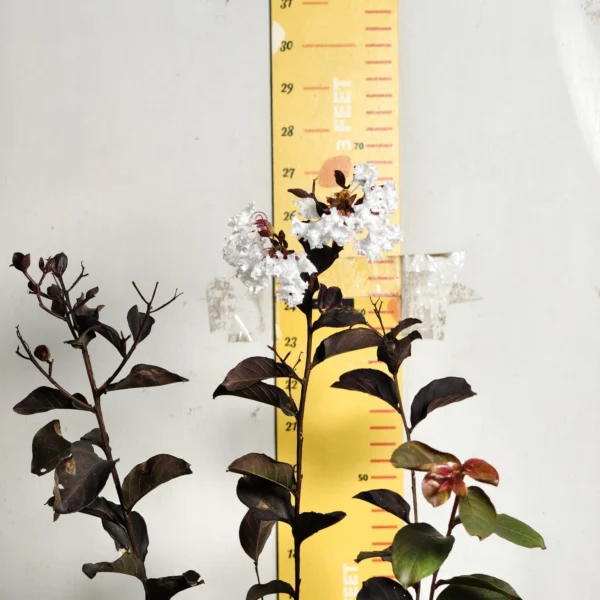
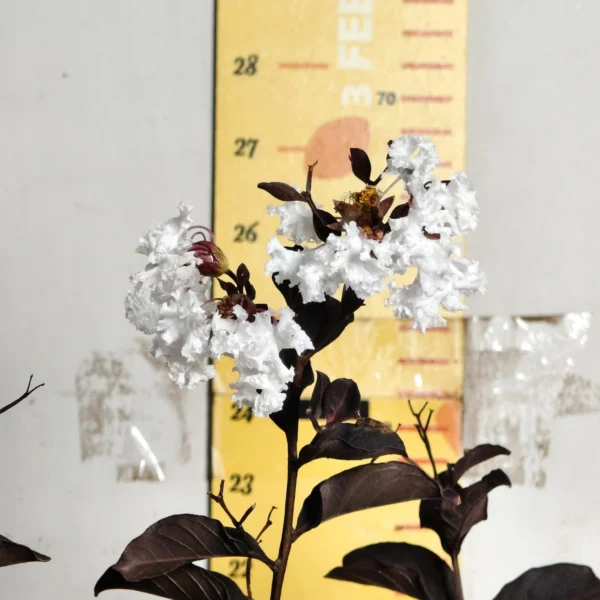
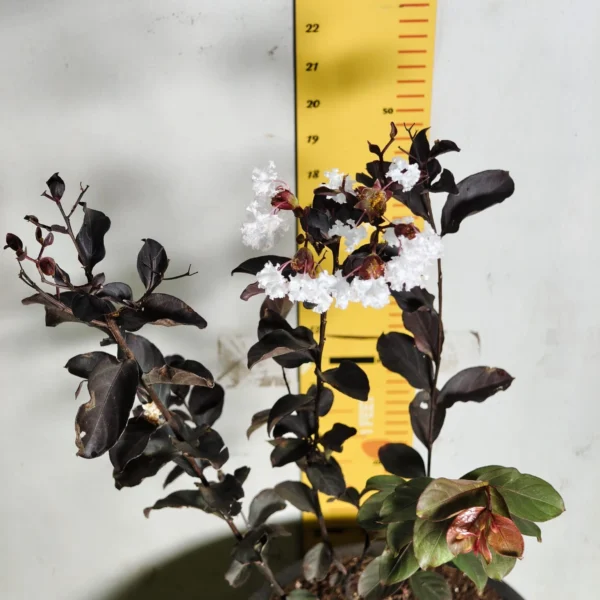
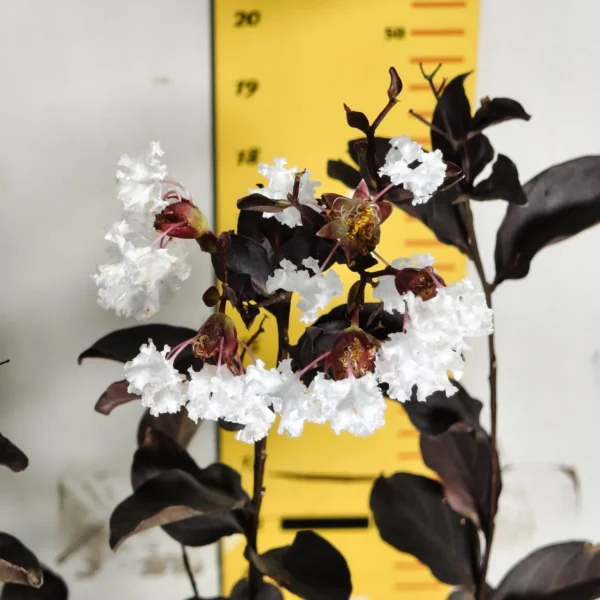
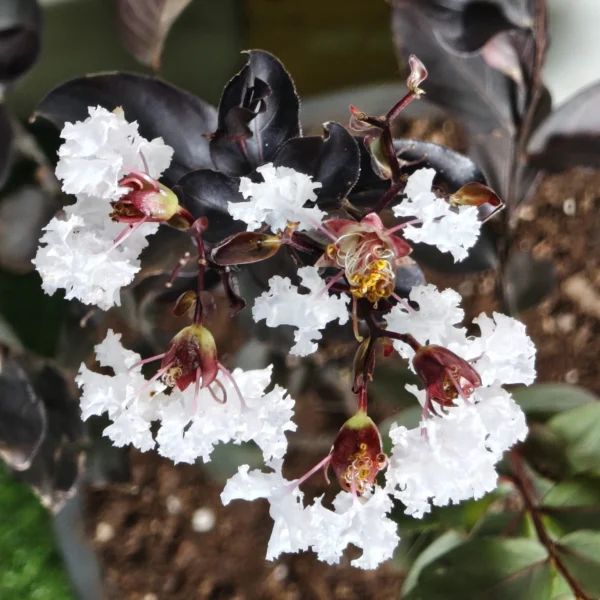
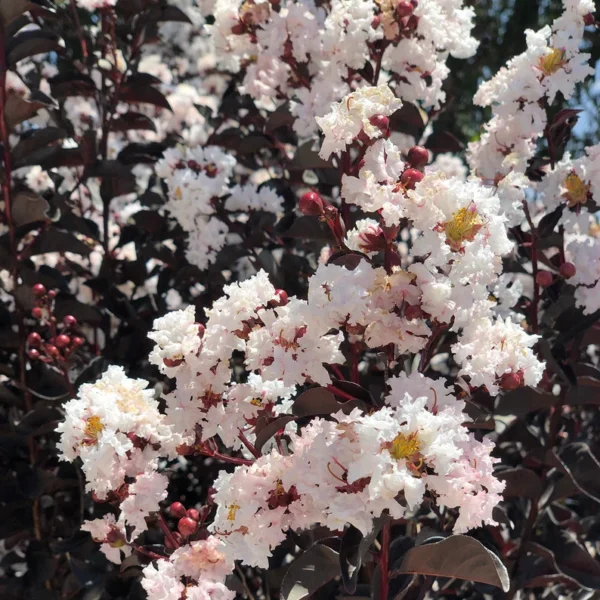
Lagerstroemia Black Diamond ‘White’ pairs the darkest foliage in the crape myrtle world with clean, snow-white flower panicles. The contrast is the point — nothing else in an Indian garden gives quite this effect.
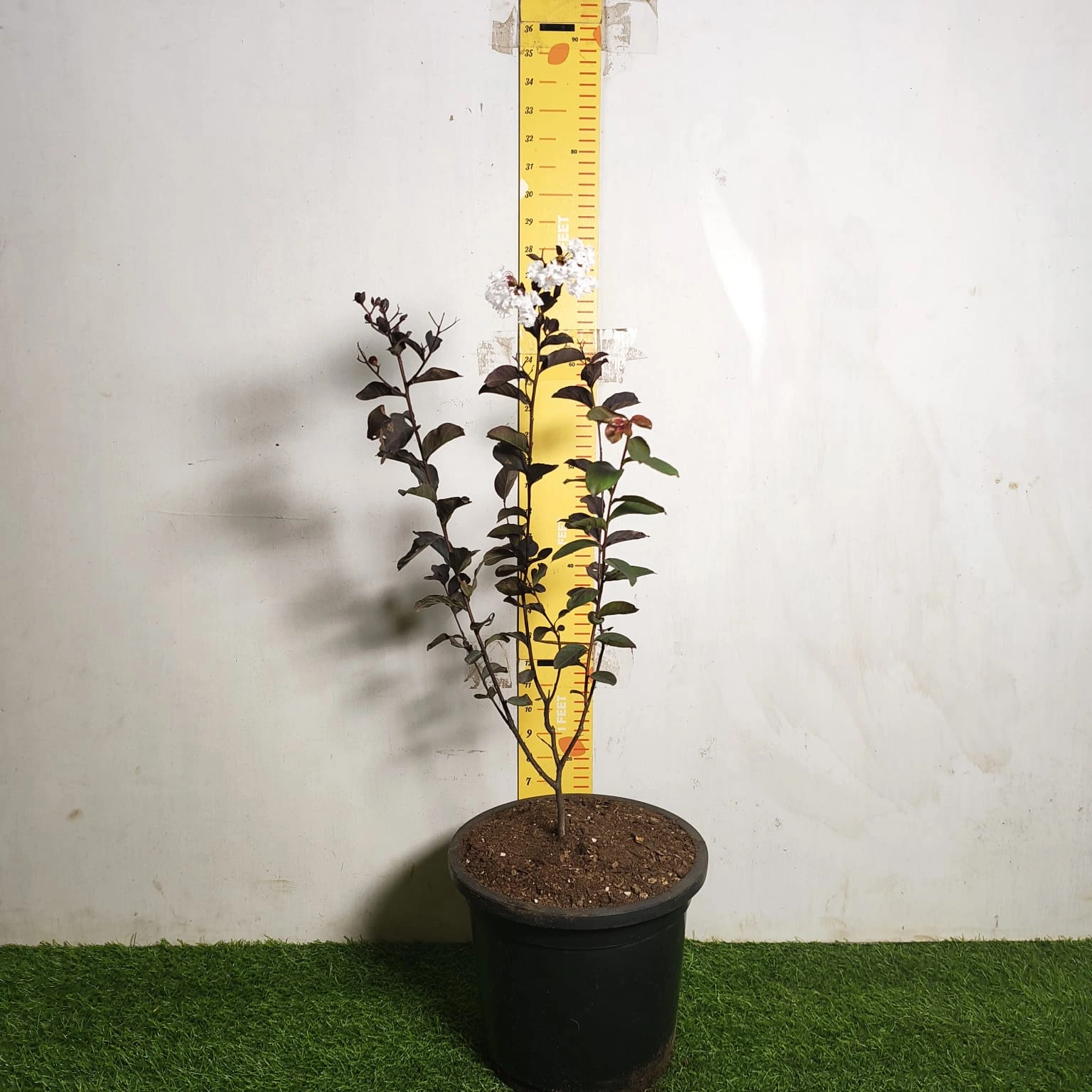
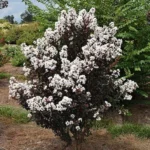
It behaves like the rest of the Black Diamond line: compact at 2–3 m, flowering in flushes from early summer to autumn, dropping its leaves in winter to reveal smooth mottled bark, and needing no hard annual pruning to perform.
Foliage and Flower
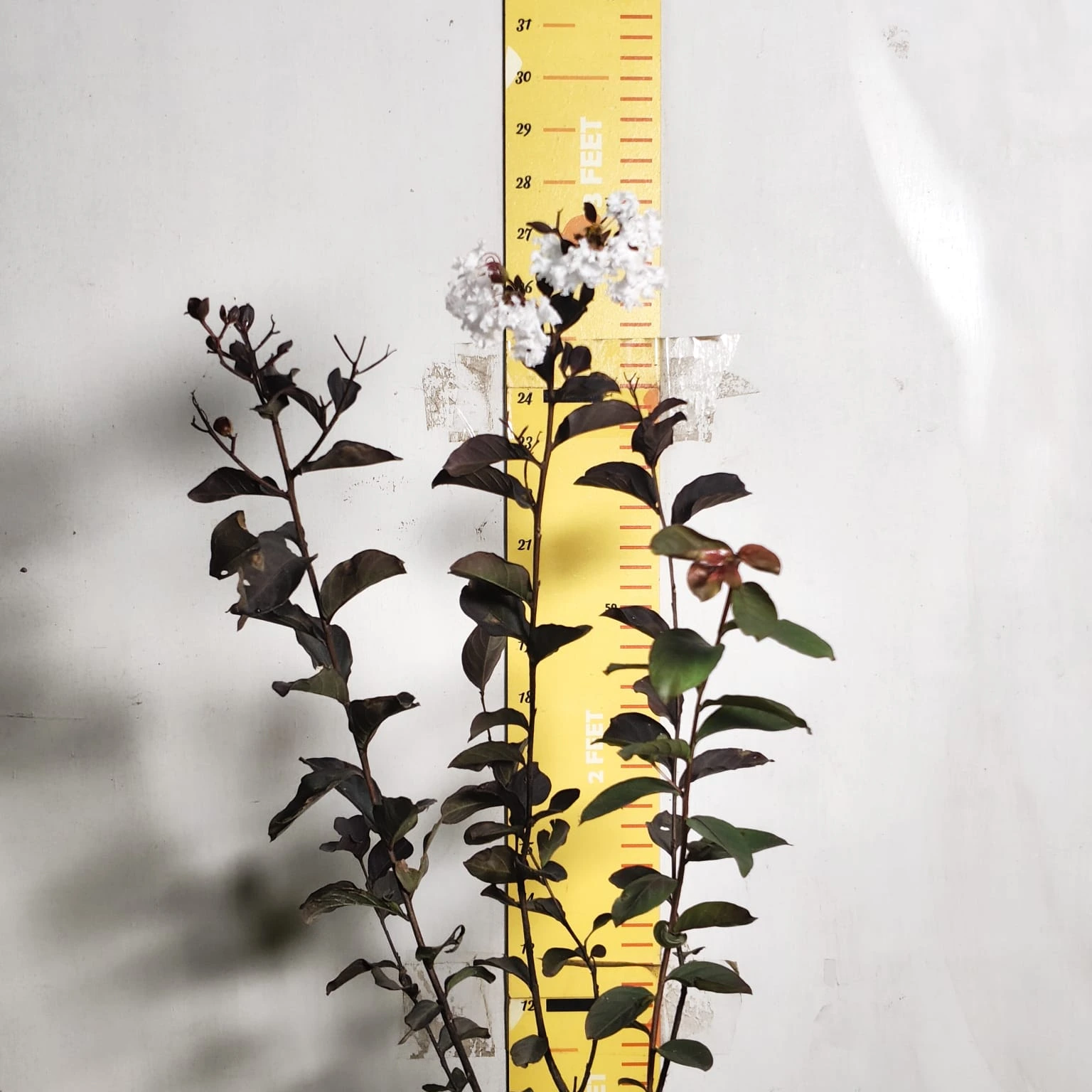
Leaves hold a deep burgundy-black through the whole growing season without fading in heat. Flower panicles are 15–20 cm long in pure white, appearing in successive flushes from June onward. The white reads especially well at dusk and under garden lighting.
Key Features
✓ Pure white panicles against near-black foliage
✓ Flowers in flushes from early summer to autumn
✓ Compact 2–3 m — suits large pots and small gardens
✓ Smooth mottled bark once leaves drop
✓ Colour-stable leaves that do not green off in heat
✓ Handles hot, dry Indian summers well
🌱 Recommended Potting Mix
Light on garden soil, strong on compost — heavy soil chokes crape myrtle roots.
Crape Myrtle
Potting Mix
Potting Mix
25% Garden Soil
What is Garden Soil?
Clean, fertile and loose topsoil collected from a healthy garden or cultivation area.
- Loose and easy to crumble
- Free from stones and waste
- Not extremely hard or sticky
- Able to drain excess water
- Loamy soil is preferred
If your garden soil is sticky or clay-heavy, increase the river sand or perlite share and reduce the cocopeat by the same amount.
30% Cocopeat
Holds moisture, keeps the mix light.
25% Vermicompost
Slow-release nutrients and microbes.
15% River Sand
Drainage channels; stops compaction.
5% Bone Meal
Slow phosphorus for roots and blooms.
Pro Tip: Give it the sunniest spot you have. Shade means fewer flowers and duller leaf colour.
Growing and Care Guide
Simple essentials for healthy and balanced growth.
Sunlight
Full sun — 6 to 8 hours daily. Shade costs you both leaf colour and flowers.
Watering
Deep watering twice a week through summer; let the surface dry in between.
Soil
Fertile, free-draining loam. Avoid any spot where water stands after rain.
Temperature
Hardy to about −10°C when dormant. Leaf scorch above 38°C. Best growth 20°C to 35°C.
Fertilizer
Balanced flowering feed in early spring, repeated after the first flush.
Pruning
Light shaping in late winter. Remove spent heads and any crossing branches.
Temperature Tolerance
What this plant enjoys, what it merely survives, and where it stops.
Active growth
Warm summers needed
A plant of the warm temperate zone that requires very hot and humid summers to do well. Where it fails, the cause is usually a lack of summer heat to drive vigorous growth and ripen the wood. No numeric optimum is published anywhere in the sources checked, so none is invented here.
❄️ Cold limits
Below −20.6°C
Top growth dies back
Above-ground branches often die to the ground once temperatures dip below −5°F (−20.6°C).
USDA Zone 7
Branch hardiness
Above-ground branches are winter hardy to Zone 7. Winter injury to top growth is common in Zones 5 and 6.
USDA Zone 5
Root hardiness
Roots are usually — though not always — hardy to Zone 5, so a plant cut down by cold often regrows from the base.
About −10°C
Hardy only if the wood ripened
A dormant plant is hardy to about −10°C provided the wood is well ripened — which is exactly what a hot summer does for it. A soft, unripened plant going into winter is far more vulnerable than the zone rating suggests.
🌡️ Heat limits
No upper limit published
Heat is what it wants
Crape myrtle flowers prolifically in hot climates and the extension sources give no upper temperature limit. Across India, heat is not the constraint on this plant.
Figures from NC State Extension Gardener Plant Toolbox and Missouri Botanical Garden Plant Finder (Lagerstroemia indica), UGA Extension C944 Crape Myrtle Culture, and Useful Tropical Plants for the −10°C ripened-wood figure and the hot-humid-summer requirement. USDA zone figures are a winter-minimum classification, not a growth optimum — and no growth optimum for this species could be found in any of them.
Climate Zone Compatibility
Where this plant performs across India’s growing zones.
|
Cold hardiness
About −10°C if the wood ripened
|
Optimal growth temp
No optimum published
|
Winter dormancy
Yes — drops leaves in winter
|
|
Heat stress above
No upper limit published
|
Ideal Indian zones
Z3 · Z4 · Z5 · Z6 · Z7 · Z8 · Z9 · Z12 · Z16
|
Temperature range
Dieback below −20.6°C
|
✅ Ideal — thrives here
| ✅ |
Z3 — Subtropical Hills · Winter down to 3–8°C / Summer up to 28°C
Elevation 1,500–2,500m · Rainfall 800–2,500mm · Monsoon 4–5 months · Full dormancy — best colour
|
| ✅ |
Z4 — Subtropical Highland · Winter down to 0–8°C / Summer up to 33°C
Elevation 1,200–2,200m · Rainfall 500–3,600mm · Mixed monsoon · Dormancy sufficient at elevation
|
| ✅ |
Z5 — Subtropical Monsoon · Winter 8–14°C / Summer up to 38°C
Elevation 50–600m · Monsoon 5–6 months · Rainfall 1,800–4,000mm · Humidity 75–95%
|
| ✅ |
Z6 — Subtropical Monsoon Highland · Winter 10–13°C / Summer up to 32°C
Elevation 800–1,400m · Monsoon 5–6 months · Rainfall 1,500–3,200mm · Dry season 5–6 months — no frost ever
|
| ✅ |
Z7 — Humid Subtropical · Winter 8–15°C / Summer up to 42°C
Elevation 100–700m · Dry season 3–4 months · Rainfall 800–2,200mm · Summer hot — 38–42°C
|
| ✅ |
Z8 — Subtropical Semi-Arid · Winter 5–12°C / Summer up to 44°C
Elevation 10–200m · Dry season 7 months · Rainfall 400–800mm · Semi-arid steppe
|
| ✅ |
Z9 — Cool Tropical Highland · Winter 5–12°C / Summer up to 28°C
Elevation 1,600–2,500m · Nilgiri Hills / Western Ghats · Rainfall 1,500–3,000mm · Monsoon 5–6 months
|
| ✅ |
Z12 — Tropical Wet & Dry Savanna · Winter 11–17°C / Summer up to 40°C
Elevation 300–1,000m · Dry season 5–6 months · Rainfall 700–1,600mm · Deccan Plateau — distinct wet and dry seasons
|
| ✅ |
Z16 — Subtropical Hot Semi-Arid Continental · Winter 4–13°C / Summer up to 48°C
Elevation 100–450m · Dry season 6–7 months · Rainfall 600–900mm · Summer scorching — 44–48°C peak
|
⚠️ Workable — grows, but needs help
| ⚠️ |
Z2 — Cold Hills · Winter down to 1–5°C / Summer up to 25°C
Elevation 1,800–3,000m · Rainfall 700–4,000mm · Monsoon 4–5 months · Full dormancy — excellent vigour
|
| ⚠️ |
Z10 — Tropical Mid-Elevation Monsoon · Winter 9–15°C / Summer up to 38°C
Elevation 600–1,500m · Monsoon 6–7 months · Rainfall 2,500–6,000mm · Humidity 80–95%
|
| ⚠️ |
Z11 — Tropical Monsoon Coastal · Winter 14–24°C / Summer up to 38°C
Elevation 0–200m · Monsoon 5–6 months · Rainfall 1,400–4,000mm · No frost ever
|
| ⚠️ |
Z13 — Tropical WDS Hot Interior · Winter 11–18°C / Summer up to 48°C
Elevation 200–700m · Dry season 6–7 months · Rainfall 700–1,600mm · Summer scorching — 45–48°C peak
|
| ⚠️ |
Z14 — Tropical Wet & Dry Savanna Coastal · Winter 17–22°C / Summer up to 42°C
Elevation 0–400m · Dry season 4–5 months · Rainfall 700–2,000mm · Coastal — humid year-round
|
| ⚠️ |
Z15 — Tropical Semi-Arid · Winter 12–16°C / Summer up to 45°C
Elevation 450–600m · Humidity 35–75% · Rainfall 600–900mm · Dry season 7 months
|
| ⚠️ |
Z17 — Subtropical Hot Arid · Winter 5–12°C / Summer up to 50°C
Elevation 200–300m · Dry season 9–10 months · Rainfall <400mm · True desert climate
|
| ⚠️ |
Z18 — Tropical Hot Semi-Arid · Winter 16–20°C / Summer up to 46°C
Elevation 300–800m · Dry season 7–8 months · Rainfall 500–700mm · Western Ghats rain shadow
|
❌ Not suitable
| ❌ |
Z1 — Cold Alpine · Winter down to −20°C or below / Summer up to 20°C
Elevation 3,000–5,500m · Rainfall <300mm · Dry season 8+ months · Deep dormancy — hardiest conditions
|
Season by Season
Spring (Feb – Apr)
Dark new leaves push out. Feed now and shape lightly if needed.
Summer (May – Jun)
First flower flush opens. Water deeply; some leaf scorch is normal above 38°C.
Monsoon (Jul – Sep)
Peak flowering. Ensure drainage — this plant hates waterlogged roots.
Autumn (Oct – Nov)
Final flush, then leaves colour and begin to drop.
Winter (Dec – Jan)
Fully dormant and bare. This rest drives next season’s flowering.
How to Plant
01. Pick the sunniest spot in the garden or a large pot on an open terrace.
02. Dig a hole twice the width of the root ball.
03. Add the recommended potting mixture.
04. Set the plant at the same depth it was in its nursery pot.
05. Firm the soil and create a shallow watering basin.
06. Water deeply and mulch to hold moisture.
Frequently Asked Questions
How is this different from Lavender Lace?
Only the flower colour — this one is pure white. Foliage, size, hardiness and care are identical.
Will it flower in Mumbai or Chennai?
Yes, though a little less heavily than in gardens that get a cool winter rest. Full sun matters more than winter chill.
Does it need staking?
Only in the first year on windy terraces. It builds a sturdy frame quickly.
Why are some leaves scorched in May?
Above about 38°C some leaf-edge burn is normal. It does not harm the plant and new growth covers it.
White Flowers, Black Leaves
The sharpest contrast in the crape myrtle world, on a tree that fits a terrace.
Leaf colour intensity, flowering time and plant size may vary depending on plant maturity, climate, sunlight, nutrition, soil and local growing conditions.




Reviews
There are no reviews yet